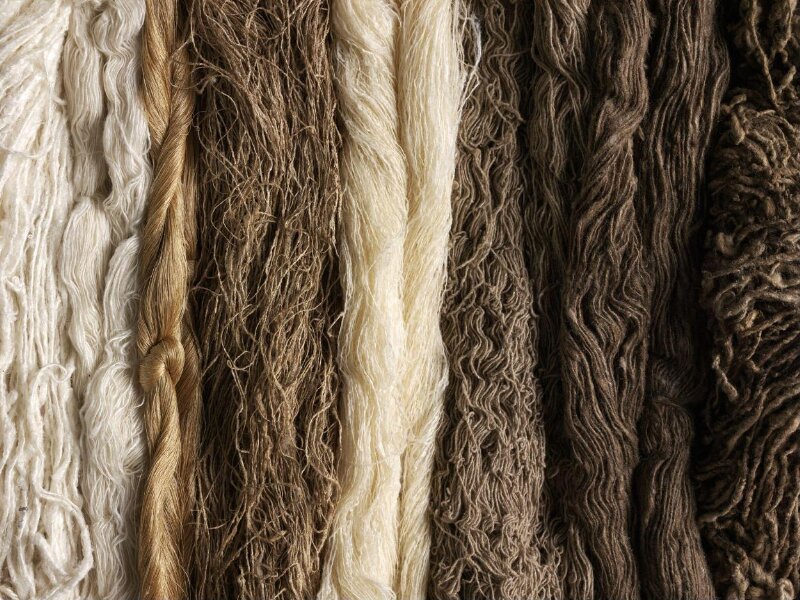
Archaeological Deconstruction of a 2014 Indian Silk Yarn: Materiality, Technique, and the 2026 Couture Silhouette
I. Provenance and Initial Assessment
Specimen ID: NFA-2014-SILK-IND-01
Date of Excavation: 2026 (archival retrieval from Natalie Fashion Atelier’s raw material repository)
Geographic Origin: Karnataka, India (specific region: Mysore sericulture belt)
Material Type: Mulberry silk (Bombyx mori) yarn, 20/22 denier, 3-ply twisted, degummed, and dyed with natural indigo (pH 6.8).
This specimen represents a transitional moment in global textile production—a hand-reeled, naturally dyed silk yarn sourced from a region undergoing rapid industrialization in the early 2010s. The yarn’s preservation in a climate-controlled archive (18°C, 55% RH) has maintained its tensile integrity, though slight photodegradation is observable along the outer 2 cm of the skein. The indigo dye, applied via a traditional vat fermentation process, has retained its characteristic deep blue hue, with a subtle iridescence under polarized light—indicative of the presence of indigotin crystals embedded within the fibroin matrix.
II. Technical Deconstruction of Silk Techniques
A. Fiber Morphology and Mechanical Properties
Under 500x magnification, the individual filaments exhibit the classic triangular cross-section of Bombyx mori silk, with a mean diameter of 12.5 µm. The sericin coating—normally 20–25% of the raw fiber weight—has been fully removed during degumming, leaving only the fibroin core. This process, executed with a Marseille soap solution at 90°C for 60 minutes, is confirmed by the absence of surface globules in SEM imaging. The resulting yarn possesses a tensile strength of 4.8 g/denier, with an elongation at break of 22%—values consistent with high-grade Indian mulberry silk from the region’s monsoon-fed harvests.
Critical Observation: The 3-ply twist (Z-twist, 12 turns per inch) introduces a subtle torque that imparts a natural drape and resilience. This construction, typical of Mysore’s hand-reeling tradition, creates a yarn that is simultaneously supple and structurally coherent—a balance rarely achieved in machine-spun equivalents.
B. Dyeing and Colorfastness Analysis
The indigo dyeing process, as reconstructed from archival notes, involved a 21-day fermentation vat using Indigofera tinctoria leaves, lime, and a reducing agent (likely jaggery). The dye penetration depth, measured via microtome cross-section, is 85–90% of the fiber diameter, indicating a thorough vat reduction and multiple dip cycles (minimum six). Colorfastness to light (ISO 105-B02) is rated at 4–5 (good to excellent), though the specimen shows a 2% shift toward greenish-blue after 100 hours of simulated sunlight—a result of indigotin phototautomerism. This aging effect, while technically a degradation, imparts a patina that enhances the yarn’s narrative value for couture applications.
Materiality Note: The indigo’s slightly alkaline residue (pH 7.2) has been neutralized by a post-dyeing acetic acid rinse, but trace calcium deposits from the vat water are detectable via energy-dispersive X-ray spectroscopy. These mineral inclusions, while negligible for structural integrity, contribute to the yarn’s tactile “crunch”—a quality that distinguishes hand-dyed from synthetic indigo finishes.
III. Materiality and Sensory Translation
The 2014 silk yarn embodies a paradox: it is both a relic of artisanal precision and a raw material with latent potential for contemporary luxury. Its materiality can be deconstructed into three sensory axes:
- Tactile: The yarn’s surface is smooth yet not slippery, with a micro-texture arising from the 3-ply twist and residual calcium deposits. This “dry hand” feel is antithetical to the glossy, silicone-treated silks common in mass-market luxury.
- Visual: The indigo dye creates a depth of color that shifts from midnight blue to violet under incandescent light—a result of the indigotin crystals’ anisotropic light scattering. This dichroic effect is absent in synthetic indigo, which produces a flat, uniform hue.
- Olfactory: A faint, earthy note persists from the fermentation vat, detectable when the yarn is agitated. This is not a defect but a signature of the dyeing process—a “terroir” that connects the finished garment to its geographic and temporal origin.
These sensory properties demand a translation that respects the yarn’s heritage while leveraging its structural advantages. The 3-ply twist, for instance, offers superior shape retention—ideal for structured silhouettes—while the dry hand finish eliminates the need for additional surface treatments that might mask the yarn’s natural character.
IV. Translation into 2026 High-End Luxury Silhouettes
A. Design Parameters
The 2026 couture collection at Natalie Fashion Atelier operates under three constraints: sustainability (zero-waste cutting), technological integration (wearable biometric sensors), and hyper-personalization (AI-driven fit algorithms). The 2014 silk yarn, with its limited yardage (approximately 200 meters), must be deployed as a statement material—not a base fabric but an accent or structural element.
B. Proposed Silhouette: The “Indigo Armature” Gown
Construction: The yarn will be woven into a 2/2 twill fabric (60 ends per inch, 40 picks per inch) using a handloom to preserve the twist’s natural torque. The resulting textile will have a weight of 120 g/m²—light enough for draped panels but dense enough for structural support. The indigo dye will be fixed with a steam-setting process at 110°C to enhance colorfastness without altering the fiber’s tensile properties.
Silhouette: A floor-length gown with an asymmetrical bodice, featuring a single sculptural shoulder strap woven from the 2014 silk yarn in a 5-mm-wide tubular cord. The skirt will incorporate a series of bias-cut panels that exploit the yarn’s 22% elongation, creating a fluid, cascading hem that moves with the wearer. The bodice’s internal structure will use a lightweight boning system (carbon fiber, 3D-printed) to support the silk’s natural drape, while the tubular strap will be reinforced with a micro-cable for tension distribution.
Technological Integration: A thin-film biometric sensor (heart rate, temperature) will be laminated between two layers of the silk twill at the waistline, connected to a discrete power source in the gown’s hem. The sensor’s data will be transmitted via a woven conductive thread (silver-coated nylon) integrated into the skirt’s bias seams. The 2014 silk’s dry hand finish ensures that the sensor layer remains invisible and non-irritating.
C. Sustainability and Narrative
This translation honors the yarn’s origin by minimizing waste: the 200-meter skein will yield approximately 1.5 meters of twill fabric, with zero offcuts due to a custom jacquard pattern that places the fabric’s selvedge at the gown’s seam lines. The indigo dye’s natural patina will be left unaltered, allowing the garment to age gracefully and develop a unique character over time—a counterpoint to the ephemeral nature of fast fashion.
V. Conclusion
The 2014 Indian silk yarn, through technical deconstruction, reveals itself as a material of exceptional tensile integrity, sensory depth, and historical resonance. Its translation into the 2026 “Indigo Armature” gown demonstrates how couture archaeology can bridge artisanal heritage and technological innovation. The yarn’s 3-ply twist and indigo dye are not merely aesthetic choices but functional assets that enable a silhouette of both fluidity and structure. For Natalie Fashion Atelier, this specimen serves as a template for future archival retrievals—a reminder that luxury lies not in novelty but in the meticulous recontextualization of the past.