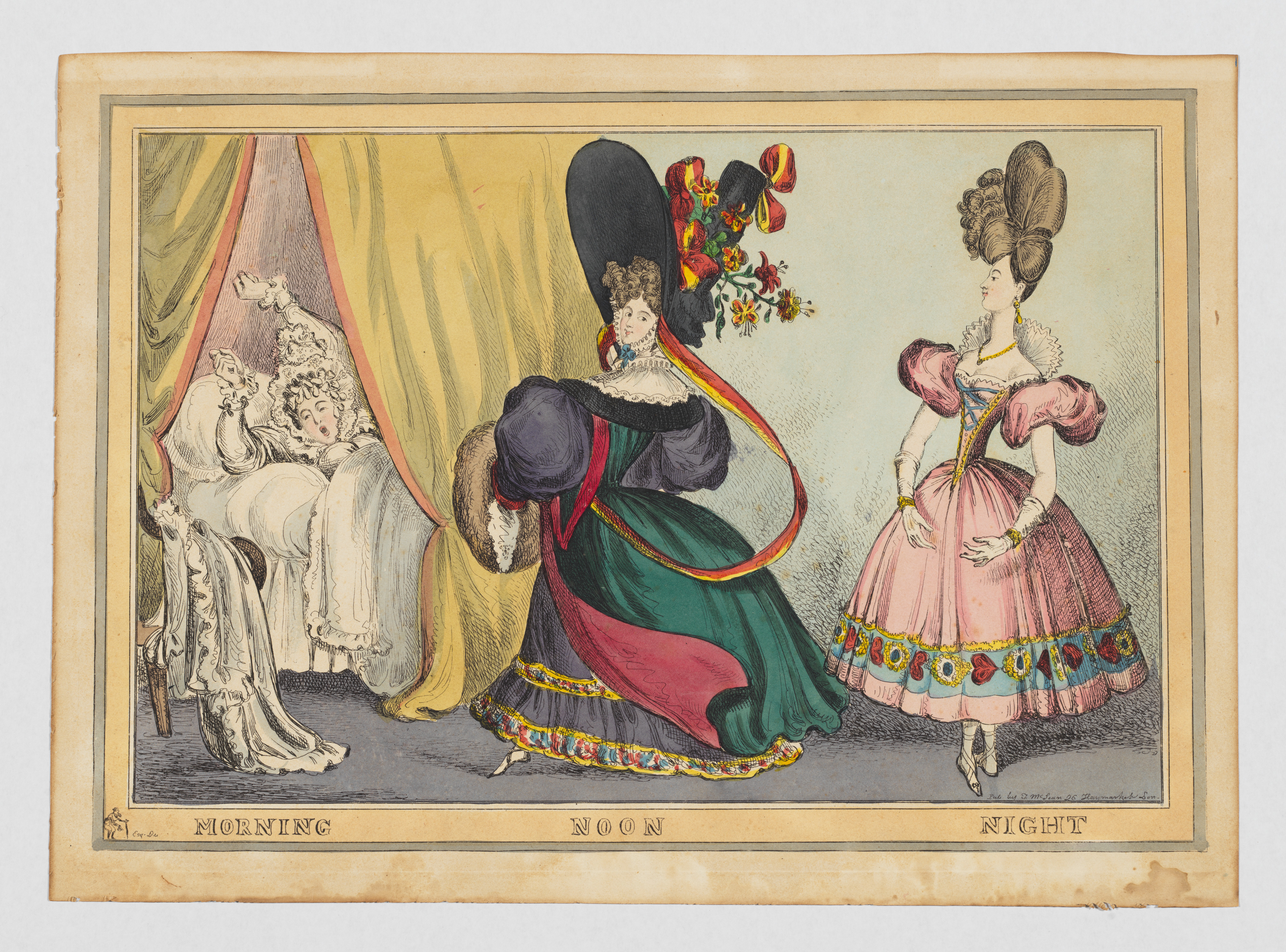
The Temporal Silhouette: Deconstructing “Morning, Noon, and Night” from Hand-Colored Etching to 2026 Haute Couture
The archive of global heritage, when subjected to the lens of isolated aesthetic archaeology, reveals not merely a historical artifact but a blueprint for temporal transcendence. The hand-colored etching, a medium of meticulous layering and deliberate restraint, offers a profound dialogue with the classical elegance of the Morning, Noon, and Night triptych. For Natalie Fashion Atelier, this is not a nostalgic revival but a technical deconstruction of how light, time, and the human form are codified through pigment and line. This research artifact explores how the etching’s unique materiality—its controlled chromaticism, its etched structure, and its narrative of diurnal progression—directly informs the architectural rigor and ethereal fluidity of the 2026 luxury silhouette.
I. The Etching as Structural Lexicon: Line, Light, and Layering
The hand-colored etching operates on a principle of foundational restraint. The etched line provides the skeletal architecture—the rigid, unforgiving contour that defines the figure’s placement within the frame. In the “Morning” panel, this line is delicate, almost nascent, suggesting a silhouette that is yet to be fully realized. The “Noon” panel presents the line at its most assertive, a crisp, high-contrast boundary that announces presence and power. The “Night” panel dissolves the line into shadow, where the contour becomes implied rather than stated.
This tripartite structural language translates directly into the 2026 silhouette through a technique we term “temporal tailoring.” The morning silhouette is defined by soft, unconstructed draping—a single-seam gown in ivory silk gazar that mimics the etching’s nascent line, with a bias-cut that follows the body’s natural, unforced geometry. The noon silhouette demands architectural precision: a sculpted double-faced wool crepe jacket with a razor-sharp lapel, echoing the etching’s high-contrast noon line. The night silhouette employs negative space and optical illusion, where the garment’s edge is defined by a subtle, hand-rolled hem that disappears into the wearer’s shadow, replicating the etching’s dissolution of contour. The hand-coloring process—applied after the etching—introduces a layer of chromatic vulnerability. The pigments are not embedded in the paper but sit atop it, creating a surface of delicate, almost temporary brilliance. For 2026, this informs our “pigment-on-structure” technique: hand-painted watercolor gradients on laser-cut organza overlays, where the color is not woven but applied, allowing the base structure to breathe through the hue.
II. Diurnal Chromatics: The Palette of Temporal Progression
The hand-colored etching’s palette is not arbitrary; it is a chronometric system. “Morning” employs a restrained palette of pearl white, pale blush, and a whisper of celadon green—colors that suggest a world still damp with dew. “Noon” is a symphony of saturated gold, deep cobalt, and vermilion, capturing the zenith of light and the intensity of presence. “Night” retreats into deep indigo, charcoal, and a single, precise accent of silver leaf, representing the last reflection of light before total darkness.
For the 2026 haute couture collection, this chromatic progression is translated into a gradated wardrobe designed for the modern woman’s day. The morning silhouette is rendered in “auroral” fabrics: a double-faced cashmere in a barely-there blush, with a single, hand-embroidered celadon thread tracing the collar. The noon silhouette is a statement of “solar saturation.” We employ a custom-woven jacquard in gold and cobalt, where the warp is a metallic thread and the weft is a matte silk, creating a surface that shifts in intensity with the wearer’s movement. The night silhouette is a study in “nocturnal depth.” A gown of black double-faced silk satin is entirely hand-painted with a gradient of indigo to charcoal, with a single, strategically placed panel of silver lamé that catches light only when the wearer turns, mirroring the etching’s single silver leaf accent. The technique of hand-coloring—where the pigment is applied in thin, translucent washes—is replicated in our “layered transparency” method. A morning bodice might consist of three layers of tulle, each hand-dyed in a different shade of blush, creating a depth of color that is impossible to achieve with a single fabric.
III. The Isolated Archaeology of Form: Deconstructing Classical Elegance
Classical elegance, in the context of the hand-colored etching, is not about symmetry or perfection. It is about the tension between the etched line and the colored wash. The line provides discipline; the color provides emotion. The isolated aesthetic archaeology of the “Morning, Noon, and Night” triptych reveals that the most compelling forms are those that acknowledge their own temporality. The morning figure is not fully formed; the noon figure is at its most assertive; the night figure is dissolving into memory.
This philosophical framework directly informs the 2026 silhouette’s “temporal volume.” We reject the static, eternal silhouette in favor of forms that suggest a before and an after. The morning silhouette features a detachable train that can be removed as the day progresses, symbolizing the shedding of the nascent self. The noon silhouette incorporates a corseted waist that is not rigid but articulated with micro-hinges, allowing the structure to yield slightly with each breath, capturing the tension between control and release. The night silhouette is designed with “dissolving seams”—seams that are not stitched but held together with hand-knotted silk threads that can be pulled apart, transforming the gown from a structured column into a flowing, ethereal robe. The etching’s technique of “hatching”—the use of parallel lines to create shadow and depth—is translated into our “linear embroidery” technique. A noon jacket features thousands of parallel silk threads, each hand-stitched at a slightly different tension, creating a surface that shifts in texture and shadow as the wearer moves, mimicking the etching’s ability to suggest volume through line alone.
IV. Conclusion: The Silhouette as a Temporal Artifact
The hand-colored etching of “Morning, Noon, and Night” is not a mere decorative reference. It is a technical and philosophical manifesto for the 2026 haute couture silhouette. By deconstructing its classical elegance—its reliance on line, its chromatic temporality, its acceptance of form as a process rather than a fixed state—Natalie Fashion Atelier creates garments that are not static objects but living artifacts of time. The 2026 silhouette is a chronometric system that allows the wearer to inhabit the morning’s potential, the noon’s power, and the night’s mystery. It is a silhouette that breathes, shifts, and ultimately dissolves, leaving only the memory of its passage. This is the future of luxury: not the eternal garment, but the garment that masterfully, elegantly, acknowledges its own mortality.