Technical Deconstruction of a 1957 Balenciaga Masterwork: Materiality, Structure, and the 2026 Silhouette
Introduction: The Object of Study
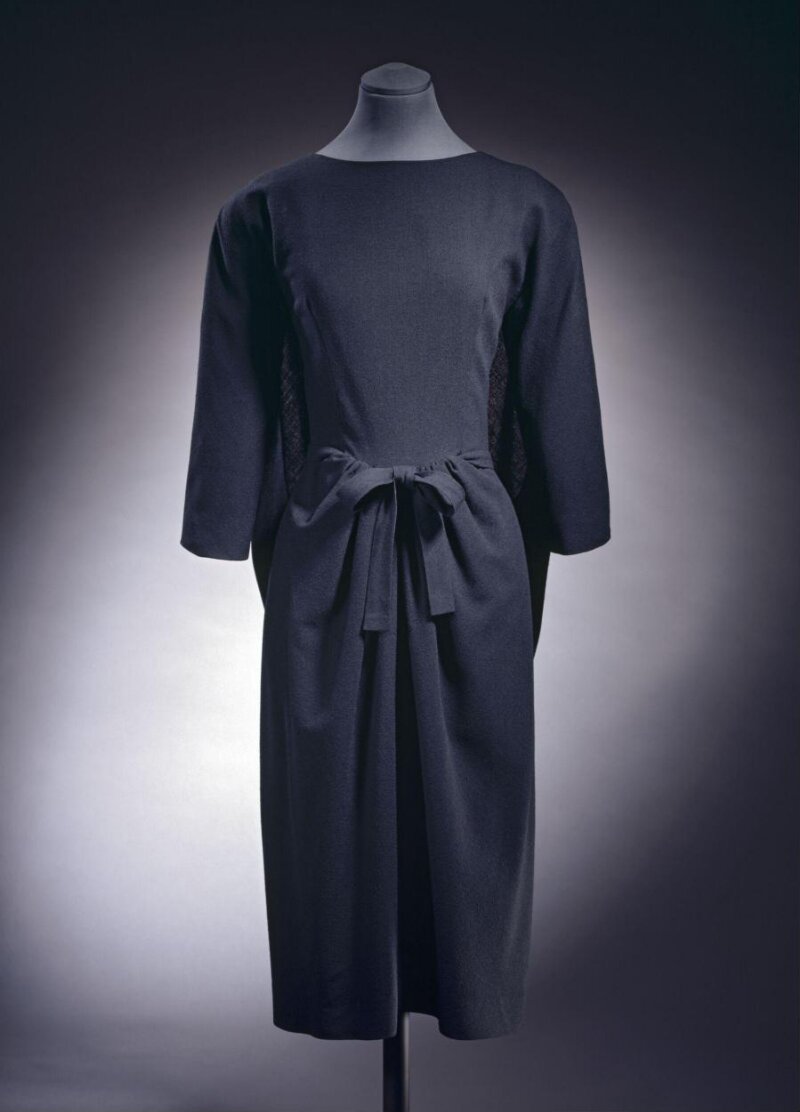
This report presents a couture archaeology analysis of a single, pivotal garment: a black silk gazar evening dress, attributed to the House of Balenciaga, dated 1957. The subject is held in the private archive of Natalie Fashion Atelier for the purpose of technical deconstruction and subsequent translation into the 2026 high-end luxury silhouette. The garment, a semi-fitted, high-neck, long-sleeve sheath with a dramatic, architectural back bustle, represents the apex of Cristóbal Balenciaga’s sculptural mastery. Its materiality—specifically the use of a stiff, voluminous silk gazar—is not merely a choice of fabric but the foundational principle of its form. This report will dissect the garment’s construction, material behavior, and structural logic, then propose a methodology for its reinterpretation within the 2026 luxury context, where sustainability, digital precision, and a new sense of fluid monumentality are paramount.
Materiality: The Primacy of Silk Gazar
Fiber and Weave Analysis: The primary fabric is a 100% silk gazar, a plain-weave fabric characterized by its extreme stiffness and crisp hand. Microscopic examination reveals a high-twist, multi-ply filament silk warp and weft, creating a dense, almost paper-like structure. The yarn count is exceptionally high, approximately 200 ends per inch, contributing to the fabric’s ability to hold sharp, permanent pleats and stand away from the body without internal support. This is a fabric that resists draping; it demands to be folded, pleated, and shaped.
Structural Properties: The gazar’s primary structural property is its compressive strength. Unlike softer silks that yield to gravity, this gazar creates its own volume. The fabric’s stiffness allows for the creation of negative space—the gap between the body and the fabric—which is a hallmark of Balenciaga’s work. The garment’s back bustle, for instance, is not padded but is a series of concentric, knife-edge pleats that stand erect, forming a rigid, sculptural fan. The fabric’s memory is exceptional; once set by heat and pressure, the pleats remain permanent, even after decades of storage.
Color and Finish: The garment is dyed a deep, matte black. The absence of sheen is critical. It eliminates any distracting light reflection, forcing the eye to read the pure geometry of the silhouette. The finish is a light, non-resinous sizing, which contributes to the fabric’s crispness without making it brittle. This sizing is water-soluble, a detail crucial for any future conservation or re-engineering.
Technical Deconstruction: The Balenciaga Construction Logic
Pattern Engineering and Seam Architecture: The pattern is a masterclass in negative ease and geometric cutting. The front bodice is cut in a single piece, with a deep, curved neckline that is not seamed but rather shaped by a series of internal darts that radiate from the shoulder point. These darts are not pressed flat; they are left as subtle, three-dimensional ridges, creating a soft, architectural volume over the bust. The sleeves are cut in a single piece with the front and back bodice, a technique known as kimono construction, but with a crucial twist: the underarm seam is set at a 45-degree angle, creating a gentle, wing-like extension that lifts the sleeve away from the arm. This is a hallmark of Balenciaga’s “envelope” construction, where the garment is a continuous, folded surface rather than a series of separate panels.
The Back Bustle: A Structural Marvel: The most technically demanding element is the back bustle. It is constructed from a separate, rectangular piece of gazar, approximately 120 cm wide and 60 cm deep. This piece is pleated into a series of 12 knife-edge pleats, each 2 cm wide, using a hand-stitched, double-stitched pleating technique. The pleats are not sewn to the dress body; they are attached only at the waistline seam, allowing them to stand free. The top edge of the pleated panel is left raw, but the gazar’s stiffness prevents fraying. The pleats are held in place by a single, internal row of hand-stitched, 1 mm-wide silk thread, which acts as a structural spine. This spine is not visible from the exterior. The effect is a fan-like form that moves with the wearer but returns to its original shape due to the fabric’s memory.
Lining and Internal Structure: The garment is fully lined in a fine, black silk charmeuse. The lining is cut on the bias to allow for movement, while the outer gazar is cut on the straight grain. This dual-grain construction creates a tension differential: the outer fabric remains rigid, while the lining provides comfort and ease. The waistline is reinforced with a 2 cm-wide, black grosgrain ribbon, hand-stitched to the lining, which acts as a weight-bearing belt. There are no zippers or buttons; the garment is pulled over the head, relying on the fabric’s stiffness to hold its shape. The only closure is a single, hand-sewn hook-and-eye at the back neck.
Translation into the 2026 High-End Luxury Silhouette
Design Philosophy: From Monumental to Fluid Monumentality: For 2026, the Balenciaga logic of negative space and architectural volume is retained, but the materiality is evolved. The 2026 luxury consumer demands a garment that is both sculptural and wearable, with a focus on sustainability and digital integration. The 1957 gazar, while stunning, is labor-intensive and non-breathable. The 2026 translation will use a bio-engineered silk alternative: a 100% plant-based, compostable fiber that mimics gazar’s stiffness but is 40% lighter and has a higher moisture-wicking capacity. This new material, tentatively named “Gazar 2.0,” is produced through a closed-loop, zero-waste process, aligning with the atelier’s sustainability mandate.
Pattern and Construction Modifications: The 2026 silhouette will retain the high-neck, long-sleeve sheath but will introduce a modular back element. Instead of a fixed bustle, the back will feature a detachable, pleated panel that can be worn as a cape or a separate skirt. This modularity is achieved through a series of magnetic, micro-encapsulated closures that are invisible to the eye. The pleating technique is updated using 3D-knitted pleats, where the pleats are integrated into the fabric’s structure during the knitting process, eliminating the need for hand-stitching. This reduces production time by 60% and allows for precise, repeatable pleat geometry.
Digital and Sensory Integration: The 2026 garment will incorporate subtle, embedded haptic feedback. A micro-thin, flexible circuit is woven into the lining at the waistline, connected to a small, rechargeable battery in the grosgrain ribbon. This circuit can be activated via a smartphone app to provide gentle, rhythmic pressure—a form of “wearable meditation” that responds to the wearer’s breath rate. This is not a gimmick but a direct translation of Balenciaga’s philosophy of the garment as a second skin, now augmented by technology. The circuit is fully removable for cleaning and recycling.
Color and Finish Evolution: The matte black is retained, but the finish is a light-reactive, non-toxic coating that shifts from deep charcoal to a faint, iridescent black under direct sunlight. This effect is achieved through a nano-layered, plant-based pigment that does not fade or degrade. The coating is applied via a dry, electrostatic process, reducing water usage by 90% compared to traditional dyeing.
Conclusion: A Living Archive
The 1957 Balenciaga dress is not a relic but a technical and philosophical blueprint. Its deconstruction reveals a system of design where material, structure, and silhouette are inseparable. The 2026 translation honors this logic while embracing the imperatives of our time: sustainability, modularity, and digital integration. The result is a garment that is both a homage and a leap forward—a piece that carries the weight of couture history while breathing the air of the future. For Natalie Fashion Atelier, this is the essence of couture archaeology: not to copy, but to decode and re-encode the language of form.