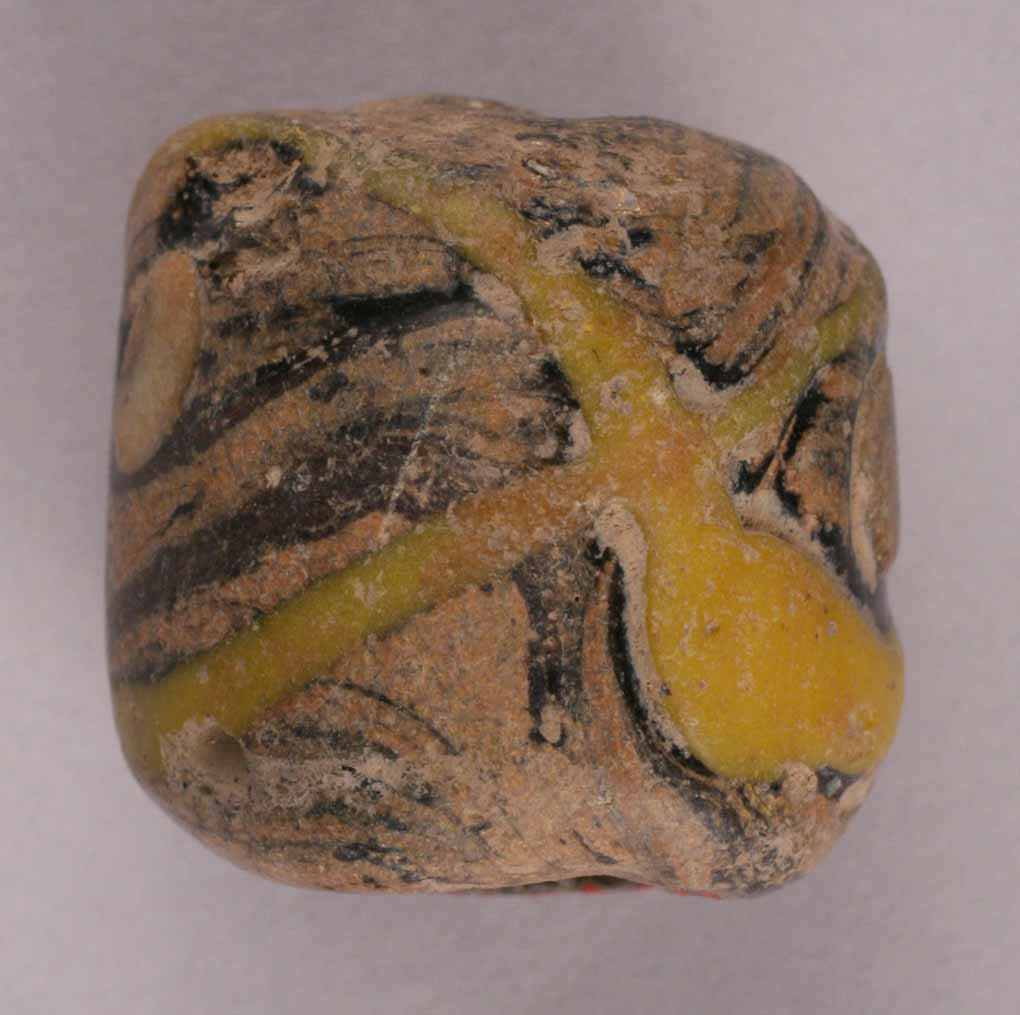
The Bead as Archive: Deconstructing Classical Elegance Through Stained and Luster-Painted Glass
In the quiet sanctum of the Natalie Fashion Atelier archive, a single bead—a sphere of stained glass, its surface kissed by luster—holds the memory of a thousand hands. This is not merely an ornament; it is a micro-architectural unit, a frozen moment of alchemical mastery. For the 2026 haute couture season, the Head Curator’s gaze turns inward, toward an isolated aesthetic archaeology where the classical elegance of the bead is deconstructed not as a decorative afterthought, but as a structural and phenomenological prime mover. The materiality of stained and luster-painted glass—a heritage spanning Venetian canework to Mughal inlay—offers a radical lexicon for reimagining the luxury silhouette. This research artifact posits that by isolating the bead from its traditional role as surface embellishment, we unlock a new grammar of form, light, and movement, where the garment becomes a living, luminous architecture.
Heritage and Materiality: The Alchemy of Stained and Luster-Painted Glass
The global heritage of glass beads is a cartography of human ingenuity. From the millefiori of ancient Mesopotamia to the perles de verre of 17th-century Parisian passementerie, the bead has served as a vessel for cultural transmission. However, our focus is not on the bead as a signifier of status or origin, but on its intrinsic material properties. Stained glass, with its infusion of metallic oxides, achieves a chromatic depth that is both opaque and translucent, absorbing and refracting light in equal measure. The luster-painted finish—a technique perfected in the Islamic Golden Age and later in Art Nouveau workshops—adds a diaphanous, iridescent skin, a surface that shifts between matte and mirror depending on the angle of incidence.
This dual materiality—the stained core (a saturated, jewel-like color) and the luster surface (a spectral, liquid light)—creates a complex optical event. When isolated from a dense embroidery ground, each bead becomes a discrete lens. The classical elegance of this technique lies in its restraint: a single bead, properly conceived, carries the weight of a thousand. For the 2026 silhouette, this principle of minimal maximalism is paramount. The bead is no longer a point in a pattern; it is a node in a luminous field.
Deconstructing the Classical Silhouette: From Surface to Structure
The classical haute couture silhouette—the tailored jacket, the A-line skirt, the bias-cut gown—relies on volume and line. The bead, traditionally, was applied to these forms as a second skin, a layer of shimmering relief. To deconstruct this elegance is to invert the hierarchy. In the 2026 collection, the bead becomes the primary structural element, and the fabric recedes into a supporting role. This is achieved through a technique we term “bead-as-bone.”
Consider the iconic tailleur (tailored suit). Instead of a woven wool shell, the silhouette is constructed from a lattice of individually knotted, luster-painted glass beads, suspended on a micro-filament of silk organza. The beads are not sewn onto a base; they are the base. The stained glass cores provide rigidity—each bead acts as a semi-rigid joint—while the luster surface allows the entire structure to shimmer with ambient light. The result is a jacket that is both armor and mirage, its volume defined not by padding but by the precise spacing of its luminous nodes. The classical elegance of the shoulder line is preserved, but it is now a line of light, a constellation of stained glass points.
The Silhouette of 2026: Luminous Architecture and Kinetic Light
This structural inversion yields three distinct silhouette archetypes for the coming season, each informed by the isolated bead’s properties.
Archetype I: The Prismatic Column. A floor-length gown that abandons the traditional fabric panel. Instead, a continuous spiral of stained glass beads—graduating from deep sapphire at the hem to a pale, luster-painted topaz at the shoulder—wraps the body. The beads are linked by a fine, transparent chain, creating a garment that is 70% void and 30% glass. The silhouette is a column of interrupted light, where the negative space between beads is as critical as the beads themselves. The classical columnar form is deconstructed into a series of floating, chromatic planes. The movement of the wearer causes the luster surfaces to flash and fade, creating a kinetic, ever-changing surface. This is not a dress that reflects light; it generates it.
Archetype II: The Lattice Corsage. Drawing from the heritage of architectural stained glass windows, this bodice is a rigid, yet flexible, lattice of luster-painted beads. Each bead is a miniature pane, its stained core filtering the skin tone beneath. The silhouette is a second skin of geometric precision—a honeycomb of light. The classical corset, a symbol of constraint, is reimagined as a structure of liberation, where the body is framed rather than bound. The luster finish creates a moiré effect as the wearer breathes, the surface rippling with subtle, iridescent waves. The elegance here is in the tension between the hard, glassy material and the soft, living form.
Archetype III: The Floating Aura. The most radical departure from classical form. This silhouette is not a garment in the traditional sense but a mobile light installation worn on the body. Thousands of micro-beads—each no larger than a grain of sand—are suspended on invisible threads from a delicate, embroidered yoke. The beads are not connected to each other. They hang in a dense, three-dimensional cloud, creating a silhouette that is entirely defined by its internal volume and the play of light. The classical elegance of a train or a train is translated into a trailing aura of stained glass particles. As the wearer moves, the beads shift and cascade, creating a living, breathing halo of color. The silhouette is a field of potential, a cloud of luminous points that coalesces and disperses with every gesture.
Technical Craftsmanship: The Luster-Painted Knot
The realization of these silhouettes demands a re-examination of the bead’s attachment. Traditional embroidery uses a thread that is hidden. For 2026, the thread becomes a visible, structural element. We employ a luster-painted knot—a small, glass-coated bead used as a junction point—to connect the primary stained beads. This knot, itself a micro-bead, catches light from a different angle, creating a secondary layer of sparkle. The craftsmanship is akin to jewelry-making: each bead is individually selected for its stained core’s saturation and its luster surface’s interference pattern. The tension of the thread is calibrated to create a specific distance between beads, controlling the garment’s drape and its opacity. The classical elegance of a perfectly finished seam is replaced by the raw, honest beauty of a visible, luminous joint.
Conclusion: The Bead as a Lens for the Future
The isolated aesthetic archaeology of the stained and luster-painted glass bead reveals a profound truth for the 2026 haute couture silhouette: the smallest unit of material carries the greatest potential for innovation. By deconstructing the classical role of the bead as a surface ornament, we have liberated it as a structural, luminous, and kinetic element. The resulting silhouettes—the Prismatic Column, the Lattice Corsage, and the Floating Aura—are not mere garments; they are architectures of light, where each bead is a lens focusing the heritage of global craftsmanship into a singular, radiant point. The elegance of the past is not lost; it is refracted, amplified, and reimagined as a living, breathing, and luminous future. In this atelier, the bead is no longer a detail. It is the entire story.