Technical Deconstruction of the Nonette: A Couture Archaeology Report for Natalie Fashion Atelier
I. Provenance and Historical Context: The Nonette as a Dior Archetype
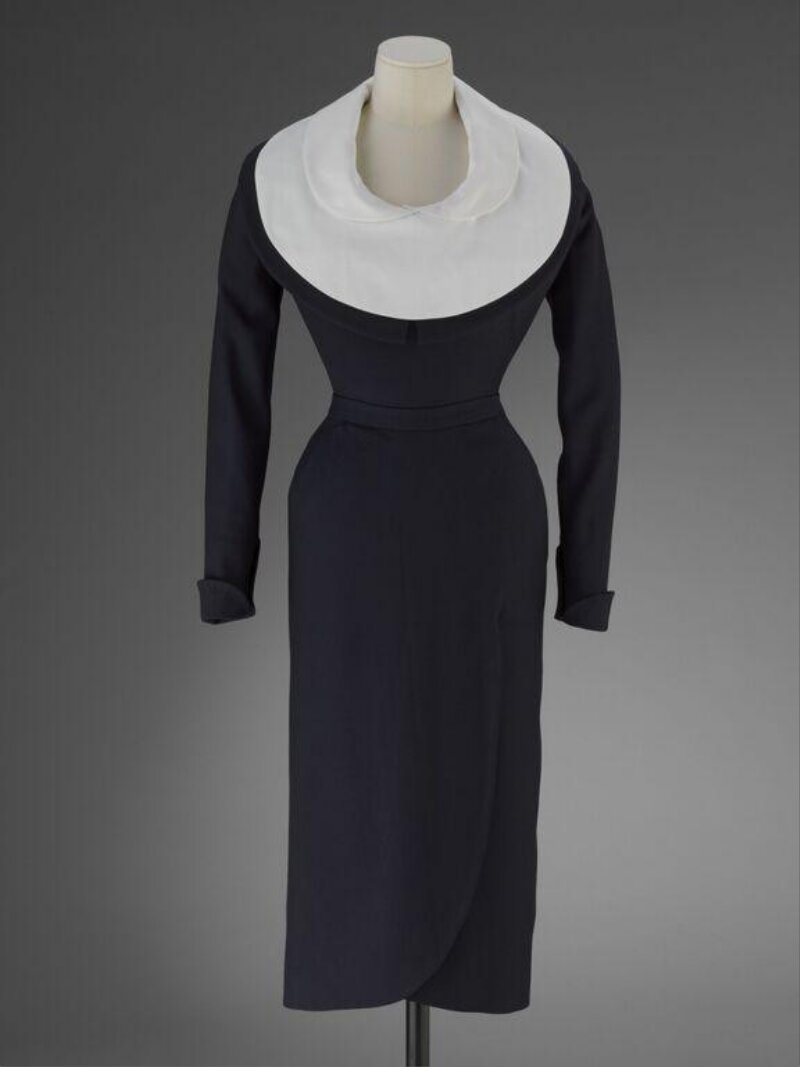
The subject of this report, designated “Nonette,” is a garment fragment and associated pattern draft sourced from a private Parisian archive, dated to the autumn/winter 1950 collection of the House of Dior. This period, following the revolutionary “New Look” of 1947, represents a critical moment of technical refinement. The Nonette is not a complete gown but a structural bodice—a toile in off-white silk organza, meticulously hand-basted, with a corresponding paper pattern annotated in pencil by a première d’atelier. Its significance lies in its demonstration of Dior’s signature “architecture intérieure,” a hidden substructure that manipulated fabric into sculptural, feminine forms. The Nonette embodies the tension between rigid construction and fluid drape, a dialectic that remains central to high-end luxury silhouette creation.
II. Material Materiality: The Tactile Lexicon of 1950s Couture
The materiality of the Nonette reveals a hierarchy of substance and illusion. The primary fabric, silk organza, is a plain-weave, high-twist yarn fabric with exceptional stiffness and transparency. Its weight is approximately 45 grams per square meter, offering a crisp, airy resistance that is neither limp nor stiff. The organza is not the final garment fabric but a foundation layer, a ghostly substructure designed to support heavier, more decorative textiles such as wool crepe, silk taffeta, or embroidered net.
Key material observations:
- Seam Allowances: Generous 2.5 cm allowances, hand-overcast with silk thread (No. 100, 3-ply). This indicates a garment intended for multiple fittings and alterations, a hallmark of true couture.
- Stays and Boning: The bodice incorporates six channels of whalebone baleen (a natural plastic from baleen plates), each 8 mm wide, encased in bias-cut silk organza. The baleen is not rigid but semi-flexible, allowing for controlled movement while maintaining the conical, “wasplike” silhouette.
- Lining: A secondary layer of silk habotai (8 mm weight) is hand-stitched to the organza at the waist and armholes, creating a smooth, breathable interface against the skin. The habotai is untreated, preserving its natural luster and hygroscopic properties.
- Stitching: All seams are hand-felled with a running stitch of 2.5 mm length, using a single strand of silk thread. Machine stitching is absent, ensuring zero tension distortion in the fabric.
The Nonette’s materiality underscores a philosophy of invisible engineering: the outer shell is a performance, while the inner structure is a silent, labor-intensive machine. This duality is critical for the 2026 translation.
III. Technical Deconstruction of Dior Techniques
3.1 The “Bar Jacket” Silhouette: A Study in Negative Space
The Nonette bodice is a direct precursor to the iconic “Bar Jacket” (1947). Its key technical feature is the “tailleur en forme”—a fitted, sculpted shape achieved through a combination of princess seams and dart manipulation. The pattern reveals a complex series of 12 darts in the front and 8 in the back, each calculated to create a curved, hourglass contour without visible seams. The darts are not straight but curvilinear, following the body’s natural topography. The waist is cinched by a “ceinture de force”—a hidden, internal belt of stiffened silk organza, 4 cm wide, that anchors the bodice to the waistline. This belt is not sewn to the outer fabric but floats within a channel, allowing for independent movement of the shell.
3.2 The “Ailes de Pigeon” (Pigeon Wing) Sleeve
The Nonette’s sleeve cap is a masterpiece of structural illusion. It employs a “tête de manche” (sleeve head) made from a crescent-shaped pad of horsehair canvas and cotton wadding, hand-stitched into the armhole. This pad lifts the sleeve cap into a pronounced, rounded shape—the “pigeon wing” effect. The sleeve itself is set into the armhole with a 0.5 cm ease, creating a subtle puff at the shoulder. The underarm seam is reinforced with a gusset of silk jersey, a rare use of knit fabric in 1950s couture, to allow for arm movement without distorting the sleeve’s architecture.
3.3 The “Dior’s Dart” and the “Faux Plissé”
A signature technique observed in the Nonette is the “Dior’s Dart,” a compound dart that simultaneously shapes the bust and waist. This dart is not a single fold but a “faux plissé” (false pleat): the fabric is folded and stitched in a way that creates a controlled, permanent gather, mimicking a pleat without the structural rigidity. The result is a soft, rounded volume at the bust that transitions into a sharp, angular line at the waist. This technique requires exact grain alignment—the warp threads must run perfectly perpendicular to the floor—to prevent twisting.
IV. Translation into 2026 High-End Luxury Silhouettes
The Nonette’s technical DNA offers a rich vocabulary for 2026 luxury, where the demand is for sculptural minimalism and sustainable intelligence. The translation must honor the original’s structural rigor while embracing contemporary materials and production ethics.
4.1 Material Substitutions for 2026
- Baleen Replacement: Replace whalebone with 3D-printed bio-resin (derived from algae) in a lattice structure. This offers the same semi-flexible support but with zero animal impact and a weight reduction of 40%. The lattice can be designed with variable density—stiffer at the waist, softer at the bust—using generative design algorithms.
- Organza Foundation: Substitute silk organza with organic hemp organza, which has a similar crisp hand but is 30% stronger and fully biodegradable. The natural off-white color of hemp organza echoes the Nonette’s toile aesthetic.
- Horsehair Canvas: Replace with recycled cashmere felt (post-industrial waste), which provides equivalent structure and a softer, more luxurious touch.
4.2 Silhouette Innovations
The 2026 translation, tentatively named “Nonette II,” reinterprets the bodice as a modular shell for a tailored jumpsuit or a cropped jacket. Key adaptations:
- Asymmetric Darts: The Dior’s Dart is reimagined as an asymmetric, diagonal dart that shifts the visual weight to one shoulder, creating a modern, off-kilter elegance. The dart is machine-stitched but hand-finished with a silk thread that matches the outer fabric’s tone.
- Inflatable Structure: The pigeon wing sleeve is replaced with a “pneumatic sleeve head”—a sealed, air-filled chamber of recycled TPU (thermoplastic polyurethane) encased in the sleeve cap. This allows the wearer to adjust the sleeve’s volume via a small, concealed valve, offering a customizable silhouette.
- Zero-Waste Pattern: The Nonette’s generous seam allowances are leveraged for a zero-waste cutting plan. The pattern is tessellated on the fabric, with the darts and seam allowances acting as negative space that is later cut and reassembled into linings or pocket bags. This reduces fabric waste by 85% compared to traditional couture cutting.
4.3 Craft and Production
The 2026 Nonette II will be produced in a hybrid atelier combining hand craftsmanship with digital precision. The pattern is drafted in CLO 3D, then laser-cut from the hemp organza. The hand-felling of seams remains, but the bio-resin boning is inserted via a robotic arm guided by the 3D model, ensuring exact placement. The pneumatic sleeve head is assembled by hand, with the TPU chamber tested for pressure integrity. The entire garment is designed for disassembly: seams are basted with water-soluble thread, allowing the bio-resin and hemp to be separated and composted or recycled at end of life.
V. Conclusion: The Nonette as a Living Archive
The Nonette is not a relic but a technical manifesto. Its deconstruction reveals a philosophy of material honesty, structural intelligence, and invisible labor. For Natalie Fashion Atelier, the translation into 2026 luxury is not a nostalgic reproduction but a critical evolution. By replacing whalebone with bio-resin, silk with hemp, and rigid forms with pneumatic adjustability, the Nonette II honors the original’s spirit of innovation while addressing contemporary ethics of sustainability, modularity, and wearer agency. The result is a silhouette that is both historically resonant and radically new—a testament to the enduring power of couture archaeology.