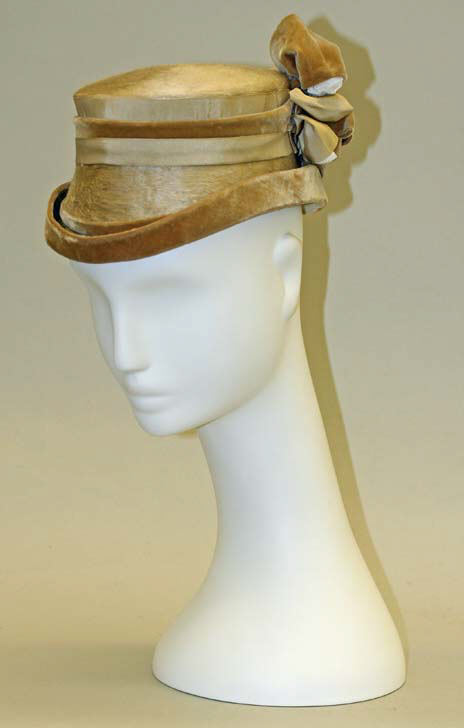
Deconstructing the Silk Hat: An Aesthetic Archaeology for 2026
Introduction: The Hat as a Silent Archive
Within the hallowed archives of Natalie Fashion Atelier, the hat—specifically the French silk hat from the late 19th century—exists not merely as an accessory, but as a structural manifesto. This artifact, isolated through the lens of aesthetic archaeology, reveals a sophisticated dialogue between material constraint and sculptural freedom. The silk, in its raw and manipulated forms, becomes a primary text from which we can decode the architectural principles of classical elegance. For the 2026 luxury silhouette, this heritage informs a radical departure from ephemeral trends, anchoring the collection in a tectonic materiality that redefines volume, drape, and the very notion of adornment.
Materiality of the Silk: From Rigidity to Fluid Architecture
The silk employed in the historical hat is not the supple, flowing fabric of a gown. It is a structured silk, often a heavy duchesse satin or a stiffened taffeta, engineered to hold a precise shape. This paradox—a delicate fiber rendered architecturally rigid—is the cornerstone of our deconstruction. The hat’s brim, for instance, is not simply a flat plane; it is a cantilevered structure, its integrity derived from the silk’s warp and weft, often reinforced with internal wire or buckram, yet the outer face remains pure, unadulterated silk. This teaches us that luxury lies in the invisible engineering of the material.
For 2026, this principle translates directly into the silhouette of the haute couture garment. We are not replicating the hat; we are abstracting its structural logic. The silk is treated as a composite material. Through a process of thermal bonding and micro-pleating, we create zones of differential stiffness. The bodice of a gown, for example, will feature a silk panel that transitions from a fluid, bias-cut drape at the waist to a rigid, sculpted shoulder that mimics the hat’s brim. This is not decoration; it is functional sculpture. The silk’s inherent luminosity is preserved, but its hand is transformed, allowing the garment to stand independently, to create negative space, and to redefine the wearer’s silhouette as a monument of controlled tension.
The Classical Elegance of the Crown: Volume and Negative Space
The crown of the historical hat—whether a tall, cylindrical toque or a softly rounded dome—exemplifies the mastery of volumetric manipulation. The silk is gathered, pleated, or smoothly stretched over a form, creating a precise relationship between the interior void and the exterior surface. This is aesthetic archaeology at its most potent: the hat is a hollow form, a sculpture of absence. The classical elegance derives not from the material itself, but from the tension between the contained air and the silk’s surface.
In the 2026 luxury silhouette, this concept is inverted and expanded. We introduce the “negative volume” technique. A silk tulle, layered and stiffened, is used to create a phantom crown—a translucent, architectural halo that floats above the head or shoulders. This is not a hat, but a silhouette of a hat. The silk’s transparency allows the skin and hair to become part of the design, creating a dialogue between the solid and the ethereal. For the body, we apply this logic to the hip and shoulder lines. A silk organza, pleated into a geodesic dome, creates a structured puff sleeve that is hollow inside, its volume defined by the air it contains. The classical elegance is preserved through the precision of the pleating—every fold is a calculated vector, every seam a line of force. The result is a silhouette that is both monumental and weightless, a direct descendant of the hat’s architectural crown.
Brim Dynamics: The Edge as a Design Element
The brim of the silk hat is a masterclass in peripheral design. Its shape—whether a sweeping cartwheel or a sharp, upturned cloche—defines the hat’s character. The edge is not a termination; it is a line of tension. The silk is often bound, wired, or rolled to create a crisp, unyielding boundary. This edge discipline is a critical lesson for 2026.
We apply the brim’s logic to the hemlines and necklines of the collection. The silk is not left to fall naturally. Instead, it is structured at the edge. A floor-length gown will feature a hem that is a sculpted flange, a continuous curve of stiffened silk that creates a subtle, floating platform. This is achieved through a wire-core encased in silk grosgrain, a technique borrowed directly from millinery. The neckline of a jacket is treated similarly: a sharp, upturned collar that echoes the brim of a cloche, framing the face with a geometric precision. The classical elegance is maintained because the edge is uncompromisingly clean. There is no fray, no soft roll—only a pure, architectural line. This discipline transforms the garment from a piece of clothing into a wearable artifact, a direct translation of the hat’s peripheral authority.
Ornament and Restraint: The Silk as a Singular Statement
The historical French silk hat is often devoid of excessive ornament. Its beauty lies in the singularity of the material and the purity of the form. A single silk rose, a precisely placed feather, or a ribbon band are not decorations; they are punctuation marks in the architectural sentence. This restraint is the ultimate expression of classical elegance. It is a curatorial decision—every element must justify its existence.
For 2026, this principle dictates a radical reduction. The silhouette is not layered with appliqués or embroidery. Instead, the silk itself becomes the ornament. Through jacquard weaving, we embed the hat’s structural motifs—the curve of a brim, the arc of a crown—directly into the fabric’s pattern. A gown’s surface is a topographical map of the hat’s geometry, visible only upon close inspection. The only accent is a single, hand-sculpted silk flower at the shoulder or waist, its petals engineered to mimic the hat’s pleated crown. This is not nostalgia; it is aesthetic archaeology made contemporary. The ornament is derived from the structure, not applied to it. The 2026 silhouette thus achieves a monastic luxury, where the material’s inherent beauty and the precision of its construction are the only necessary statements.
Conclusion: The Hat as a Silhouette Generator
The isolated aesthetic archaeology of the French silk hat reveals a profound truth: classical elegance is not a style, but a system of structural principles. The hat teaches us about material integrity, volumetric discipline, edge precision, and ornamental restraint. For the 2026 luxury silhouette, these principles are not historical references; they are generative algorithms. The silk, once a material for a single accessory, now becomes the primary structural medium for the entire garment. The result is a collection that is timeless yet radical, a direct lineage from the ateliers of the 19th century to the runways of the near future. The hat is not worn; it is inhabited—and now, so is the silhouette it has inspired.