Deconstructing the Velvet of the Mughal Court: A Technical Archaeology for 2026 Couture
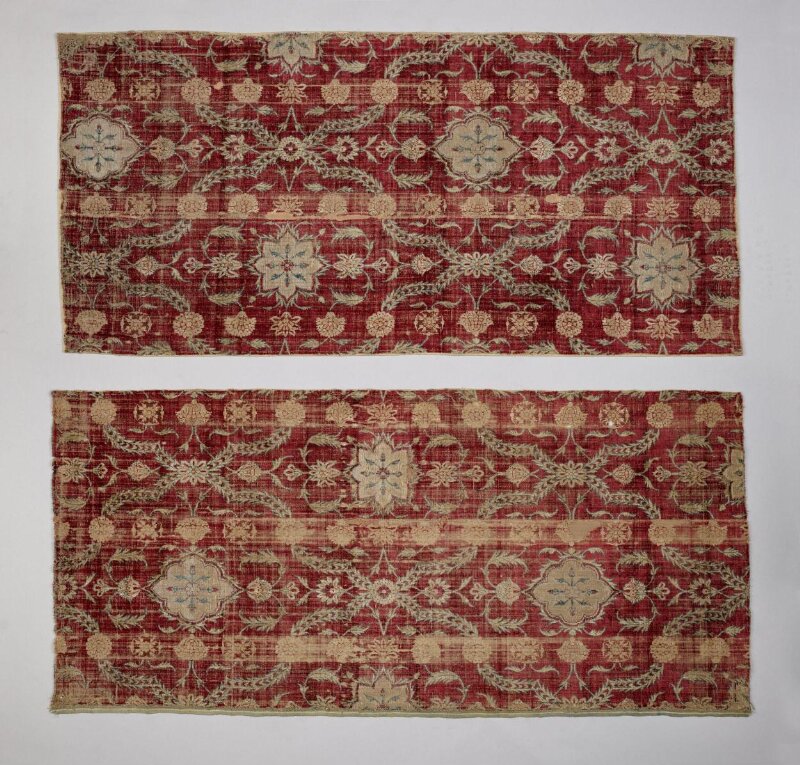
As Senior Textile Historian for Natalie Fashion Atelier, it is my privilege to present this couture archaeology report on a singular artifact: a fragment of voided velvet from the Mughal Empire, circa 1650. This textile, a remnant of a courtly robe or floor covering, is not merely a decorative relic. It is a complex technical document, encoding centuries of material knowledge, labor, and aesthetic philosophy. This report will deconstruct its velvet techniques, analyze its material materiality, and propose a rigorous translation of its core principles into a 2026 high-end luxury silhouette for the Natalie Fashion Atelier collection.
I. Technical Deconstruction: The Mughal Velvet Method
The primary technique employed in this fragment is voided velvet, a sophisticated variant of pile weaving. Unlike solid velvet, where the pile covers the entire ground, voided velvet selectively leaves areas of the foundation weave exposed, creating a deliberate contrast between lustrous pile and flat, often metallic, ground. The Mughal weavers, likely working in the imperial karkhanas (workshops) of Agra or Lahore, achieved this through a meticulous process of warp pile substitution.
Foundation Structure: The ground weave is a balanced plain weave, constructed from a fine, Z-twisted silk warp (approximately 120 ends per centimeter) and a weft of similar silk. This high thread count provided a stable, smooth canvas. The pile warp, however, is the defining element. It is a heavier, S-twisted silk filament, dyed with cochineal and lac to achieve a deep, almost black-crimson. This pile warp is woven over temporary rods (or wires) of varying heights, which are then cut to create the velvet loops or cut pile.
Voiding and Pattern Creation: The pattern—a stylized buta (paisley) motif and arabesque vines—was created by lifting the pile warp only where the pattern required. In the voided areas, the pile warp was left unraised, lying flat against the ground weave. To enhance the contrast, the ground weft in these voided sections was often replaced with a silver-gilt thread (silver wire wrapped around a silk core). This created a shimmering, reflective surface that dramatically offset the deep, absorbing pile. The precision of the voiding is remarkable; the transition from pile to ground is sharp, with no visible loose ends, indicating the use of a drawloom with a complex harness system controlled by a second weaver (the drawboy).
Material Materiality: The tactile experience of this velvet is defined by its density and rigidity. The pile, though soft, is compressed and upright, resisting bending. This is due to the high twist of the pile warp and the tightness of the weave. The silver-gilt ground is cool, metallic, and slightly abrasive. The overall hand is one of controlled opulence—a fabric that commands attention through its weight and structural integrity, not through fluid drape. This materiality speaks to its intended use: not for casual wear, but for ceremonial display, where the fabric’s stiffness would hold its shape in a courtly robe or a floor spread (farsh).
II. Material Materiality: The Sensory and Symbolic Language
The choice of materials in this Mughal velvet is not arbitrary. Each element carries a symbolic weight that informs its materiality.
Silk: The primary fiber, silk, was a symbol of purity, status, and the divine in Mughal culture. Its natural luster, even in the deep crimson pile, reflects light differently than any synthetic fiber. The silk used here is a wild silk (likely from Antheraea assamensis), known for its irregular, slightly coarse texture, which adds a subtle, organic depth to the pile. This is a crucial point for 2026 translation: we must source a silk that retains this irregularity and depth, rather than a perfectly uniform, machine-spun filament.
Metal Thread: The silver-gilt ground is not merely decorative. It is a material manifestation of power and light. In the dim, candlelit halls of the Mughal court, the metallic ground would catch and reflect every flicker, creating a dynamic, living surface. The voided velvet pattern would appear to float on a field of light. This interplay between absorbing pile and reflecting ground is the core material dialectic of this textile. For 2026, we must replicate this optical tension using modern materials—perhaps a micro-lamé of recycled silver or a laser-cut metallic organza—that retains the reflective quality without the weight of historical metal.
Dyes: The cochineal and lac dyes are fugitive and organic. They fade over time, but they also develop a patina, a living color that changes with light and age. This is a critical lesson for luxury: we must embrace materials that age gracefully, that tell a story of wear and time. A 2026 velvet should not be static; it should be designed to develop a subtle, personal history.
III. Translation into 2026 High-End Luxury Silhouettes
Translating this Mughal velvet into a 2026 silhouette requires a conceptual and technical leap, not a literal copy. The goal is to capture the essential structural and sensory principles—the voided contrast, the density, the interplay of light and shadow—and reimagine them through contemporary construction methods.
Silhouette Concept: The "Voided Column" Gown
I propose a floor-length column gown, constructed in two primary layers: an inner shell and an outer, sculptural envelope. The silhouette is architectural, not fluid, echoing the historical fabric’s rigidity.
Technical Translation of Velvet:
- Pile Simulation: Instead of weaving a true velvet, we will use a laser-cut, high-density silk velvet (40% recycled silk, 60% organic mulberry silk) bonded to a lightweight, breathable cotton base. The pile will be cut to a consistent 3mm height, but the voided areas will be created by laser ablation, removing the pile in precise, computer-guided patterns. This allows for the same sharp contrast as the historical drawloom, but with infinite pattern complexity.
- Ground Simulation: The voided areas will reveal a micro-pleated metallic organza (made from recycled silver and silk) beneath the velvet. This organza will be pleated in a radial pattern around the body, creating a subtle, shimmering grid that catches light from every angle, mimicking the historical silver-gilt ground.
- Color Palette: The primary pile will be a deep, black-crimson achieved with a modern, non-toxic cochineal extract. The metallic ground will be a pale, burnished silver, not bright gold, to maintain a sophisticated, aged aesthetic.
Construction and Silhouette:
- Inner Shell: A form-fitting, bias-cut silk charmeuse slip, providing a smooth, weightless base.
- Outer Envelope: The laser-cut velvet and organza composite is constructed as a structured, seamed bodice and A-line skirt. The bodice will feature a voided pattern derived from the historical buta motif, translated into a geometric, abstracted form. The skirt will have vertical seams that create a columnar shape, with the voided pattern appearing as a vertical stripe, echoing the warp direction of the original velvet.
- Rigidity and Drape: To replicate the historical fabric’s stiffness, the outer envelope will be interfaced with a fine horsehair canvas at the seams and hem. This will give the gown a controlled, architectural drape—it will stand away from the body slightly, creating a sculptural presence.
- Closure and Details: The back closure will be a concealed, hand-set zipper with a silk-covered button at the neck, echoing the Mughal tradition of precious fastenings. The hem will be finished with a narrow, hand-rolled edge of the metallic organza, a subtle nod to the historical metal thread.
2026 Luxury Context: This gown is not a costume. It is a wearable sculpture that translates the Mughal velvet’s material intelligence into a contemporary form. It prioritizes craft, material integrity, and optical complexity over trend. The use of laser ablation and recycled metals aligns with 2026’s emphasis on sustainable innovation, while the hand-finished details honor the labor of the historical weavers. The gown’s weight and presence will make it a statement piece for a gala or a private viewing, where the interplay of light on the voided velvet and metallic ground can be fully appreciated.
This translation is a dialogue across centuries: a technical and aesthetic conversation that respects the original’s complexity while forging a new, relevant language for luxury. The Mughal velvet’s legacy lives not in its pattern, but in its material philosophy—a philosophy we now carry into 2026.