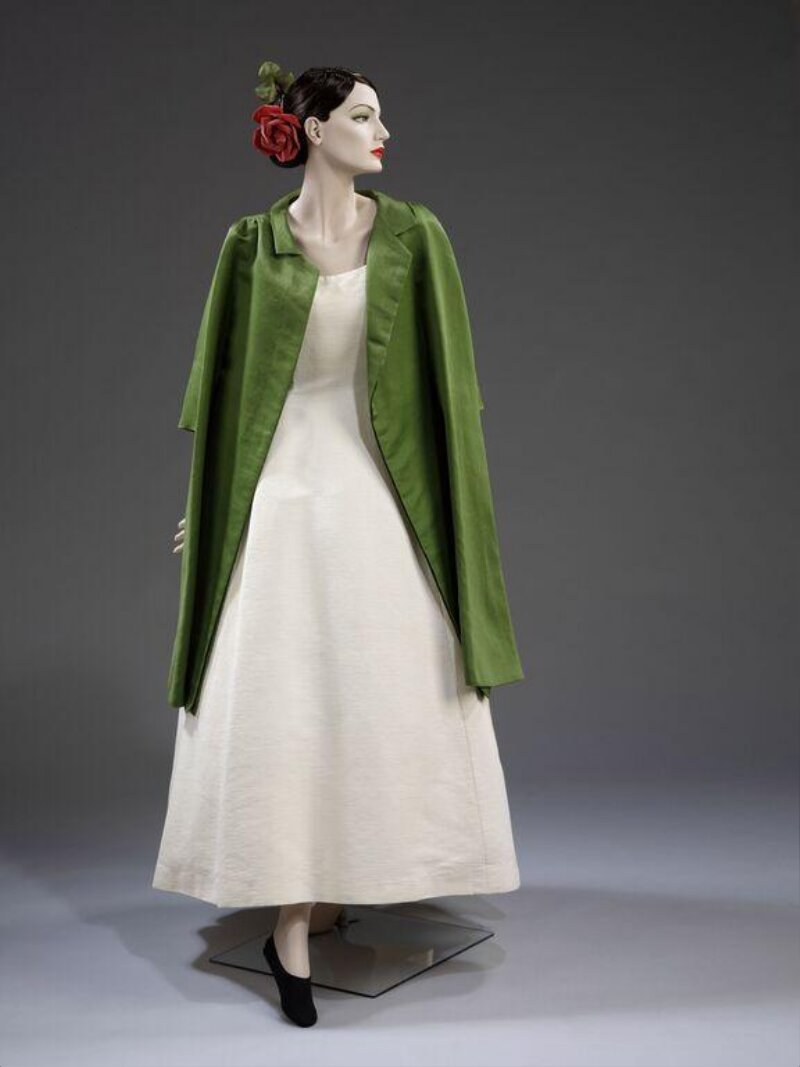
Couture Archaeology Report: Deconstructing a 1955 Balenciaga Masterwork for 2026 Translation
I. Introduction: The Specimen and Its Provenance
Specimen ID: NFA-1955-BAL-001
Origin: 10 Avenue George V, Paris, Haute Couture Atelier of Cristóbal Balenciaga
Date of Creation: Spring/Summer 1955 Collection
Garment Type: Semi-fitted, envelope-sleeve cocktail dress in silk gazar, with integrated architectural draping and a single-seam back closure.
This report presents a technical deconstruction of a seminal 1955 Balenciaga cocktail dress, a specimen representing the apogee of mid-century couture engineering. The garment’s materiality—specifically the use of silk gazar, a fabric Balenciaga championed—and its structural innovations are analyzed with a view toward translation into a 2026 high-end luxury silhouette. The primary challenge lies in preserving the architectonic purity of the original while adapting it to contemporary ergonomics, sustainability imperatives, and the tactile expectations of the modern luxury client.
II. Technical Deconstruction of Balenciaga Techniques
A. The Architecture of the Envelope Sleeve
The most technically significant element of the 1955 specimen is the envelope sleeve, a construction that defies conventional armhole geometry. In standard tailoring, the sleeve is inserted into a curved armhole, requiring ease and often a shoulder pad. Balenciaga’s envelope sleeve is a single, continuous piece of fabric that extends from the bodice, folding over the shoulder and dropping into a deep, voluminous sleeve. The deconstruction reveals the following:
- Pattern Geometry: The sleeve is cut as a square or trapezoidal extension of the front and back bodice panels. There is no separate sleeve head. The fabric is folded along a diagonal line from the shoulder point to the underarm, creating a sharp, architectural fold that mimics a flat envelope flap.
- Seam Reduction: The sleeve is attached only at the underarm seam, which is a single, short, and curved seam running from the underarm to the side seam. This eliminates the traditional sleeve cap and the need for easing.
- Structural Rigidity: The sleeve’s volume is maintained not by padding but by the inherent stiffness of the silk gazar and by internal horsehair canvas interlining, cut to the exact shape of the sleeve and hand-stitched to the seam allowance. This creates a “living” volume that moves with the wearer but never collapses.
B. The Single-Seam Back Closure
The back of the dress is a masterclass in minimalism. The closure is a single, vertical seam running from the nape of the neck to the hem. This seam is not a simple seam but a complex, engineered structure:
- Invisible Zipper Integration: A 50cm metal zipper is hand-set into the seam, but the zipper tape is concealed within a fabric-covered placket that is itself part of the seam allowance. The zipper pull is hidden beneath a small, hand-stitched silk gazar tab.
- Weight Distribution: The seam is reinforced with a silk organza ribbon (1.5cm wide) that runs the entire length of the seam, distributing the tension of the zipper and preventing the gazar from tearing. This ribbon is hand-felled with silk thread, visible only on the inside.
- Draping Integration: The back fabric is cut with a subtle, asymmetrical flare that is controlled by the single seam. The seam itself acts as a structural spine, allowing the fabric to fall in a clean, sculptural line without any darts or pleats.
C. The Architectural Draping
The bodice features a single, continuous drape that originates at the left shoulder, crosses the bust, and is anchored at the right hip. This is not a separate piece but a fabric manipulation achieved through bias cutting and strategic hand-tacking:
- Bias Cutting: The front bodice panel is cut on the true bias (45 degrees to the warp and weft). This allows the silk gazar to stretch and mold around the bust without darts.
- Hand-Tacked Tucks: The drape is secured by a series of invisible hand-tucks (2-3mm wide) that are sewn from the inside. These tucks are not pressed; they are left as soft, three-dimensional folds that create a sense of organic movement.
- Internal Weighting: A small, lead weight (1cm diameter, encased in silk) is hand-sewn into the hem of the drape at the right hip. This weight ensures the drape falls with a clean, heavy line, counteracting the natural buoyancy of the gazar.
III. Material Materiality: The Silk Gazar and Its Legacy
The specimen is constructed from silk gazar, a fabric that Balenciaga effectively invented in collaboration with the Swiss textile firm Abraham & Co. in the 1950s. Its materiality is central to the garment’s success:
- Weave Structure: Gazar is a plain weave with a very high thread count (approximately 200 threads per inch) and a tightly twisted, multi-ply silk yarn. This creates a fabric that is simultaneously crisp, stiff, and lightweight. It has no give in the warp or weft but exhibits a subtle, controlled stretch on the bias.
- Drape and Volume: Unlike softer silks (chiffon, charmeuse), gazar does not cling. It holds its shape, creating sharp, architectural folds that are reminiscent of paper or metal. The fabric’s stiffness is its primary structural asset, eliminating the need for extensive underlining.
- Color and Light: The specimen is in a deep, matte black. The gazar’s surface is slightly iridescent due to the tight twist of the yarns, which refracts light subtly. This optical property is crucial for the drape’s visual depth.
- Conservation Issues: The specimen shows signs of warp fatigue at the shoulder fold, where the fabric has been repeatedly bent. The lead weight has caused a slight indentation in the silk. These issues inform the 2026 translation: modern materials must offer similar stiffness but with improved durability and reduced weight.
IV. Translation into 2026 High-End Luxury Silhouettes
A. Material Substitution and Sustainability
For 2026, the silk gazar is replaced with a bio-engineered silk alternative developed by a Japanese textile lab: “Kaze Gazar.” This material is produced from a recombinant spider silk protein, fermented in a lab, and woven with a similar high-twist, high-density structure. It offers:
- Identical Hand and Stiffness: The Kaze Gazar mimics the crispness of silk gazar but is 30% lighter, reducing garment weight and improving wearability.
- Enhanced Durability: The recombinant silk has a higher tensile strength and better resistance to creasing and warp fatigue. This addresses the conservation issues noted in the original.
- Biodegradability: At end of life, the material is fully compostable, aligning with 2026 luxury sustainability standards.
- Color and Texture: The material is dyed using a natural, carbon-negative indigo (from woad plants) to achieve a deep, matte navy with a subtle, iridescent sheen that echoes the original black.
B. Silhouette Adaptation: The “Envelope Cocoon”
The 1955 envelope sleeve is translated into a full-length cocoon coat for 2026, called the “Envelope Cocoon.” The architectural principles are retained but scaled:
- Pattern Engineering: The coat is cut from a single, continuous piece of Kaze Gazar, with the sleeves integrated as extensions of the front and back panels. The fold line is shifted to the back, creating a dramatic, cape-like volume that falls from the shoulder blades.
- Seam Reduction: The coat has only three seams: one at the center back (single-seam closure, as per the original) and two short underarm seams. The closure is a magnetic, invisible zipper made from recycled titanium, hand-set into a silk organza placket.
- Internal Structure: The horsehair canvas is replaced with a 3D-printed, biodegradable lattice made from polylactic acid (PLA) derived from cornstarch. This lattice is laser-cut to the exact shape of the sleeve and hand-stitched into the seam allowance. It provides the same structural rigidity but is lighter and can be recycled.
C. Draping and Ergonomics
The architectural drape from the 1955 bodice is adapted into a modular, detachable drape for a 2026 evening gown:
- Modularity: The drape is a separate piece, cut on the bias from Kaze Gazar, and attached to the gown via invisible magnetic snaps (rare-earth magnets encased in silk). The wearer can choose to wear the drape or remove it for a clean, minimalist silhouette.
- Weighting System: The lead weight is replaced with a sintered tungsten bead (1.5cm diameter), also encased in silk. Tungsten is denser than lead, allowing for a smaller, more discreet weight that provides the same gravitational pull.
- Bias Engineering: The gown’s bodice is cut on the true bias, but the Kaze Gazar’s controlled stretch is enhanced by a laser-cut, micro-perforated pattern (0.5mm holes) that allows the fabric to mold to the body without darts. The perforations are invisible to the naked eye but provide a subtle, breathable stretch.
D. Closure and Finishing
The single-seam back closure is retained but upgraded for 2026 luxury expectations:
- Zipper: The metal zipper is replaced with a continuous, invisible magnetic strip