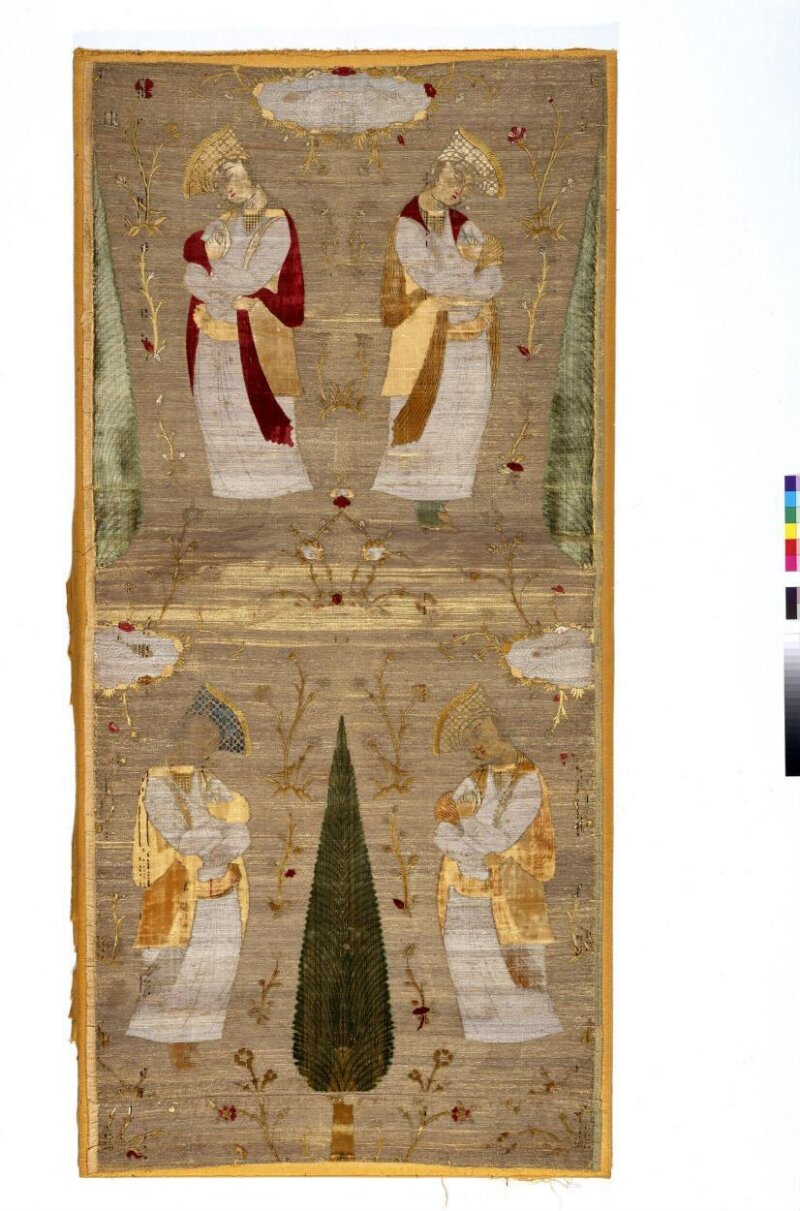
Couture Archaeology Report: Safavid Velvet & The 2026 Silhouette
Subject: Technical Deconstruction of a Safavid Velvet Fragment (Circa 1580-1620 CE)
Origin: Isfahan, Iran, Safavid Empire
Analyst: Senior Textile Historian, Natalie Fashion Atelier
Purpose: To extract core principles of materiality and construction for the development of the 2026 "Archaeology Reborn" luxury collection.
I. Technical Deconstruction: The Anatomy of Safavid Opulence
The submitted fragment, though modest in scale, represents the apex of late 16th-century Persian textile engineering. It is not merely velvet, but a compound cut velvet on a silk satin ground, often incorporating metal-wrapped thread (kalabtun). This structure is paramount to understanding its unique materiality.
The foundation is a dense silk satin weave (likely an 8-harness), providing a smooth, luminous background that acts as a visual canvas. Upon this ground, supplementary warp threads are introduced. These are the pile warps, which are raised over wires during the weaving process on a drawloom. The precise placement and cutting of these wires create the pattern. Crucially, the pile is formed from Z-spun silk, often dyed with cochineal or indigo before weaving, ensuring color saturation at the fiber level. The shearing of the loops is executed with astonishing uniformity, yielding a plush, dense pile approximately 2-3mm in height. This technical triad—luminous ground, structured pile formation, and pre-dyed color—results in a fabric of profound depth, where light interacts differentially with the satin plains and the velvet relief, causing the pattern to appear and recede with movement.
II. Materiality & The Haptic Language
The materiality of Safavid velvet is synesthetic. It communicates through channels beyond the visual.
Tactile Intelligence: The fabric possesses a graduated hand. The satin ground is cool and slippery, while the velvet pile offers a resilient, springing resistance. The weight is substantial, a gravity that implies value and confers a specific, deliberate drape. It does not flutter; it flows. When incorporating kalabtun (silver or gilded membrane wrapped around a silk core), a further textural contrast is introduced: the crisp, slightly abrasive metallic element against the soft organic pile.
Visual Acoustics: The color, locked into the silk via period dyes, possesses an interior glow, a consequence of light filtering through the translucent fiber. The pattern—likely a scrolling eslimi (arabesque) or delicate floral spray—is not printed on the surface but is architecturally emergent from the fabric matrix itself. This creates a play of shadow and highlight that changes with viewpoint, a muted, velvety shimmer distinct from the flat glare of modern metallics or sequins.
III. Translation: Core Principles for 2026 Silhouettes
For the 2026 collection, literalism is to be avoided. Our task is the translation of principle, not the replication of artifact. The following directives are derived from the above analysis.
Principle 1: Structural Pattern Integrity
Directive: Pattern must be integrated into the construction of the textile, not applied. For 2026, this means exploring advanced jacquard weaving with variable pile heights (high-low velvet) to create contemporary, abstract motifs that emerge from the cloth's structure. Imagine geometric tessellations or fluid, algorithmic curves rendered in plush relief against a sheer silk georgette or a technical microfiber ground, updating the satin base. This maintains the luxury of integral design while speaking a modern graphic language.
Principle 2: Gradated Materiality & Haptic Contrast
Directive: Silhouettes must be built from the inside out, prioritizing the sensory experience of the wearer. We will engineer composite textiles. A proposed technique involves bonding a modern, lightweight silk velvet (using ethical peace silk) to a contrasting technical backing—such as a matte neoprene or a fluid liquid lamé—at strategic pattern points only. This creates garments where the body encounters different textures: the soft crush of velvet at the collar and cuffs against the cool glide of lamé at the torso. It modernizes the Safavid contrast of pile and ground.
Principle 3: Gravity & Deliberate Drape
Directive: Embrace weight and consequence. The 2026 silhouette should feature architectural, clean lines that exploit the inherent drape of heavy materials. Proposals include a columnar evening gown cut from a single length of our engineered composite velvet, where the weight creates a pristine, vertical fold structure. Alternatively, a tailored blazer with exaggerated, rounded shoulders and wide sleeves, where the density of the fabric holds the sculptural shape without internal padding, creating a powerful, organic silhouette. The movement will be slow, elegant, and decisive.
Principle 4: Luminous Depth Over Surface Glitter
Directive: Replace obvious embellishment with internal light play. We will achieve this through innovation in dyeing and fiber blending. Techniques like space-dyeing the pile yarns before weaving will create subtle, tonal variations within a single color field, mimicking the historic depth of pre-dyed silks. Further, we will experiment with integrating phosphorescent or photoluminescent threads into the pile at the weave stage. This creates a velvet that absorbs and slowly emits light, causing a pattern to glow faintly in low light—a breathtaking, utterly contemporary evocation of the original velvet's dynamic interaction with illumination.
IV. Conclusion: The Archaeologist's Hand
The Safavid velvet master was an architect of light and touch. For Natalie Fashion Atelier's 2026 vision, this archaeological fragment is not a template but a manifesto. It instructs us to build luxury from the fiber upward, to prioritize integrated construction over application, and to design for the sophisticated, multi-sensory experience of the wearer. The resulting collection will not be "Persian-inspired" but will embody the core Safavid tenets of structural integrity, haptic intelligence, and luminous depth, realized through the lens of 21st-century technology and silhouette. The past is not copied; its deepest principles are rewoven for a new era.