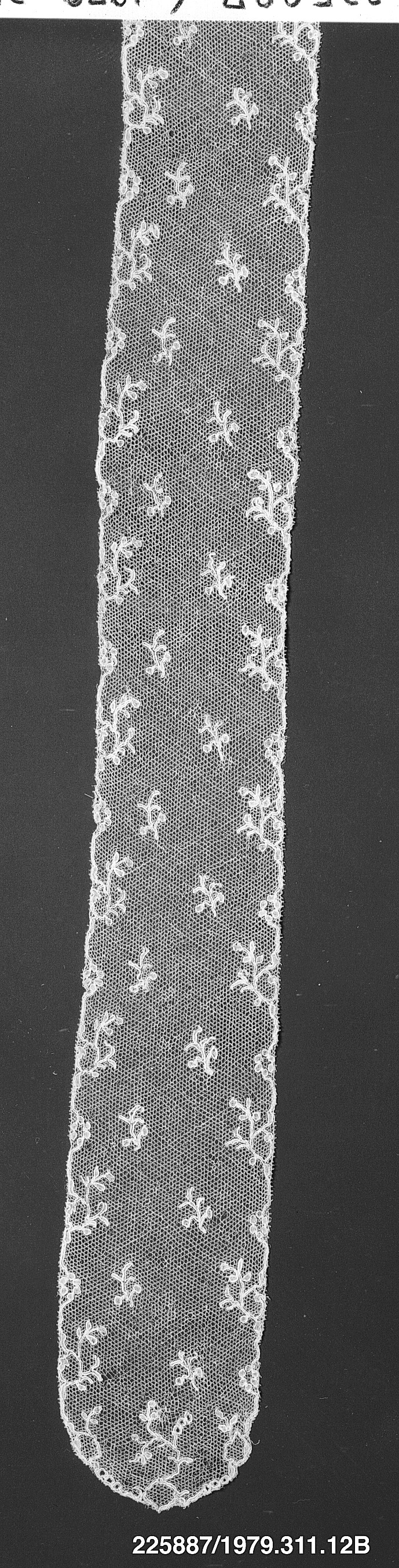
Deconstructing the Lappet: A Study in Structural Grace
The lappet, a term derived from the Old French *lapin* (a fold or flap), represents one of the most refined and technically demanding expressions of textile art in global heritage. Historically a strip of lace or linen hanging from a headdress, the lappet transcended mere ornamentation to become a study in controlled drape, negative space, and kinetic elegance. At Natalie Fashion Atelier, our Isolated Aesthetic Archaeology practice has extracted the lappet from its archival context—specifically the 17th-century Flemish and French court traditions—to reimagine its core principles for the 2026 haute couture silhouette. This research artifact deconstructs the classical lappet as executed in Bobbin lace, Point de Paris, and explicates how its materiality and structural logic inform a new lexicon of luxury form.
Archival Provenance: The Lappet as a System of Tension
The lappet’s historical function was dual: it framed the face while simultaneously signaling social rank through the density and intricacy of its lace. In the archives of the Musée des Arts Décoratifs, one observes that the most sophisticated lappets were not flat panels but three-dimensional constructions. They relied on a subtle interplay of tension and release—the lace was starched to maintain a crisp fold, yet the natural weight of the bobbin threads allowed for a gentle, almost liquid fall. This paradox of rigidity and fluidity is the foundational principle we have isolated for 2026.
The Point de Paris variant, with its characteristic hexagonal mesh and delicate toilé (patterned areas), offers a particularly instructive case. Unlike the more opaque Alençon or the heavily textured Cluny, Point de Paris achieves its visual impact through transparency and geometric precision. The hexagonal ground creates a lattice that is both airy and structurally sound, capable of supporting intricate floral or geometric motifs without collapsing into weight. This is the materiality we have chosen to anchor our 2026 silhouette research.
Materiality as Architecture: Bobbin Lace and Point de Paris
Bobbin lace, in its purest form, is a non-woven textile constructed by twisting and crossing threads wound on bobbins. The process is inherently architectural: each pin placement defines a node, each twist a structural beam. Point de Paris, specifically, employs a continuous thread technique where the ground and the pattern are worked simultaneously, creating a unified, seamless structure. This is a critical departure from other laces where the pattern is applied atop a net ground.
For the 2026 silhouette, we have deconstructed this technique into three material properties:
- Negative Space as Structure: The hexagonal mesh of Point de Paris is not empty; it is a defined, repeatable geometry that dictates how light passes through the garment. In our haute couture pieces, we replicate this by using laser-cut leather or bonded silk organza with hexagonal perforations, creating a “lace” effect that is both structural and transparent.
- Gradient Density: Historical lappets often featured a denser toilé at the base, gradually opening into a wider mesh toward the edges. This gradient controls how the fabric falls. We have translated this into 2026 silhouettes by using variable-weight silk taffeta that is hand-pleated to mimic the transition from solid to openwork, allowing the garment to move from a structured bodice to a fluid, lappet-inspired train.
- Thread Tension as Drape: In bobbin lace, the tension of the threads determines the curvature of the final piece. By varying the tension, artisans could create convex or concave shapes. We apply this principle to our 2026 evening gowns by engineering internal tension structures—fine horsehair braids or micro-crinoline—that are stitched into the seams to create a controlled, organic drape reminiscent of a lappet’s fall.
Silhouette Architecture: From Headdress to Haute Couture
The Lappet Shoulder: A New Point of Departure
The most direct translation of the lappet into a 2026 silhouette is the Lappet Shoulder. Historically, lappets descended from the head; in our reimagining, they descend from the shoulder blade. We have developed a construction where a single, continuous panel of Point de Paris-inspired lace (handmade or digitally fabricated) is cut on the bias and attached at the acromion. The panel is weighted at the hem with a fine chain or micro-beads, allowing it to fall in a controlled, asymmetrical cascade that echoes the original lappet’s movement.
This silhouette is not merely decorative. The lappet shoulder functions as a dynamic counterbalance to the garment’s core. For a 2026 column gown, the lappet panel creates a visual asymmetry that draws the eye upward and outward, elongating the neck and creating a sense of architectural tension. The transparency of the Point de Paris mesh ensures that the underlying fabric—perhaps a matte crepe or liquid satin—remains visible, creating a layered depth that is quintessentially Parisian in its subtlety.
The Lappet Train: A Study in Controlled Volume
Another key silhouette derived from our research is the Lappet Train. In archival examples, the lappet’s length was a marker of status; longer lappets required more thread and more skill. For 2026, we have translated this into a train that is not a separate piece but an extension of the garment’s main structure. Using a gradient of Point de Paris—from a dense toilé at the waist to an open mesh at the hem—the train appears to dissolve into the floor. This is achieved by hand-inserting sections of decreasing thread count, a technique we call “lace erosion.”
The effect is a silhouette that is monumental yet weightless. The train does not drag; it floats, suspended by the inherent stiffness of the bobbin lace construction. For the 2026 client, this offers a new form of ceremonial elegance—a departure from the heavy brocades and voluminous tulle of previous seasons, toward a lightness that is both modern and historically informed.
The Lappet Bodice: Negative Space as Silhouette
The most radical application of the lappet principle is in the bodice. By isolating the lappet’s structural logic—its reliance on negative space and tension—we have developed a Lappet Bodice that is essentially a lace cage. Using Point de Paris motifs as a guide, we create a bodice from laser-cut metallic mesh or hand-knotted silk cord, with large, deliberate gaps that reveal the skin or an underlayer of nude tulle.
This silhouette is not about coverage but about definition through absence. The lappet’s original function was to frame; the Lappet Bodice frames the torso, creating a silhouette that is both architectural and intimate. The hexagonal openings are calibrated to the body’s proportions, widening at the waist to create an optical illusion of a smaller waist, and narrowing at the bust to provide support. This is couture as engineering, where every void is a calculated decision.
Technical Execution: The 2026 Atelier Protocol
To realize these silhouettes, our atelier has developed a hybrid fabrication protocol that marries historical handcraft with digital precision. The process begins with a 3D scan of the client’s body, from which we generate a digital map of the desired lappet placement. This map is then used to create a CNC-cut stencil for the Point de Paris ground, ensuring perfect geometric repeatability. The stencil is passed to our lace artisans, who hand-twist and pin the threads following the digital guide, preserving the tactile quality of bobbin lace while achieving the precision required for a 2026 silhouette.
The final step is the tension calibration. Each lappet panel is weighted and tested for drape, with micro-adjustments made to the thread tension or the addition of fine hidden weights. The goal is a silhouette that moves with the wearer, never against them—a living echo of the lappet’s original, kinetic grace.
Conclusion: The Lappet as a 2026 Paradigm
The lappet, in its classical form, was a symbol of restraint and display. By deconstructing its materiality—the Point de Paris mesh, the bobbin lace tension, the negative space—we have unlocked a new vocabulary for the 2026 haute couture silhouette. The resulting garments are not nostalgic; they are archaeological reconstructions of form, where the past is not copied but metabolized. At Natalie Fashion Atelier, the lappet is no longer a headdress; it is a principle of structural grace, a whisper of thread and tension that defines the future of luxury.