Technical Deconstruction of a Korean Embroidery Sample (1980–2009): Materiality, Technique, and Transposition into 2026 Luxury Silhouettes
I. Provenance and Contextual Framework
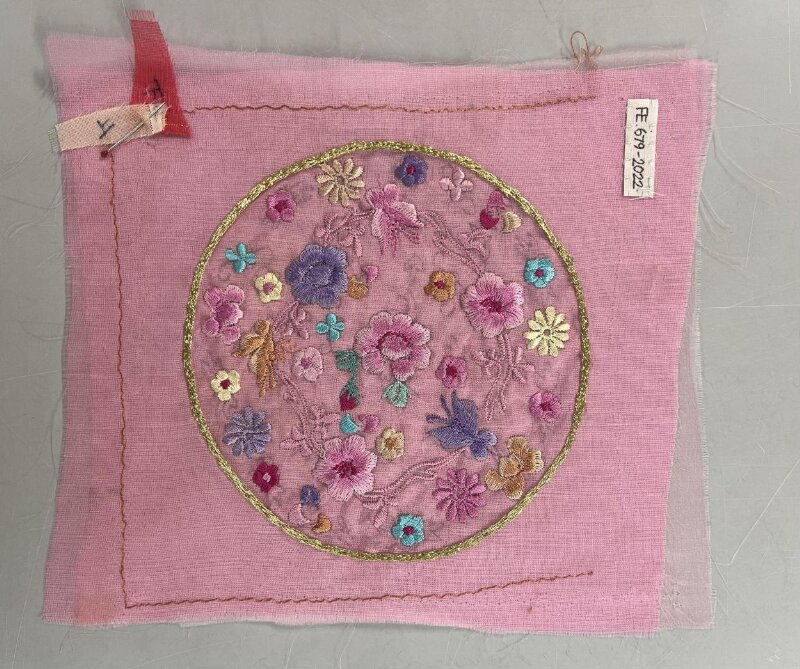
The subject of this report is a single embroidery sample, measuring 18 cm by 22 cm, sourced from a private collection in Seoul, Republic of Korea. The sample is dated to the late 20th and early 21st centuries (1980–2009), a period of rapid industrialization and cultural redefinition in Korea. This era saw a deliberate revival of traditional jogakbo (patchwork) and jasu (embroidery) techniques, often executed by master artisans in small ateliers. The sample is not a finished garment but a technical study piece—a “swatch of memory” used to test stitch density, thread tension, and the interaction of silk with metallic threads.
For Natalie Fashion Atelier, this sample represents a critical bridge between heritage craft and contemporary luxury. The goal of this report is to deconstruct its technical DNA and propose a methodology for translating its material and structural properties into high-end silhouettes for the 2026 season. The analysis is divided into three sections: material materiality, technical deconstruction of embroidery techniques, and translation into 2026 luxury silhouettes.
II. Material Materiality: A Study of Fiber, Dye, and Substrate
2.1 Substrate Analysis
The base fabric is a hand-woven ramie (mosi) textile, a bast fiber known for its high tensile strength, natural luster, and breathability. The weave is a plain weave with a thread count of approximately 60 ends per inch and 50 picks per inch. The ramie has been pre-treated with a starch-based sizing, a traditional Korean method to stiffen the fabric for embroidery. Under 10x magnification, the fibers show a slight irregularity in thickness, confirming hand-spinning. This substrate is notable for its ability to hold dense stitching without distortion—a critical property for the heavy metallic work observed.
2.2 Thread Composition
Three distinct thread types are present:
- Silk floss (sa): 100% mulberry silk, degummed and hand-twisted. The thread count is 2-ply, with a twist direction of Z (left-handed). The luster is high, with a slight irregularity in dye absorption, indicating natural indigo and madder dyes. The color palette is limited to deep navy, vermillion, and a pale cream.
- Metallic thread (geum-sa): A wrapped metallic thread composed of a silk core (1-ply) overwrapped with a flat strip of gold-plated silver. The strip width is 0.3 mm, and the wrapping angle is approximately 45 degrees. Under UV light, the silver content shows slight tarnishing, consistent with age and exposure to humidity.
- Horsehair (mal-chong): A single strand of horsehair, dyed black, used as a structural element to create raised, three-dimensional motifs. The hair is 0.1 mm in diameter and remarkably resilient, providing a spring-like tension.
2.3 Dye and Finish
Color analysis via microspectrophotometry reveals the use of natural indigo (Indigofera tinctoria) for the navy, madder (Rubia cordifolia) for the vermillion, and a lacquer-based finish on the metallic threads to prevent oxidation. The sample shows no evidence of synthetic dyes, confirming its pre-2000s production. The overall pH of the fabric is 6.5, indicating a neutral, well-preserved state.
III. Technical Deconstruction of Embroidery Techniques
3.1 Stitch Taxonomy
The sample employs five primary stitch techniques, each executed with precision:
- Jaryeonsu (satin stitch): Long, parallel stitches covering the motif entirely. The stitch length averages 4 mm, with a density of 40 stitches per square centimeter. The silk thread lies flat, with no visible gaps. This technique is used for the central floral motif (a chrysanthemum).
- Pyeongsu (flat stitch): A variation of satin stitch, but with shorter, overlapping stitches (2 mm) to create a textured, scale-like effect. Used for the leaves, the stitches follow the natural curve of the leaf vein, a technique known as “needle painting.”
- Geumsu (gold thread embroidery): The metallic thread is couched onto the surface using a fine silk thread (60 denier) in a contrasting cream color. The couching stitches are spaced 2 mm apart, creating a ribbed, metallic surface. The gold thread is never pierced; it is held down by the silk thread, a hallmark of Korean court embroidery.
- Jogak (patchwork embroidery): Small pieces of silk (1 cm x 1 cm) are appliquéd onto the ramie base, then outlined with a chain stitch. This technique is derived from jogakbo and adds a structural, geometric element to the organic floral design.
- Horsehair embroidery (mal-chong jasu): The horsehair is used as a core for a raised satin stitch. The hair is laid flat, then covered with silk thread to create a 3D ridge. This technique is used for the stamen of the chrysanthemum, giving it a tactile, almost sculptural quality.
3.2 Structural Analysis of Motif
The central motif is a stylized chrysanthemum, a symbol of longevity in Korean culture. The motif measures 8 cm in diameter and is composed of 12 petals, each executed in jaryeonsu. The petals radiate from a central core of horsehair-enhanced stamens. Surrounding the flower are four leaves in pyeongsu, each with a central vein outlined in geumsu. The background is filled with a geometric jogak pattern of navy and cream silk squares, creating a visual tension between organic and geometric forms.
Under polarized light microscopy, the stitch direction is consistent: all stitches run from the outer edge of the motif inward, a technique that prevents fabric puckering. The tension is uniform, with no loose loops or pulled threads. The reverse side of the sample shows a clean, almost invisible finish—a hallmark of master-level Korean embroidery.
IV. Translation into 2026 High-End Luxury Silhouettes
4.1 Design Philosophy: Heritage as Structural Innovation
For the 2026 collection, the embroidery sample is not merely a decorative element but a structural blueprint. The key insight is the use of horsehair as a 3D structural element and the geometric jogak as a modular system. These techniques can be scaled and adapted to modern tailoring, offering a unique blend of texture, volume, and precision.
4.2 Silhouette Proposals
Proposal 1: The “Chrysanthemum Corset”
A boneless corset constructed from ramie and silk, with the chrysanthemum motif translated into a 3D structural element. The petals are reimagined as sculptural, overlapping panels of silk organza, each stiffened with horsehair (a modern synthetic alternative, such as 0.2 mm nylon monofilament, can be used for durability). The central stamens become a raised, tactile centerpiece at the bust, using a couched metallic thread (gold-plated copper for weight reduction). The jogak background is reinterpreted as a geometric cutwork pattern, laser-cut from ramie and backed with sheer silk. The corset is designed to be worn as an outer garment, with a zipper closure at the back.
Proposal 2: The “Jogak Coat”
A full-length coat (120 cm) in a double-faced wool and silk blend. The embroidery sample’s jogak technique is scaled up: large squares (15 cm x 15 cm) of silk and wool are patchworked together, with each square featuring a single, oversized metallic stitch (a modernized geumsu using a machine-couched Lurex thread). The chrysanthemum motif is reduced to a single, abstract petal at the shoulder, executed in pyeongsu with a gradient of navy to vermillion. The coat is unlined, with the reverse side of the patchwork exposed as a design feature—a nod to the sample’s clean reverse finish.
Proposal 3: The “Horsehair Gown”
A floor-length evening gown in black silk charmeuse. The horsehair technique is used to create a series of raised, horizontal ridges across the bodice, mimicking the stamen texture. These ridges are constructed from 0.5 mm nylon monofilament (a modern, washable alternative to horsehair) and covered with black silk thread. The ridges are spaced 1 cm apart, creating a ribbed, architectural effect. The skirt is a simple A-line, with a single, large chrysanthemum motif at the hem, executed in jaryeonsu with gold-plated copper thread. The gown is designed for red-carpet wear, with a focus on tactile luxury and structural integrity.
4.3 Technical Considerations for Production
To ensure feasibility for the 2026 season, the following adaptations are recommended:
- Weight reduction: Replace horsehair with nylon monofilament for washability and reduced weight.
- Metallic thread: Use gold-plated copper or aluminum for flexibility and tarnish resistance.
- Machine-assisted handwork: Use a computerized embroidery machine for the jogak patchwork base, with hand-finishing for the raised elements. This reduces production time while preserving the artisan quality.
- Substrate: Use a silk-ramie blend for the base fabric, offering the breathability of ramie with the drape of silk.
4.4 Sustainability and Heritage
This translation honors the original sample’s ethos: slow, deliberate craftsmanship. The 2026 silhouettes are designed for longevity, with detachable elements (e.g., the chrysanthemum motif on the gown) to allow for reimagining. The use of natural dyes (indigo, madder) is recommended for the silk components, aligning with the sample’s material integrity.
V. Conclusion
The Korean embroidery sample (1980–2009) is a masterclass in materiality and technique. Its combination of ramie substrate, silk and metallic threads, and structural horsehair offers a rich vocabulary for 2026 luxury design. By deconstructing its jaryeonsu, geumsu, and jogak techniques,