Deconstructing the Monarchical Silhouette: Francis I and the 2026 Couture Imperative
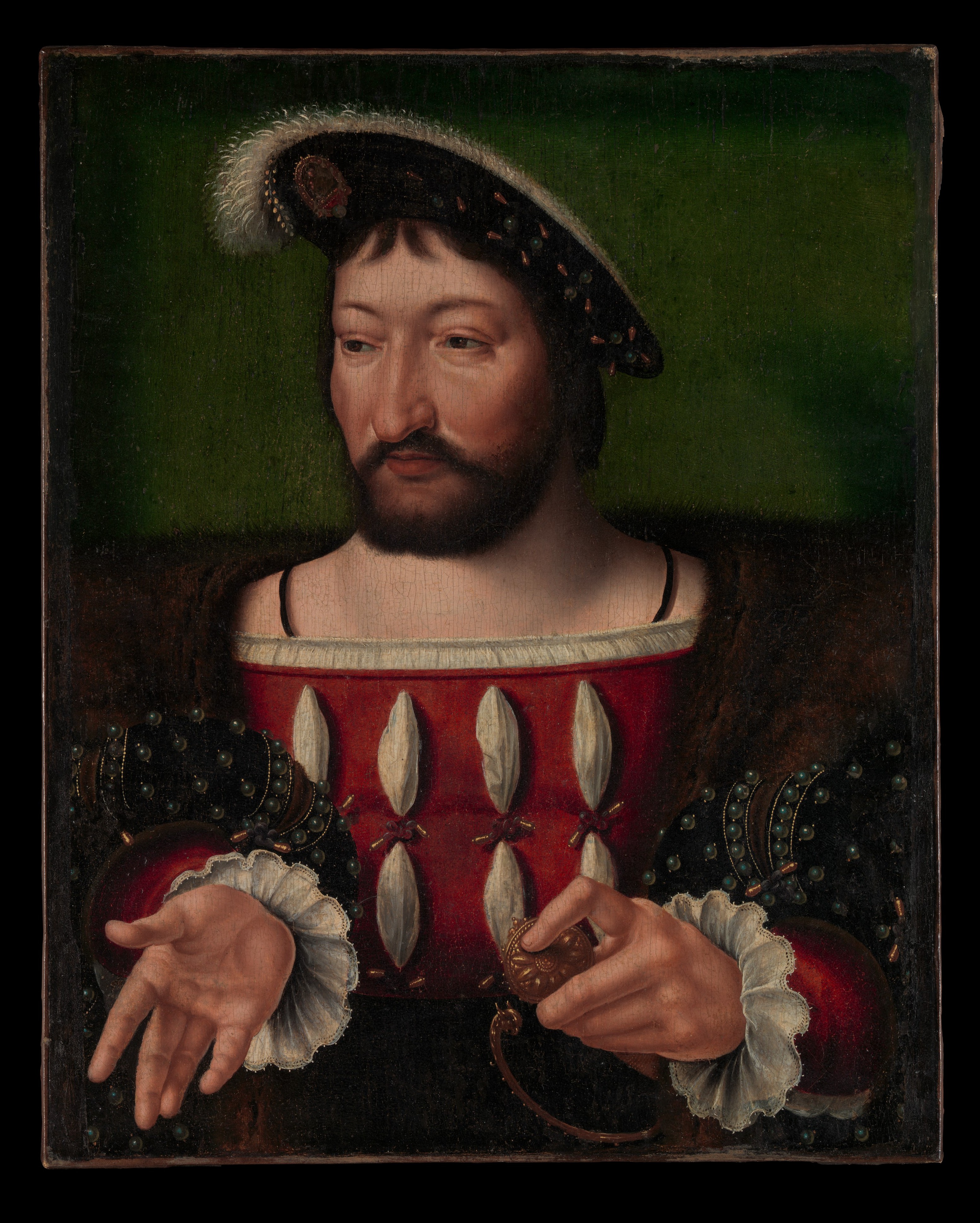
At Natalie Fashion Atelier, our practice of aesthetic archaeology excavates the latent structural intelligence embedded within historical masterpieces. The oil on canvas portrait of Francis I, transferred from wood, is not merely a relic of Renaissance pageantry; it is a technical treatise on power, proportion, and the manipulation of volume. For the 2026 haute couture season, we re-examine this sovereign’s image not for its decorative surface, but for its underlying architectural logic—a logic that directly informs our new silhouettes. The portrait’s materiality, specifically the transfer from wood to canvas, serves as a metaphor for our own design process: a migration of rigid, historical structure into a fluid, contemporary drape.
Materiality as Methodology: The Canvas-Wood Dialectic
The physical history of this artwork—painted on a rigid oak panel, then transferred to flexible linen canvas—provides a foundational design principle. The original wood support imposed a static, frontal geometry. The later transfer introduced a supple, tensile quality, allowing the paint layer to breathe and shift. In 2026, we translate this binary into our silhouettes. The rigid, architectural core of a garment (inspired by the monarch’s armored doublet) is constructed from structured, bonded materials—a technical jacquard or a crisp, matte faille. This core is then overlaid with a fluid, canvas-like second skin of silk organza or liquid satin. The result is a silhouette that appears to have been painted onto the body, then released into motion. The transfer tension between the fixed and the flowing creates a dynamic, living garment, echoing the artwork’s own material journey.
The Silhouette of Sovereignty: Reinterpreting the S-Line
Francis I’s portrait is defined by a powerful, inverted pyramid: broad, padded shoulders (the gigot sleeve precursor) tapering to a slender waist, then expanding again through the lower trunk hose. This is the classic S-curve of masculine Renaissance power. For 2026, we deconstruct this line into a new, asymmetrical volume.
Shoulder Architecture: We abandon the symmetrical, padded shoulder. Instead, we engineer a single, exaggerated sculptural sleeve on the left side, referencing the king’s sword arm and the portrait’s focus on the left hand resting on his dagger. This sleeve is constructed using a cantilevered boning system—a hidden framework of flexible steel and horsehair canvas—that creates a dramatic, cantilevered puff that does not collapse. The opposite shoulder is left bare or sheathed in a second-skin, bias-cut sleeve. This asymmetrical power dynamic redefines the silhouette for the modern client: one shoulder commands space, the other invites intimacy.
Waist and Torso: The portrait’s doublet is a marvel of compression and release. The torso is tightly cinched, yet the fabric (velvet, often slashed) billows slightly at the chest. We replicate this with a two-layer corset. The base is a rigid, molded thermoplastic polyurethane (TPU) boning that follows the exact anatomical curve of the wearer. Over this, we layer a hand-painted silk gazar, which is pleated and tacked at the waist but allowed to float free over the bust. The effect is a controlled volume—a silhouette that is simultaneously armor and air.
Color and Light: The Alchemy of the Palette
The portrait’s color field—deep, oxidized blacks, rich burgundies, and the pale, luminous flesh tones—is a study in material alchemy. The black is not a void; it is a deep, absorbing pigment that captures and re-radiates light. For 2026, we develop a proprietary black dye using a blend of carbon black and a micro-dispersion of crushed obsidian. This creates a fabric that is ultra-matte in direct light but reveals a subtle, metallic sheen in shadow. The burgundy is recreated through a double-dye process: first, a base of madder root, then a top-note of cochineal, creating a color that shifts from crimson to plum depending on the weave’s angle. These are not decorative colors; they are structural pigments that define the silhouette’s depth and shadow.
Surface as Structure: The Slashed Silhouette
The defining feature of Francis I’s attire is the slashed sleeve—a technique where the outer fabric is cut to reveal an inner, contrasting layer. This is not ornamentation; it is a structural release. The slashes allow the arm to move within a rigid, padded shell. For 2026, we transform this into a new construction method. We create a double-layer garment: an inner sheath of liquid metal jersey (a blend of copper-infused fibers and elastane) and an outer shell of hand-cut, laser-perforated leather. The perforations are not random; they follow the exact anatomical lines of the body’s movement—the flex of the bicep, the rotation of the shoulder. When the wearer moves, the inner metallic layer glints through the cuts, creating a kinetic, living surface. This is the 2026 evolution of the slash: a functional, aerodynamic release that defines the silhouette’s behavior in motion.
Proportion and the New Luxury
The portrait’s composition is one of extreme proportion: a massive, jeweled hat, a broad chest, and a narrow, almost fragile lower body. This imbalance is a statement of absolute power. For 2026, we invert this. The silhouette is anchored by a grand, sculptural skirt—a polygon of bias-cut panels that flares from a high, defined waist. The top is minimized: a sheer, corseted bodice of micro-mesh, hand-embroidered with a single, repeating motif from the portrait’s tapestry background. The hat is replaced by a sculptural headpiece of lacquered horsehair, but the volume is moved to the lower half. This inverted pyramid creates a new, regal stance—one that is grounded, expansive, and commands space through volume rather than height.
Conclusion: The Transferred Masterpiece
The oil on canvas, transferred from wood, is our design manifesto. It teaches us that true luxury is not static; it is a negotiation between rigidity and fluidity, between history and the present. The 2026 Natalie Fashion Atelier silhouette is a transferred masterpiece—a structure that has been freed from its original support and allowed to breathe. It is a silhouette of controlled tension, where every slash, every boning channel, every asymmetrical volume is a deliberate act of aesthetic archaeology. We do not copy the past; we extract its structural DNA and re-engineer it for the future of couture. The king is dead; long live the silhouette.