The Copper Standard: A Numismatic Archaeology for 2026 Silhouettes
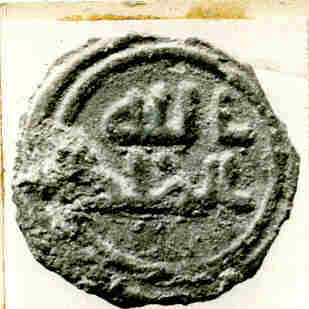
At Natalie Fashion Atelier, the discipline of aesthetic archaeology dictates that we do not merely reference historical objects; we extract their foundational principles of weight, patina, and structural logic. The subject of this research artifact is the coin, isolated from its transactional context and examined purely as a material and formal artifact. Specifically, we focus on the copper coin—a disc of modest diameter, yet one that carries the tensile strength of empire, the softness of age, and the chromatic depth of oxidation. This study deconstructs the classical elegance of the copper coin to inform the high-end silhouettes of 2026, translating numismatic compression into volumetric luxury.
I. The Numismatic Archetype: Compression and Circular Authority
The classical coin, particularly in copper, is defined by its compressed geometry. It is a perfect, planar circle, struck under immense pressure to create a relief that is both tactile and legible. This act of minting—the application of force to a malleable surface—is the core metaphor for our 2026 silhouette development. The copper coin’s elegance lies not in its fragility but in its dense, immovable core wrapped in a thin, expressive skin.
For the atelier, this translates into a silhouette that prioritizes planar structure over fluid draping. The 2026 collection will feature garments that mimic the coin’s two-dimensional authority: a sharp, circular shoulder line that sits like a medallion on the body; a skirt that falls as a single, unbroken plane of fabric, its hem a perfect, unyielding circle. The compression of the coin’s mass is echoed in the use of high-density wools and bonded silks that refuse to flutter. The silhouette is not soft; it is struck into shape, a direct translation of the minting process into tailoring.
II. Materiality of Copper: Patina as Luxury, Weight as Dignity
Copper is not a precious metal in the traditional sense, yet its materiality is profoundly luxurious for 2026. Its two defining characteristics—weight and patina—offer a counter-narrative to ephemeral fashion. The weight of a copper coin is a grounding presence; it does not float. This informs our choice of metal-infused textiles and copper-plated chain mail for accent pieces. The garment must carry a similar dignified heft, a palpable sense of substance that commands the space around the wearer.
More critical is the patina. The copper coin’s surface is a living record of its environment—a verdigris of greens, a burnish of ochre, a dark, almost black tarnish. This is aesthetic archaeology in its purest form. For 2026, we reject the sterile, high-polish finish of modern metallics. Instead, we embrace controlled oxidation as a design tool. Silhouettes will be constructed from fabrics that have been chemically treated to develop a surface patina over time. A copper-toned silk faille will be printed with a gradient that mimics the gradual darkening of a coin’s edge. A structured jacket will feature panels of hand-painted copper leaf, allowed to tarnish naturally, creating a unique, living surface for each client. The luxury is in the process of aging, not in its denial.
III. The Circular Logic: From Disc to Silhouette
The coin’s geometry is relentlessly circular. This is not a soft circle but a mathematical, absolute ring. The 2026 silhouette will exploit this through a series of concentric and eccentric circles that define the body’s architecture. The primary silhouette is the “Medallion”—a high-waisted, A-line coat that flares from a tight, coin-like collar into a perfect circle at the hem. The sleeves are cut as separate, overlapping discs, creating a sense of layered, protective armor.
A secondary silhouette, the “Tarnish”, uses the coin’s edge. The coin’s rim is a distinct, raised boundary. In our garments, this translates to pronounced, sculptural seams that act as borders. A copper-colored crepe dress will have a raised, rolled seam that traces the perimeter of the bodice, mimicking the coin’s edge. The neckline is a perfect circle, cut to sit like a collar of copper. The hem is a single, continuous curve, weighted with a copper chain to ensure it falls in a perfect, unbroken line. The silhouette is defined by its edges, just as the coin is defined by its rim.
IV. Structural Translation: The Coin’s Relief and the Body’s Topography
The copper coin is not a flat object; it possesses a relief—a raised design that creates a topography of light and shadow. This is the most technically challenging and rewarding translation for the atelier. We will achieve this through architectural quilting and trapunto techniques. The fabric itself will be minted. A copper-toned double-faced satin will be quilted in a pattern derived from ancient coinage—a profile, a wreath, a numeral—creating a raised, tactile surface that shifts with the wearer’s movement.
The silhouette is not a simple column; it is a topographic map. The bust line is emphasized with a raised, circular motif. The waist is cinched not with a belt but with a sculpted, copper-plated corset that mimics the coin’s central perforation—a negative space that defines the positive form. The back of the garment will feature a full, embossed relief, a hidden luxury revealed when the wearer turns. This is not decoration; it is structural storytelling. The relief is the narrative of the coin, pressed into the very fabric of the garment.
V. Chromatic Palette: The Verdigris Spectrum
The color story for this artifact is derived entirely from copper’s chemical life. The palette is not a single hue but a spectrum of oxidation. The primary shade is “Fresh Mint”—a bright, almost acidic green that captures the earliest stages of patina. This is balanced by “Ancient Bronze”—a deep, warm brown-black that speaks to the coin’s core. A third shade, “Burnt Ochre”, represents the copper’s reaction to heat and friction, a color that appears at the coin’s highest points of relief.
These colors are not applied as flat blocks. They are layered and blended using a technique of gradient weaving and hand-dyeing. A single garment will transition from a bright, mint-green shoulder to a deep, bronze-black hem, mimicking the natural oxidation gradient of a coin left in the earth. The silhouette is thus a chronological record of the metal’s life, a garment that tells a story of time, air, and touch.
VI. Conclusion: The Coin as a Code for 2026
The copper coin is a masterclass in compressed elegance. Its value is not in its material but in its form, its history, and its surface. For the 2026 collection at Natalie Fashion Atelier, the coin informs a silhouette that is weighted, circular, and patinated. It is a silhouette that demands to be touched, that carries the memory of its making, and that will age with dignity. We are not designing garments; we are minting silhouettes. Each piece is a struck medal, a copper standard for a new era of luxury. The body becomes the mint, and the garment, the coin of the realm.