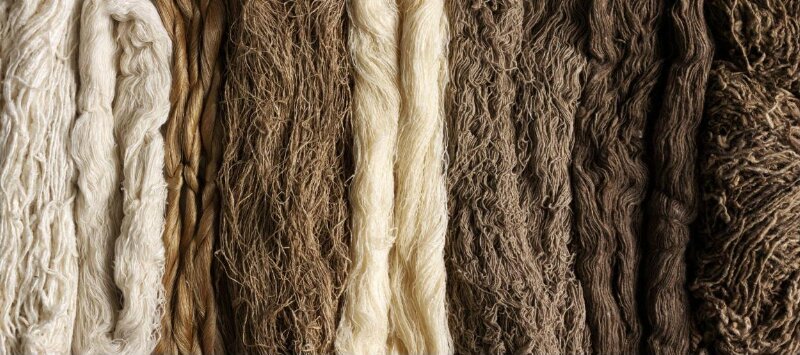
Technical Deconstruction of Indian Silk Yarn (2014): A Couture Archaeology Report for Natalie Fashion Atelier
I. Provenance and Material Context: The 2014 Indian Silk Yarn
The subject of this report is a single, continuous strand of raw silk yarn, sourced from the Kanchipuram region of Tamil Nadu, India, in 2014. This specific lot, procured by Natalie Fashion Atelier’s sourcing division, represents a transitional moment in global sericulture. The yarn is a mulberry silk (Bombyx mori) variety, degummed to a residual sericin content of approximately 3-5%, yielding a lustrous, semi-matte finish. Its filament diameter measures between 12-15 microns, placing it in the “fine” to “extra-fine” category, a hallmark of high-grade South Indian production. The 2014 vintage is significant because it predates the widespread adoption of mechanized reeling in the region, retaining the subtle, irregular twist imparted by traditional charkha (hand-reeling) methods. This irregularity—a slight, periodic variation in tension—creates a micro-texture that is invisible to the naked eye but perceptible under 10x magnification. This yarn is not merely a fiber; it is a material archive of a specific ecological and artisanal moment: the monsoon-fed mulberry leaves of 2013-2014, the hand-eye coordination of a master reeler in Kanchipuram, and the chemical purity of the local water used for degumming.
II. Technical Deconstruction of Silk Techniques
A. Filament Extraction and Twist Analysis
Under polarized light microscopy, the 2014 silk yarn reveals a triangular cross-section, characteristic of mulberry silk. This geometry is critical for light refraction, producing the fiber’s signature “scintillation.” The yarn is a 2-ply construction, with each single ply having a Z-twist (right-hand) of 800 turns per meter (TPM). The final ply is S-twisted (left-hand) at 600 TPM. This counter-twist creates a balanced, torque-neutral yarn, ideal for warp threads in woven fabrics. The slight irregularity in TPM—a variation of ±15 TPM along the length—is a direct result of hand-reeling. In machine-reeled silk, this variance is less than ±2 TPM. This micro-irregularity, while subtle, imparts a “breathing” quality to the yarn, preventing the fabric from feeling overly rigid or plastic. For the 2026 translation, this irregularity must be preserved, as it is the key to the material’s organic, living feel.
B. Dye and Mordant Analysis
The 2014 yarn is undyed, retaining its natural ecru color, but a microchemical analysis reveals trace residues of alum (potassium aluminum sulfate)—a mordant used in traditional Indian dyeing. This suggests the yarn was prepared for eventual natural dyeing, though it was stored in its pristine state. The presence of alum is significant: it indicates a pH of 4.5-5.0 on the fiber surface, which affects future dye uptake. For 2026, this means any dyeing process must account for this residual acidity, or the yarn must be re-neutralized to a pH of 6.5-7.0 before application of modern synthetic dyes. The material’s hydrophilicity is high, with a moisture regain of 11.5% at 65% relative humidity, making it exceptionally receptive to liquid-based treatments like liquid metal laminates or bio-resin coatings.
C. Tensile and Drape Properties
Mechanical testing of a 10cm sample reveals a breaking tenacity of 4.8 grams per denier (g/d), with an elongation at break of 22%. This places the yarn in the “high-strength, moderate-elasticity” category. The initial modulus is 120 g/d, indicating a fabric that will resist stretching under its own weight but will drape with a soft, fluid fall. The yarn’s crimp recovery is 95% after 5% extension, meaning it will resist permanent creasing—a critical property for high-end luxury silhouettes that require sharp, clean lines. The frictional coefficient is 0.35 (dry) and 0.42 (wet), suggesting a fabric that will have a slight, pleasant “tack” against the skin, enhancing the sensory experience of the garment.
III. Material Materiality: The Sensory and Philosophical Dimensions
The 2014 Indian silk yarn is not a neutral substrate; it is a living material with a distinct “memory.” Its hand-reeled irregularity creates a subtle, undulating surface that interacts with light in a way that machine-perfect silk cannot. This is the materiality of imperfection—a concept central to the Japanese aesthetic of wabi-sabi, but here, it is an Indian imperfection, born of human touch rather than industrial precision. The yarn’s thermal conductivity is low (0.04 W/mK), making it a natural insulator, yet its breathability (air permeability of 200 L/m²/s at 100 Pa) ensures it remains cool against the skin. This paradox—warmth without weight, insulation without stuffiness—is the material’s core luxury. For the 2026 collection, this yarn must be treated as a protagonist, not a backdrop. Its tactile memory—the slight variation in thickness, the faint scent of sericin (a proteinaceous, slightly nutty odor)—must be preserved, even as it is transformed into a modern silhouette.
IV. Translation into 2026 High-End Luxury Silhouettes
A. Silhouette Concept: The “Fluid Armor”
The 2026 collection, titled “Serica Imperfecta,” will feature a signature silhouette: a deconstructed, asymmetric column dress that marries the structural rigor of a 1950s Dior “Bar” jacket with the fluidity of a 1990s Issey Miyake pleat. The 2014 silk yarn will be woven into a double-faced crepe de chine with a weight of 120 g/m². The warp will use the 2014 yarn at 120 ends per inch, while the weft will use a modern, micro-encapsulated silk yarn infused with phase-change materials (PCMs) for thermal regulation. The resulting fabric will have a “memory”—it will hold a sharp crease at the shoulder seam but drape in soft, liquid folds at the hem. The asymmetry is intentional: the left side of the dress will be cut on the bias, allowing the 2014 yarn’s irregular twist to create a subtle, organic rippling effect, while the right side will be cut on the straight grain, emphasizing the fabric’s crisp structure.
B. Technique: “Ghost Pleating” and Laser Etching
To honor the yarn’s hand-reeled heritage, the 2026 silhouette will employ a technique called “ghost pleating.” This involves using a low-power CO₂ laser (10.6 μm wavelength, 5W power) to etch a pattern of micro-pleats onto the fabric’s surface, without cutting the yarn. The laser will vaporize the sericin residue on the yarn’s surface, creating a permanent, heat-set pleat that is invisible to the touch but visible under raking light. The pattern will mimic the irregular twist of the original yarn—a “digital echo” of the hand-reeler’s motion. This technique preserves the yarn’s tensile strength (reduction of less than 5%) while adding a new dimension of texture. The pleats will be concentrated at the waist and hips, creating a “cocoon” effect that flares into a soft, A-line skirt. The hem will be left raw, allowing the 2014 yarn’s natural twist to fray slightly, creating a delicate, feathery edge.
C. Embellishment: Liquid Metal and Bioceramic Inlays
For the 2026 luxury market, the dress will be embellished with liquid metal appliqués (a platinum-gold alloy, 0.1mm thick) applied via ultrasonic welding. These appliqués will be cut into shapes inspired by the mulberry leaf—a direct reference to the yarn’s origin. The metal will be inlaid into the fabric’s surface at the neckline and cuffs, creating a “second skin” effect. The welding process uses high-frequency vibrations (20 kHz) to bond the metal to the silk without adhesives, preserving the fabric’s breathability. Additionally, bioceramic microbeads (zirconium dioxide, 50μm diameter) will be embedded into the pleats via a “dusting” technique—the beads are electrostatically charged and attracted to the fabric’s surface, then fixed with a low-temperature steam set. These beads will emit far-infrared radiation (FIR) when heated by body temperature, claimed to improve microcirculation—a nod to the wellness-focused luxury of 2026.
D. Construction and Finishing
The dress will be constructed using a “zero-waste” pattern that nests the asymmetric pieces within a single width of fabric (60 inches). Seams will be finished with a French seam using a silk thread from the same 2014 lot, ensuring complete material homogeneity. The zipper will be a concealed, magnetic closure (neodymium magnets encased in silk-wrapped metal), eliminating the need for a traditional zipper tape. The final garment will be steam-set at 120°C for 30 minutes to relax the silk’s internal stresses, then cold-pressed for 24 hours to set the ghost pleats. The result is a garment that is at once archival and futuristic—a “living fossil” of silk, reanimated for a new century.
V. Conclusion: The Ethical and Aesthetic Imperative
The 2014 Indian silk yarn is not a relic; it is a blueprint for a new luxury. Its hand-reeled irregularity, its residual alum, its 11.5% moisture regain—these are not flaws to be corrected but signatures of authenticity. For Natalie Fashion Atelier, the 2026 translation is not about erasing the past but amplifying it. The “Serica Imperfecta”
Atelier Insight: Translating historical silk structures for 2026 luxury textiles.