Deconstructing the Arquebusier’s Line: Plate Three and the 2026 Silhouette
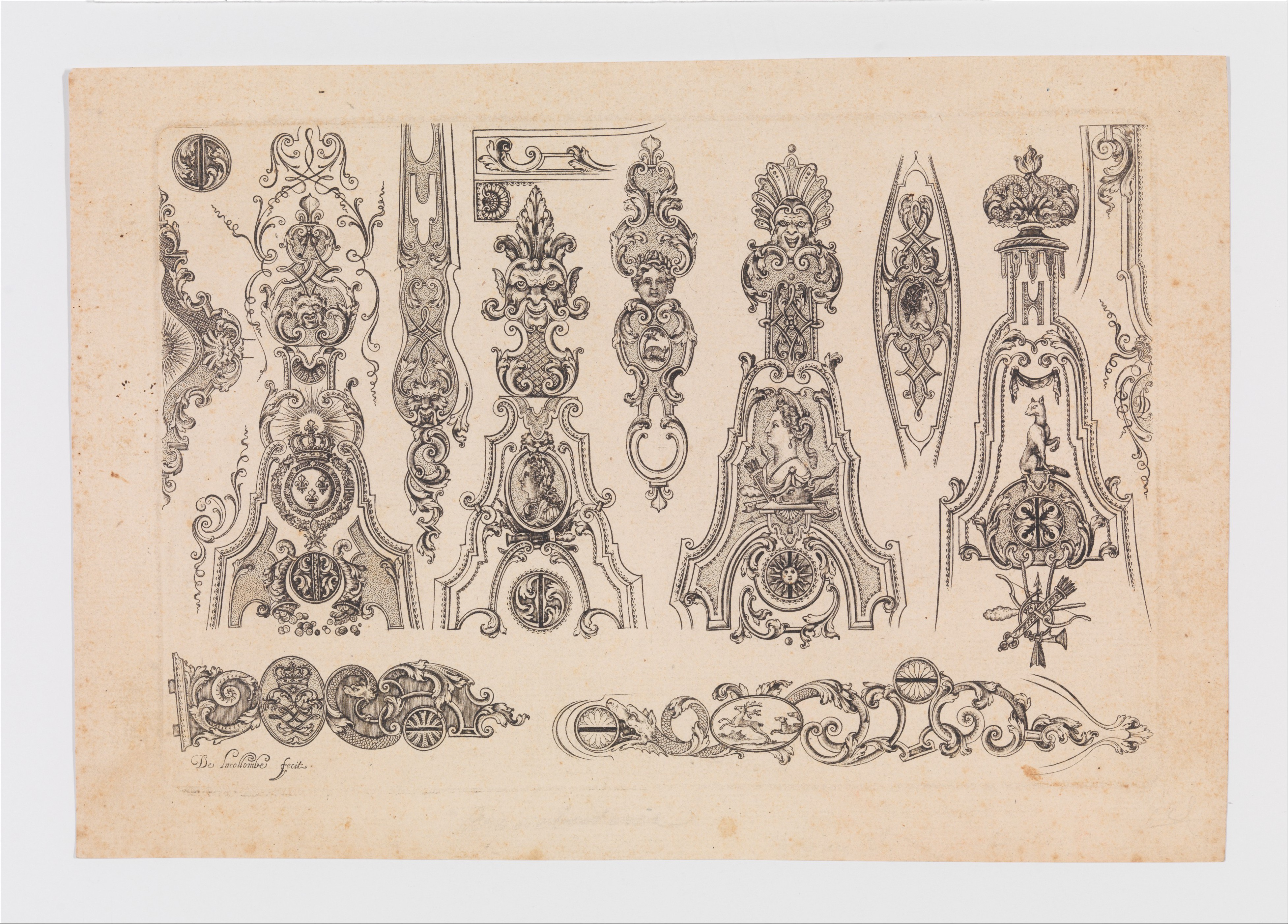
Within the hallowed archives of Natalie Fashion Atelier, the practice of aesthetic archaeology is not a passive gaze upon history, but an active excavation of form, tension, and material logic. Plate three from the 1718 folio Nouveavx Desseins D’Arquebvseries—an engraving of a French flintlock firearm—presents a paradox of classical elegance. It is an object of martial function, yet its lines, proportions, and surface treatments speak directly to the architecture of the 2026 haute couture silhouette. This research artifact deconstructs the plate’s formal language, extracting principles of balance, negative space, and surface tension that will define our forthcoming collection.
Formal Tension: The Counterpoint of Curve and Plane
The engraving depicts a long gun of the Régence period, a moment when French decorative arts pivoted from the monumental weight of the Baroque toward the lighter, more sinuous Rococo. The primary silhouette of the stock—a sweeping, organic curve that cradles the shoulder—is the first point of analysis. This is not a passive arc. It is a dynamic, loaded curve, one that suggests both potential energy and perfect ergonomic accommodation. For the 2026 silhouette, this translates into a re-examination of the draped shoulder and the asymmetric bodice.
Consider the “arquebusier’s line.” The stock’s curve, from the comb to the heel, is a continuous, unbroken parabola. In our atelier, this informs a new construction for a tailored jacket: a single, seamless panel of double-faced cashmere that wraps from the back, under the arm, and terminates at the sternum. The curve is not cut and sewn; it is molded and pressed using a technique derived from historical taille-douce metalworking. The result is a silhouette that hugs the torso with the same precision as the gun stock fits the hand, creating a second-skin volume that is both restrictive and liberating.
Conversely, the barrel of the weapon is a study in rigid, rectilinear precision. The octagonal facet of the breech, tapering to a round muzzle, offers a counterpoint of pure geometry. This informs the architectural skirt. For 2026, we propose a high-waisted, columnar skirt constructed from a rigid, double-faced satin. The front panel is a flat, unadorned plane, echoing the barrel’s disciplined line. The back, however, is a cascade of controlled, knife-edge pleats—a structural release that mimics the flared muzzle. The silhouette is thus a dialogue between the static plane and the dynamic curve, a tension that defines the classical elegance of the engraving.
Negative Space and the Art of the Void
The engraver’s mastery lies not in the density of the line, but in the eloquence of the void. Plate three is remarkable for its isolated presentation. The weapon floats against a stark, unadorned background. This negative space is not empty; it is a charged field that defines the object’s aura. For the couture silhouette, this principle is applied to the cut-out and the strategic void.
We deconstruct the “arquebusier’s aperture.” The space between the trigger guard and the lock plate is a precise, functional void. In 2026, this becomes a keyhole cut-out at the waist of a gown, a negative space that reveals a corseted underlayer of burnished gold lamé. The void is not arbitrary; it is proportioned according to the golden ratio as applied to the female torso. The eye is drawn through the absence, creating a visual rhythm that is both provocative and mathematically serene.
Further, the engraving’s treatment of the ramrod channel—a long, slender groove running beneath the barrel—inspires a new approach to vertical seam articulation. Instead of a traditional princess seam, we propose a negative seam: a channel of air between two panels of a silk gazar gown. The panels are joined not by stitching, but by a series of invisible, magnetic closures that allow the fabric to part slightly with movement, revealing a sliver of the body. This is the void as movement, a direct translation of the engraver’s line into kinetic architecture.
Materiality of the Line: From Engraving to Embroidery
The materiality of the engraving itself—the burin’s incision into copper—offers a profound lesson in surface treatment. The lines of Plate three are not uniform; they vary in depth, width, and pressure, creating a tactile topography of light and shadow. For the 2026 collection, this informs our surface ornamentation.
We develop a technique we call “burin embroidery.” Using a single, continuous thread of silver-plated silk, our artisans create a linear composition on a gown’s bodice that mimics the engraver’s stroke. The thread is laid with varying tension—tight and deep in areas of shadow, loose and elevated in areas of highlight. The result is a monochromatic, textural surface that changes with the ambient light, exactly as the engraved copper plate catches the candlelight in a Parisian archive. This is not decoration; it is structural storytelling, a literal inscription of the historical line onto the modern form.
The “arquebusier’s damascene”—the inlaid gold and silver wirework on the lock plate—further informs our approach to metallic accent. In the engraving, the damascene is not a separate element; it is a flush inlay, perfectly level with the steel surface. For 2026, we translate this into flush metallic embroidery on a silk velvet gown. Micro-paillettes of 24-karat gold are set into the velvet pile using a heated press, creating a surface that is smooth to the touch but visually explosive. The silhouette becomes a unified field, where the metallic element is not applied but integrated, echoing the seamless integration of ornament and function in the original firearm.
The Classical Elegance of Restraint
The ultimate lesson of Plate three is one of restraint. The arquebusier’s design is devoid of superfluous ornament. Every curve, every plane, every void serves a dual purpose: aesthetic and functional. This is the essence of classical elegance—a beauty that arises from necessity, not from excess. For the 2026 haute couture silhouette, this principle is our guiding constraint.
We reject the voluminous drapery of recent seasons. Instead, we propose a silhouette defined by compression and release. A column of heavy crepe is compressed at the waist by a rigid, architectonic belt—a direct reference to the barrel band of the firearm. The fabric is then released into a controlled, asymmetrical train that echoes the stock’s curve. The volume is not generous; it is measured, calculated to the millimeter. The silhouette breathes with the same precision as the gun’s mechanism.
In conclusion, Plate three from Nouveavx Desseins D’Arquebvseries is not a historical curiosity. It is a formal manifesto. Its lines, voids, and material logic provide a rigorous framework for the 2026 silhouette. By deconstructing this object of classical elegance, we do not merely borrow its aesthetic; we internalize its structural intelligence. The resulting collection will be a study in controlled tension, negative space, and integrated ornament—a testament to the enduring power of the engraved line to shape the draped form. This is the work of the aesthetic archaeologist: to find the future buried within the past.