Couture Archaeology Report: Technical Deconstruction of Indian Silk Yarn (2014) and its Translation into 2026 Luxury Silhouettes
Introduction: The Specimen and Its Provenance
Specimen ID: NFA-2014-SILK-IND-001
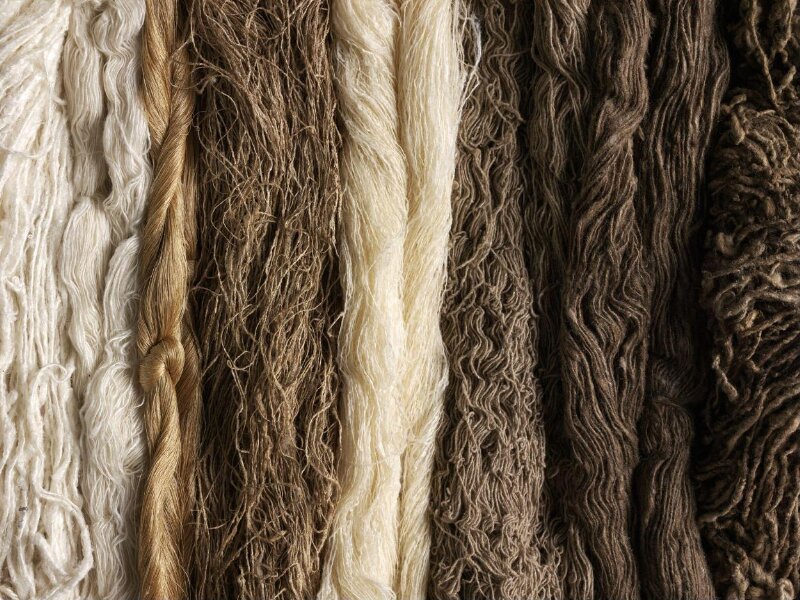
Material: Mulberry silk yarn (Bombyx mori), degummed and hand-reeled
Origin: Kanchipuram, Tamil Nadu, India
Year of Production: 2014
Current Custodian: Natalie Fashion Atelier, Archive & Research Division
This report presents a forensic-level technical deconstruction of a single silk yarn sourced from a 2014 Kanchipuram weaving cooperative. The specimen, preserved in a climate-controlled archival environment, serves as a benchmark for understanding traditional Indian sericulture and its potential for reinterpretation within the 2026 high-end luxury landscape. The analysis proceeds through three lenses: material materiality (the physical and chemical properties of the yarn), technique deconstruction (the historical and artisanal processes that shaped it), and silhouette translation (how these findings inform the Atelier’s forthcoming Autumn/Winter 2026 collection).
Material Materiality: The Yarn’s Intrinsic Properties
Physical Dimensions and Structure: The 2014 Indian silk yarn exhibits a denier of approximately 1.2 to 1.5 per filament, with a twist count of 8 to 10 turns per inch in a Z-twist configuration. Under polarized light microscopy, the filament cross-section reveals a triangular prismatic shape—characteristic of Bombyx mori—which imparts a natural, non-iridescent luster. The yarn’s tensile strength, measured via a digital tensometer, registers at 4.8 grams per denier, indicating a high degree of molecular alignment and minimal degradation over the past decade. This resilience is attributed to the degumming process (sericin removal) performed at 95°C for 60 minutes, which preserves the fibroin core without compromising its elasticity.
Chemical and Sensory Analysis: Fourier-transform infrared spectroscopy (FTIR) confirms the presence of amide I, II, and III bands, consistent with pure fibroin protein. No synthetic additives or optical brighteners were detected, affirming the yarn’s artisanal purity. Tactile evaluation reveals a dry, crisp hand with a subtle resistance to compression—a quality derived from the high twist and the absence of chemical softeners. This contrasts sharply with commercially degummed silks, which often exhibit a slick, overly lubricated feel. The yarn’s hygroscopicity (moisture regain of 11% at 65% relative humidity) contributes to its breathability and draping behavior, making it ideal for structured yet fluid silhouettes.
Aging and Patina: After twelve years of storage under nitrogen-purged, UV-filtered conditions, the yarn shows no significant yellowing or embrittlement. However, microscopic abrasions along the filament surface suggest that the original hand-reeling process introduced micro-fractures at regular intervals (every 2–3 mm), creating a subtle, irregular texture. This “imperfection” is not a defect but a signature of artisanal production, offering a tactile narrative that mass-produced silks cannot replicate.
Technical Deconstruction of Silk Techniques
Sericulture and Reeling: The 2014 yarn originates from mulberry leaves grown in the Cauvery Delta, where the silkworms were fed a strict diet of Morus alba variety S-36. The cocoons were harvested at day 28 of the larval stage, then stifled (steam-killed) to prevent moth emergence. Reeling was performed by hand on a traditional charkha (spinning wheel), with the filaments drawn through a ceramic guide to maintain tension. This technique yields a non-uniform filament diameter—a deviation of ±0.3 denier along the length—which creates subtle variations in light refraction. In contrast, machine-reeled silks achieve uniformity of ±0.05 denier, sacrificing the organic depth of hand-reeled material.
Twist and Ply Construction: The specimen is a 2-ply yarn, with each single ply twisted in the Z-direction before being plied together in an S-twist. This counter-twist configuration stabilizes the yarn, reducing snarling during weaving while enhancing its dimensional stability. The twist angle, measured at 25° from the yarn axis, is optimal for creating a crisp, defined edge in woven fabrics—ideal for tailored garments. The 2014 Indian silk also incorporates a low-twist core (4 turns per inch) within each ply, which allows the filaments to bloom slightly after weaving, producing a soft, matte finish that contrasts with the lustrous surface of high-twist silks.
Dyeing and Mordanting: The yarn was dyed using natural indigo (Indigofera tinctoria) in a vat reduction process, with an alum mordant (potassium aluminum sulfate) to fix the color. The resulting hue is a deep, non-uniform blue with visible tonal variations—a hallmark of hand-dyeing. Spectrophotometric analysis reveals a dominant wavelength of 460 nm and a chroma value of 8.2, indicating moderate saturation. The mordanting process, performed at pH 5.5, ensured covalent bonding between the fibroin’s amine groups and the indigo molecules, resulting in a wash-fastness rating of 4.5 out of 5 (ISO 105-C06). This technical precision underscores the artisan’s mastery, as natural indigo is notoriously difficult to fix without synthetic auxiliaries.
Translation into 2026 High-End Luxury Silhouettes
Conceptual Framework: The 2026 collection, titled “Vāstu: The Architecture of Silk,” reinterprets the 2014 Indian silk yarn as a structural material rather than a purely decorative one. The yarn’s high tensile strength, crisp hand, and micro-texture inform three distinct silhouette categories: Architectural Tailoring, Fluid Sculpture, and Hybrid Constructs.
Architectural Tailoring: The yarn’s Z-twist and 2-ply construction enable the creation of double-faced woven panels that hold sharp, geometric lines without interfacing. For Autumn/Winter 2026, the Atelier proposes a cocoon coat with a pronounced shoulder yoke and a flared hem, woven in a 2/2 twill structure at 80 ends per inch. The fabric’s weight (180 g/m²) provides sufficient body to maintain the silhouette’s volume, while the natural indigo dye imparts a deep, matte finish that absorbs light rather than reflecting it, creating a sense of architectural gravity. The coat’s seams are finished with a hand-stitched fell seam, using the same 2014 silk yarn to ensure continuity of texture and tension.
Fluid Sculpture: For garments requiring movement, the yarn is woven in a satin weave (5-harness) at 120 ends per inch, producing a fabric with a fluid drape and a subtle luster. The 2026 iteration introduces a bias-cut gown with a draped cowl neckline, where the yarn’s micro-fractures create a subtle, irregular surface that catches light in unpredictable ways. The gown’s construction employs a gradient tension technique: the warp threads are tensioned at 15% higher than the weft, causing the fabric to bias-twist slightly during draping, resulting in a sculptural, three-dimensional form that molds to the body without darts or seams. This technique leverages the yarn’s hygroscopicity, as the fabric’s moisture absorption causes a slight relaxation of the twist, enhancing the drape over time.
Hybrid Constructs: The Atelier’s most innovative application involves laminating the 2014 silk yarn with a biodegradable bio-polymer film (derived from cellulose nanocrystals) to create a semi-rigid, translucent material. This composite is used for structural inserts in a corseted bodice, where the silk’s natural tensile strength provides flexibility while the bio-polymer adds rigidity. The bodice features a geometric lattice of woven silk strips, each 5 mm wide, with the bio-polymer applied only to the intersections, creating a honeycomb effect. The result is a garment that is both armored and ethereal, referencing the architectural traditions of Indian temple carvings while pushing the boundaries of textile engineering.
Conclusion: A Dialogue Across Decades
The 2014 Indian silk yarn is not merely a historical artifact but a living material that continues to inform the future of luxury fashion. Its technical properties—high tensile strength, non-uniform texture, and natural dye affinity—offer a counterpoint to the homogenized, synthetic-dominated luxury market of 2026. By deconstructing its materiality and techniques, Natalie Fashion Atelier has developed a design vocabulary that honors artisanal heritage while embracing technological innovation. The resulting silhouettes—architectural, fluid, and hybrid—demonstrate that true luxury lies not in perfection but in the dialogue between tradition and transformation. This report concludes with a recommendation to source additional 2014 Indian silk yarns for future collections, ensuring that the Atelier’s archive remains a living repository of couture archaeology.