From Printed Leaf to Living Silhouette: The Ten Bamboo Studio Manual as a 2026 Couture Lexicon
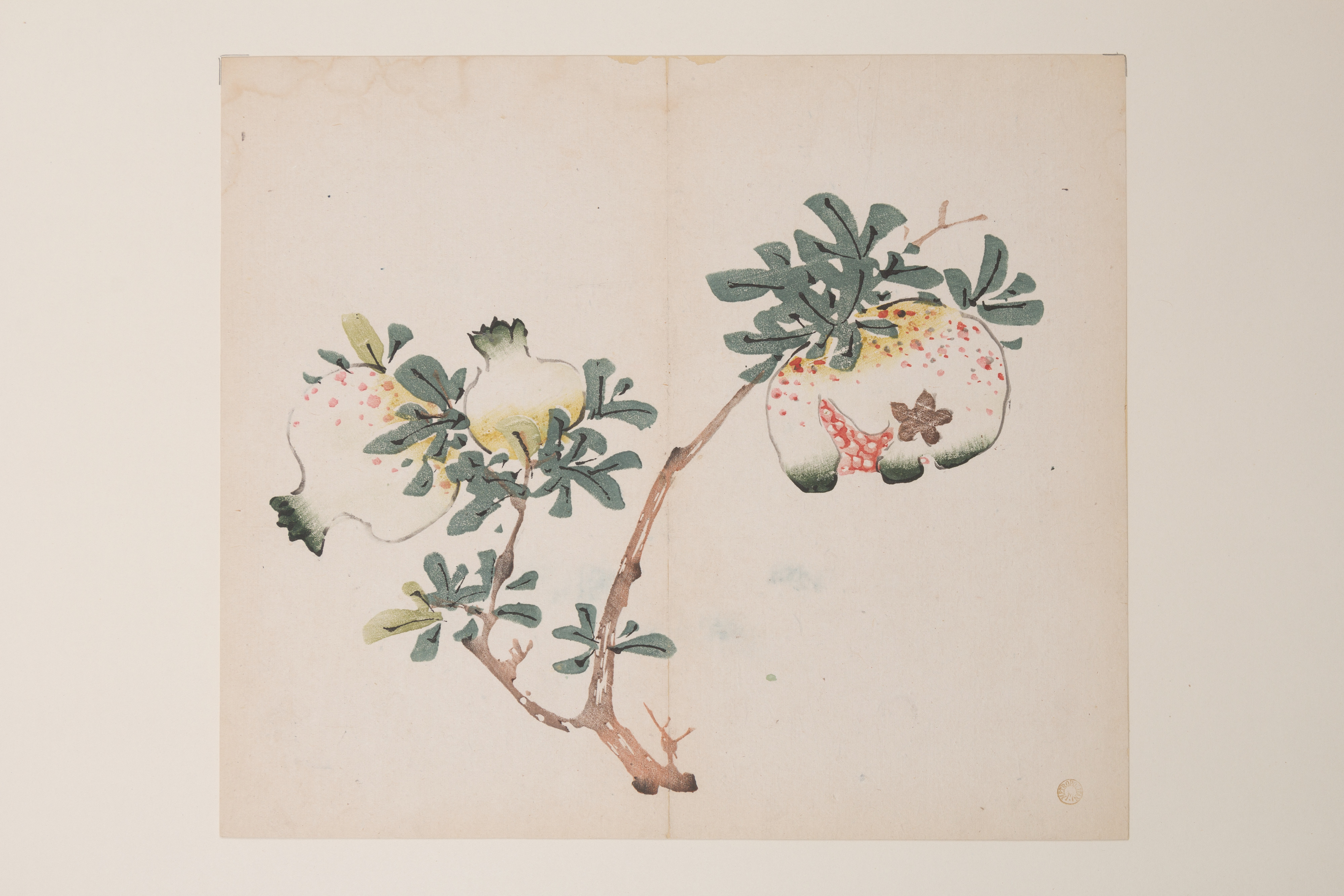
Within the hallowed archives of aesthetic archaeology, the Page from the Ten Bamboo Studio Manual of Painting and Calligraphy stands as a singular artifact. This leaf, a masterwork of Ming dynasty printmaking, transcends its function as a pedagogical guide. Composed of ink and color on paper, it represents a philosophy of line, negative space, and organic rhythm. For Natalie Fashion Atelier, this isolated fragment is not merely a historical curiosity; it is a foundational text for decoding the 2026 luxury silhouette. The technical challenge lies in translating the manual’s two-dimensional, monochromatic elegance into a three-dimensional, volumetric language of haute couture. This research artifact deconstructs the page’s classical elegance and proposes a rigorous methodology for its application in high-end garment construction.
I. Deconstructing the Classical Elegance: A Technical Analysis of the Leaf
The Ten Bamboo Studio Manual, first published in 1633, is a compendium of painting techniques. The isolated leaf under examination—likely depicting a botanical or avian subject—exhibits a masterful command of line weight, ink wash, and compositional asymmetry. The classical elegance is not derived from ornamentation, but from the economy of means. Each brushstroke is deliberate, carrying both structural and expressive intent.
Line as Architecture: The primary technical element is the contour line. In the leaf, these lines vary from hair-thin, almost invisible boundaries to bold, calligraphic strokes that define the subject’s core. This is not a static outline; it is a dynamic, breathing edge. The line’s thickness modulates to suggest volume, tension, and the flow of energy (qi). For the 2026 silhouette, this translates into seam lines that are not merely functional but expressive. A seam can be a whisper of a curve on a silk crepe bodice, or a bold, sculptural dart on a structured wool coat. The atelier must engineer seams that mimic the calligraphic stroke—varying in width, depth, and tension to create a garment that “breathes” with the wearer.
Negative Space as Volume: The manual’s genius lies in its use of liu bai (leaving white). The unpainted paper is not empty; it is the sky, the water, the air that defines the subject’s form. In couture, this principle informs the silhouette’s relationship with the body. A 2026 gown might feature a dramatic cutaway at the waist, a void that is as powerful as the fabric itself. The negative space is not an absence but a deliberate architectural void, creating a dialogue between the garment and the form it envelops. This is achieved through strategic draping, asymmetric hemlines, and cutouts that follow the body’s meridian lines, echoing the manual’s compositional balance.
Ink Wash and Color Gradation: The leaf employs a restrained palette—primarily black ink with subtle washes of mineral pigments. The gradation from dense black to translucent grey creates a sense of depth without resorting to shading or shadow. This is a monochromatic modeling of form. For the 2026 silhouette, this informs the use of texture and materiality. A single fabric—say, a double-faced cashmere or a matte silk gazar—can be manipulated through pleating, smocking, or devoré to create tonal variation. The garment becomes a canvas where light and shadow are modulated by the fabric’s own structure, not by applied color.
II. Translating the Manual into 2026 High-End Silhouettes: A Technical Lexicon
The transition from page to silhouette requires a rigorous, three-step methodology: linear extraction, volumetric translation, and kinetic integration. Each step is a technical operation that respects the source material while innovating for contemporary luxury.
Step 1: Linear Extraction – The Calligraphic Seam. The atelier begins by tracing the leaf’s primary brushstrokes. These are not copied but abstracted into a series of parametric curves. Each curve is assigned a specific function: a dart, a princess seam, a panel line. The line’s thickness is translated into a seam allowance or a structural pleat. For example, a bold stroke from the leaf’s central branch becomes a sculptural seam on a tailored jacket, running from the shoulder to the hem, widening and narrowing to create a three-dimensional contour. This seam is not stitched; it is hand-felled and pressed with a weighted iron to mimic the ink’s flow.
Step 2: Volumetric Translation – The Negative Space Silhouette. The leaf’s negative spaces are mapped onto the body. The unpainted area around a bird’s wing, for instance, becomes a cutaway on a sleeveless top, framing the armhole. The void is not arbitrary; it follows the body’s kinetic lines. For a 2026 evening gown, the back might be entirely open, with a single, calligraphic strap that echoes the leaf’s branch. This is engineered negative space, where the absence of fabric is as structurally considered as its presence. The cut is executed using laser-precise pattern cutting on a single layer of silk, ensuring the edge is raw but perfectly clean, mirroring the paper’s crisp boundary.
Step 3: Kinetic Integration – The Living Garment. The Ten Bamboo Studio leaf is not static; it implies movement—the sway of a bamboo leaf, the flutter of a bird’s wing. The 2026 silhouette must capture this kinetic quality. This is achieved through strategic fabric manipulation and construction techniques. A gown’s train might be cut on the bias, with a single, unbroken seam that spirals from the waist to the floor, creating a fluid, calligraphic line as the wearer moves. A jacket’s sleeve might be set with a rotating armhole, allowing the fabric to drape in an organic, ink-wash-like cascade. The garment is not a static object; it is a performance of line and volume.
III. Materiality and Craftsmanship: The Atelier’s Technical Response
The leaf’s materiality—ink and color on paper—dictates the atelier’s material choices. The 2026 collection will feature a monochromatic palette with tonal depth. Fabrics are selected for their ability to hold a crisp edge (like a contour line) and to absorb light (like an ink wash). Matte silk gazar, double-faced wool, and liquid satin are primary candidates. The construction techniques are equally deliberate:
- Hand-painted seams: Using a custom-mixed, pigment-rich dye, the atelier’s artisans will paint the seam lines directly onto the fabric before cutting, ensuring the line is intrinsic to the garment, not an afterthought.
- Weighted hems: To mimic the ink’s density, hems will be weighted with tiny, hand-sewn lead beads, creating a gravitational pull that echoes the leaf’s grounding.
- Layered transparency: Sheer overlays of organza will be used to create the effect of ink wash, with multiple layers of varying opacity to simulate the gradation from dense black to translucent grey.
The 2026 silhouette, informed by this isolated leaf, is not a costume or a literal reproduction. It is a dialogue between historical mastery and contemporary engineering. The Ten Bamboo Studio Manual teaches us that elegance is not about abundance, but about the precise, intentional use of line, space, and material. For Natalie Fashion Atelier, this artifact is a blueprint for a new luxury—one that is quiet, technical, and profoundly beautiful.