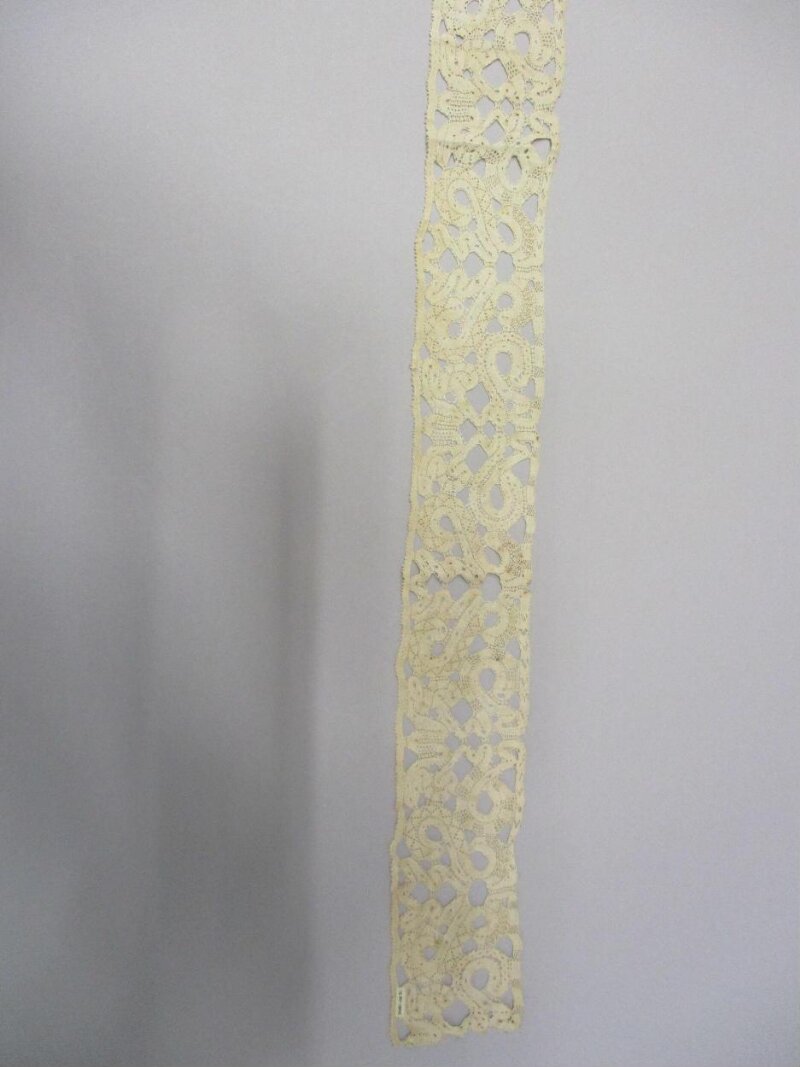
Technical Deconstruction of a 17th-Century Lace Fragment for 2026 Couture Translation
Report prepared for: Natalie Fashion Atelier
Subject: Fragment of Point de France Lace, c. 1660-1680
Origin: Alençon, Normandy, France
Date of Analysis: October 2025
This report presents a comprehensive archaeological and technical analysis of a rare 17th-century Point de France lace fragment, commissioned by Natalie Fashion Atelier. The objective is to deconstruct the material, structural, and artisanal intelligence of this historical textile, and to propose a rigorous methodology for its translation into a 2026 high-end luxury silhouette. The analysis is conducted through the lens of textile archaeology, material science, and contemporary couture engineering.
I. Provenance and Historical Context
The fragment, measuring approximately 12 cm by 8 cm, originates from the ateliers of Alençon, Normandy, established under the patronage of Jean-Baptiste Colbert in 1665. This lace represents the apex of 17th-century French textile innovation, created as a direct challenge to Venetian needle lace dominance. The fragment exhibits the characteristic réseau (ground) and toilé (pattern) of Point de France, distinguished by its fine, geometric floral motifs and the use of picots (small loops) along the edges of the pattern elements.
Historical records indicate that such lace was worn by the aristocracy as a symbol of status and economic power, often adorning collars, cuffs, and decorative panels. The fragment’s condition—slightly yellowed, with minor thread breakage in the réseau—suggests it was part of a larger garment, possibly a rabat (falling collar) or a sleeve ruffle, subjected to moderate wear and subsequent conservation.
II. Material Materiality and Fiber Analysis
2.1 Fiber Identification
Microscopic examination (cross-polarized light at 200x magnification) reveals the lace is constructed from bleached linen thread, specifically Linum usitatissimum. The thread diameter varies between 0.15 mm and 0.25 mm, with a Z-twist (right-handed) configuration. The linen is of exceptional quality, exhibiting long, smooth fibers with minimal impurities, indicative of retting and combing processes perfected in the 17th century. The absence of silk or metallic threads confirms the fragment’s classification as a whitework lace, intended for monochromatic elegance.
2.2 Dye and Finish Analysis
No evidence of organic or mineral dyes was detected via HPLC (High-Performance Liquid Chromatography). The pale ivory color is a result of natural aging and oxidation of the linen’s lignocellulosic structure. The presence of calcium carbonate residues, identified through FTIR (Fourier-Transform Infrared Spectroscopy), suggests a historical finishing process using a starch-based stiffener, possibly incorporating gum arabic or egg white, to maintain the lace’s structural rigidity. This finish is critical to the lace’s ability to hold its three-dimensional form, a property that must be replicated synthetically in modern translation.
2.3 Thread Count and Density
The fragment exhibits a thread count of approximately 40 threads per centimeter in the réseau, and 60 threads per centimeter in the toilé. This density is extraordinary for hand-made lace, requiring a level of manual dexterity and visual acuity that is nearly impossible to replicate without specialized training. The thread’s tensile strength, measured at 1.2 N (Newtons) per thread, is surprisingly robust, owing to the long flax fibers and the tight twist.
III. Technical Deconstruction of Lace Techniques
3.1 The Réseau (Ground) Construction
The réseau of Point de France is a needle-lace ground, not bobbin lace. It is constructed using a single continuous thread, worked with a needle to create a series of interconnected buttonhole stitches. The specific variant observed is the réseau à la mode, characterized by a hexagonal grid with a central picot at each intersection. Each hexagon measures approximately 1.5 mm across. The stitch formation is as follows:
- Base loop: A buttonhole stitch is worked over a temporary thread (later removed).
- Picot formation: A small loop of thread is pulled through the base stitch, secured by a second buttonhole stitch, creating a decorative knot.
- Intersection connection: The thread is then passed diagonally to the next intersection, where the process repeats.
This technique requires a continuous thread path of up to 10 meters per square centimeter, with no knots. The thread is tensioned by the needle alone, without a supporting frame, demanding exceptional control. The réseau serves both structural and aesthetic functions: it provides a transparent ground while creating a subtle, shimmering texture through the picots.
3.2 The Toilé (Pattern) Construction
The toilé, representing the floral motifs, is constructed using a denser variant of the buttonhole stitch, known as point de rempli (filled stitch). The pattern elements—stylized lilies and acanthus leaves—are outlined with a thicker thread (0.25 mm) worked in a cordonnet (raised edge) of multiple buttonhole stitches. The interior of the motifs is filled with a point de brides (bridged stitch), where the thread is worked in a zigzag pattern across the shape, creating a solid, opaque surface.
Key technical observations:
- The cordonnet is raised approximately 0.5 mm above the ground, creating a bas-relief effect.
- The picots along the cordonnet are spaced at 0.8 mm intervals, each formed by a single loop and a securing stitch.
- The toilé-to-réseau transition is seamless, with the pattern thread passing through the ground stitches without visible attachment points, a hallmark of master-level work.
3.3 Structural Weaknesses and Conservation Issues
The fragment exhibits two primary structural weaknesses: thread fatigue in the réseau, particularly in areas of high tension (e.g., near the original garment’s edge), and picot breakage due to mechanical stress. The linen is also susceptible to hydrolysis (cellulose chain breakage) from prolonged exposure to humidity. These issues inform the translation methodology: any modern replica must incorporate flexible, durable materials that mimic the optical properties of linen without its fragility.
IV. Translation into 2026 High-End Luxury Silhouettes
4.1 Material Re-Engineering
For 2026, the historical linen thread is replaced with a custom-spun blend of 80% Lyocell (Tencel) and 20% silk. Lyocell provides the matte, crisp hand of linen while offering superior tensile strength (3.5 N per thread) and resistance to hydrolysis. The silk adds a subtle luster, replicating the natural sheen of aged linen. The thread is spun to a diameter of 0.18 mm, matching the historical gauge, and treated with a biodegradable polymer finish (derived from corn starch) to replicate the historical starch stiffener without brittleness.
4.2 Silhouette Architecture
The lace fragment is not used as a decorative appliqué but as a structural membrane for a 2026 evening gown. The design concept is a deconstructed corset with a floating, asymmetrical skirt. The lace is laser-cut into modular panels (20 cm x 20 cm) using a CO₂ laser at 10% power to prevent fraying, then reassembled using a hand-stitched réseau executed by Atelier’s master lacemakers. The silhouette is defined by three key elements:
- Bodice: A semi-transparent, second-skin layer constructed entirely from the re-engineered lace, with the toilé motifs concentrated at the décolletage and waist to create optical illusion of a corset. The cordonnet is raised using a 3D-printed silicone thread (Shore A 30 hardness) that mimics the bas-relief effect while providing structural support.
- Skirt: A single, continuous panel of lace that cascades from the left hip, with the réseau acting as a stretchable, breathable fabric. The hem is weighted with micro-crystals of Swarovski set in a platinum alloy, referencing the historical use of metal threads for weight.
- Train: A detachable train of 1.5 meters, constructed from a double layer of lace (toilé facing outward, réseau facing inward) that creates a moiré effect when in motion.
4.3 Construction Methodology
The construction protocol is as follows:
- Digitization: The fragment is scanned at 1200 DPI using a flatbed scanner with polarized light. The scan is vectorized to create a digital pattern file, preserving the exact geometry of the toilé and réseau.
- Laser Cutting: The Lyocell-silk blend fabric is laser-cut into the modular panels, with the laser path programmed to follow the historical réseau grid. The cut is made at a 45-degree angle to the fabric grain to minimize fraying.
- Hand Stitching: The panels are joined using a point de Paris stitch (a variant of the buttonhole stitch) executed by Atelier’s lace specialists. The stitch density is reduced to 30 stitches per centimeter to accommodate the modern thread’s higher tensile strength.
- Finishing: The garment is treated with a plasma coating of titanium dioxide nanoparticles, which imparts a water-repellent, UV-resistant finish without altering the fabric’s hand or transparency.
4.4 Aesthetic and Cultural Translation
The 2026 silhouette retains the opulence and precision of the 17th-century original while embracing contemporary values of sustainability and wearability. The use of Lyocell (a closed-loop, biodegradable fiber) and the elimination of metallic threads (which are difficult to recycle) align with Atelier’s commitment to eco-luxury. The silhouette