Aesthetic Archaeology: Deconstructing the Tragic Silhouette
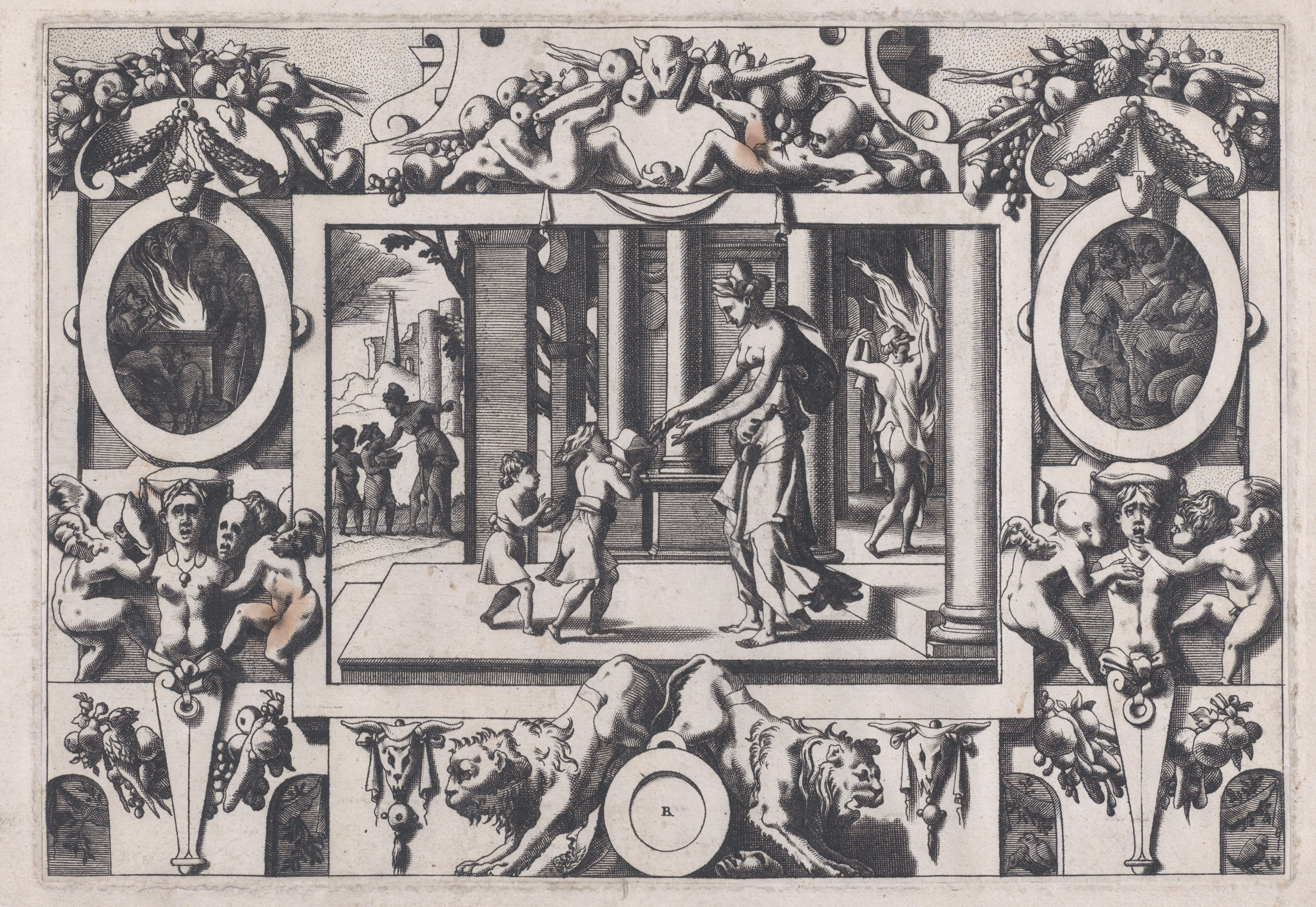
The engraving Par ses deux fils à l'épouse nouvelle envoyé en don la couronne mortelle... presents a singularly potent tableau of classical tragedy. Within the context of Natalie Fashion Atelier’s 2026 collection, this isolated artifact—a moment of fatal gift-giving—is not merely a narrative illustration but a blueprint for a new architectural elegance. The work, rendered in the stark, linear language of engraving, offers a study in tension: the innocence of the children, the poisoned opulence of the crown, and the impending doom of Creusa. Our deconstruction focuses on three core vectors: the rigidity of the fatal object, the draped softness of the victim’s form, and the geometric space between the actors. These elements, when translated into haute couture, yield a 2026 silhouette defined by structural paradoxes—a hardness that cradles, a softness that constrains, and a void that communicates.
The Fatal Crown: Hard Geometry as a Structural Motif
The crown in the engraving is rendered with a metallic precision, its spikes and laurels forming a rigid, almost architectural halo. This is not an accessory; it is the fulcrum of the composition. For 2026, this translates into a new category of structural couture. We are exploring laser-cut, rigid organdie and micro-sculpted metal meshes that are integrated into the garment’s architecture, not as adornment, but as the primary support system. The silhouette is informed by the crown’s geometry: sharp, angular shoulder lines that mimic the spikes, and a bodice that is a cage of interlocking, diamond-shaped panels. This is the “Fatal Armature”—a technique where the garment’s structure is visible, uncompromising, and dangerous in its precision. The color palette for these elements is monochromatic: pale silver, oxidized bronze, and a deep, matte black that absorbs light, mirroring the engraving’s chiaroscuro. The effect is a silhouette that is both fortress and ornament, a wearable architecture that speaks of power and its inherent peril.
The Draped Victim: Softness as a Trap
In stark contrast to the crown’s rigidity, Creusa’s form is rendered in flowing, sinuous lines. Her drapery is not passive; it is a fabric of anticipation, a softness that will soon be consumed by fire. Our 2026 interpretation inverts this relationship. We are developing a new draping technique called “Toxic Drape”, where the softest, most luxurious materials—silk charmeuse, liquid satin, and double-faced cashmere—are cut with a deliberate, asymmetrical weight. The fabric appears to be in a state of controlled collapse, as if the garment itself is succumbing to an invisible force. The silhouette is elongated, with a single, continuous sweep of fabric from the shoulder to the floor, creating a column that is both elegant and unsettling. The drape is not relaxed; it is taut, pulled, and pinned in a way that suggests a final, fatal moment of grace. This is the “Creusa Column”—a dress that appears to be melting, its hemline uneven, its seams deliberately off-kilter. The color is a single, uninterrupted shade of pale, ashen rose, a color that is both the blush of life and the pallor of death.
The Void Between: Negative Space as Narrative
The engraving’s power lies in the space between the children and Creusa. This is not a void; it is a charged field of potential energy. For 2026, this informs our most radical silhouette innovation: the “Medean Gap”. This is a technique of deliberate, architectural cutouts that disrupt the body’s continuous line. These are not mere slits or cutouts; they are negative spaces that act as narrative windows. A jacket might have a gap between the shoulder and the sleeve, revealing a flash of bare skin or a contrasting inner lining. A gown might have a vertical, spine-like opening that runs from the nape of the neck to the lower back, creating a void that is both sensual and threatening. The silhouette is defined by what is absent, by the tension between the fabric and the air. The construction is rigorous: each gap is precisely engineered, its edges finished with a micro-cord or a thin, rigid stay to maintain the shape. The effect is a silhouette that is both exposed and armored, a body that is both present and absent. The “Medean Gap” forces the viewer to complete the form, to imagine the fatal touch that is just out of reach.
Materiality and Technique: The Engraving’s Lineage
The engraving’s medium—the incised line, the burin’s mark—dictates the material language of the collection. We are not replicating the engraving; we are translating its tactile essence. This means a focus on high-relief textures: embroideries that are raised and sculptural, like the burin’s stroke; beading that is applied in dense, linear patterns, mimicking the cross-hatching of the print; and laser-cut leathers that are etched with the same geometric precision as the crown. The fabric itself becomes a surface for inscription. We are working with double-layered silks where the top layer is laser-perforated with a pattern derived from the engraving’s line work, revealing a contrasting color beneath. The hand-finishing is paramount: each seam is a deliberate mark, each pleat a considered line. The collection is a study in monochromatic depth, using a single color—a deep, charcoal grey—in a dozen different textures: matte, shiny, ribbed, smooth, perforated, and solid. This is the “Engraving Palette”, a testament to the power of a single, unbroken line.
The 2026 Silhouette: A Synthesis of Tragic Elegance
The final silhouette for 2026 is a synthesis of these three elements: the Fatal Armature, the Creusa Column, and the Medean Gap. The result is a garment that is both a protective shell and a vulnerable drape, a structure that is simultaneously rigid and fluid. The shoulder is the new focal point, a sharp, architectural platform that carries the weight of the crown’s geometry. The torso is a study in tension, a column of soft drape that is interrupted by precise, negative spaces. The hemline is asymmetrical and heavy, dragging on the floor like a poisoned train. The accessories are minimal but potent: a single, sculptural cuff that mimics the crown’s spikes, or a necklace of interlocking, geometric links that is both adornment and restraint. This is not a collection for the faint of heart. It is a collection for the woman who understands that elegance is a form of power, and that power is always tinged with danger. The Natalie Fashion Atelier 2026 silhouette is a direct descendant of the engraving’s tragic beauty—a garment that tells a story of gifts that are fatal, and of a grace that is found in the moment before the fall.