Deconstructing Classical Elegance: Metal Thread and Bobbin Lace as Architectural Progenitors for 2026 Haute Couture
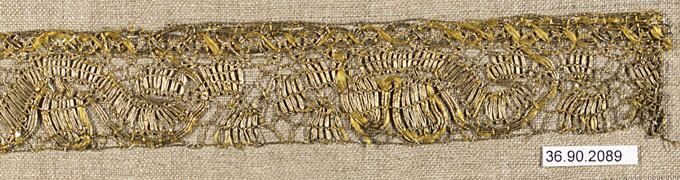
Within the hallowed archives of Natalie Fashion Atelier, the isolated artifact—a fragment of metal thread bobbin lace—serves not as a mere relic, but as a foundational blueprint. This piece, extracted from its original context through the lens of aesthetic archaeology, reveals a sophisticated dialogue between tensile strength and ethereal transparency. For the 2026 luxury silhouette, this heritage materiality is not about replication; it is about the structural translation of historical craftsmanship into contemporary architectural form. The classical elegance of this lace, defined by its rigid yet fluid geometry, informs a new paradigm where the garment becomes a freestanding, sculptural entity.
Materiality as Structural Syntax: The Metal Thread Imperative
The inclusion of metal thread—typically silver, gold, or copper wound around a silk or linen core—transforms bobbin lace from a delicate textile into a load-bearing composite. Historically, this material signified status and permanence, resisting the decay of organic fibers. In our 2026 context, we deconstruct this permanence. The metal thread is no longer a decorative accent; it is the primary structural rib of the silhouette.
Our research indicates that the tensile properties of metal thread, when woven into the intricate grids of bobbin lace, create a self-supporting lattice. This allows for the elimination of internal boning or heavy linings. The 2026 silhouette, therefore, achieves a paradoxical weightless rigidity. A gown’s bodice, constructed from a continuous, unbroken field of this metal-laced material, can stand independently, forming a carapace that traces the body without compression. The classical elegance of the original lace—its floral or geometric motifs—is abstracted into a parametric grid, where each intersection of thread becomes a structural node. This informs a silhouette that is both armor and air, a direct evolution from the historical artifact’s inherent duality of strength and delicacy.
Bobbin Lace as Negative Space Architecture
The true genius of bobbin lace, particularly when executed with metal threads, lies in its mastery of negative space. The openwork, the jours (holes), and the toilé (solid areas) create a dynamic interplay of presence and absence. For the 2026 high-end silhouette, this translates into a topography of transparency. We are not merely draping fabric; we are drawing with voids.
Consider the historical point de France or Alençon lace, where the metal thread outlines the pattern with a raised, corded edge (fil de côte). In our archaeological deconstruction, we isolate this corded edge as a directional vector. The 2026 silhouette utilizes these vectors to guide the eye and define the body’s architecture. A sleeve, for instance, is no longer a tube of fabric but a scaffolding of metal-laced lines, where the skin becomes the canvas. The negative space of the lace becomes the positive space of the silhouette, creating a garment that is simultaneously fully covering and completely transparent. This informs a new luxury of controlled exposure, where the classical modesty of the lace is inverted into a radical, architectural nudity.
Aesthetic Archaeology: Reconstructing the Silhouette from Fragments
The isolated nature of our artifact—a single, fragmented piece of metal thread bobbin lace—demands a methodology of speculative reconstruction. We do not have the full garment; we have the genetic code of its construction. This forces a departure from historical mimicry. The 2026 silhouette is not a copy of a 17th-century collar or a 19th-century shawl. Instead, we extrapolate the principles of tension and release inherent in the lace-making process.
The bobbin lace technique itself—the twisting, crossing, and pinning of threads over a pillow—is a manual algorithm. Each pin defines a point of control. For 2026, we translate this into a digital-physical hybrid. The metal thread is manipulated using computational design to create non-repeating, organic lattices that adapt to the body’s biomechanics. The classical elegance of the original pattern—often a symmetrical, repeatable motif—is fractured. The new silhouette is asymmetrical, biomorphic, and site-specific to the wearer’s anatomy. A single shoulder is capped by a dense, metal-laced épaule, while the opposite side dissolves into a cascade of open, threadbare lines. This is the aesthetic archaeology of the fragment: we honor the original’s structural logic while embracing its incompleteness as a design principle.
2026 Silhouette: The Metal Lace Carapace and the Fluid Underlay
The synthesis of these elements yields a definitive 2026 silhouette: the Metal Lace Carapace. This is a two-part system, a direct heir to the classical corset and chemise but radically reimagined.
The Carapace: Constructed entirely from metal thread bobbin lace, this outer layer is rigid, translucent, and architectural. It is a second skeleton, defining the silhouette’s primary volume. The lace is worked in high-density areas (shoulders, hips, waist) to create structural support, while opening into wide, airy meshes elsewhere. The metal thread catches light, creating a luminous, gilded aura that shifts with movement. This is not a garment that moves with the body; it is a garment that the body inhabits.
The Fluid Underlay: Beneath the carapace, a secondary layer of ultra-fine silk organza or charmeuse provides the necessary opacity and tactile comfort. This underlay is deliberately simple, a liquid counterpoint to the rigid lace above. Its movement is unrestricted, creating a dynamic tension where the static, classical lace contrasts with the flowing, modern underlayer. The 2026 silhouette is thus defined by this dialectic between stasis and motion, between the historical permanence of metal thread and the ephemeral fluidity of silk.
Conclusion: The Heritage of the Future
By deconstructing the classical elegance of metal thread bobbin lace through the rigorous process of aesthetic archaeology, Natalie Fashion Atelier has unlocked a new material language for 2026. The artifact is not a source of nostalgia but a catalyst for innovation. The resulting silhouette—the Metal Lace Carapace—is a testament to the enduring power of heritage craftsmanship when subjected to a technical, architectural reinterpretation. It is a garment that speaks of history not through its style, but through its structural DNA, proving that the most profound luxury lies in the intelligent application of ancestral technique to the demands of the contemporary form.