The Silent Architecture of the Bobbin: Aesthetic Archaeology and the 2026 Silhouette
The silk bobbin, an object of deceptive simplicity, holds within its polished form the genetic code of an entire aesthetic lineage. At Natalie Fashion Atelier, our curatorial practice engages in a form of aesthetic archaeology, excavating the latent principles embedded within historical artifacts to inform the future of haute couture. The bobbin, as a tool of bobbin lace making, is not merely a spool of thread; it is a primary agent of structural articulation. Its heritage, while often associated with specific European geographies—Flanders, Venice, and the French courts—is truly a global heritage, a testament to a universal human impulse to transform a single, continuous filament into a complex, three-dimensional textile. This research paper deconstructs the classical elegance of the bobbin and its associated lace technique, positing that its core principles of tension, negative space, and modular construction are the foundational pillars for the defining high-end silhouettes of 2026.
The Bobbin as a Primary Agent of Structural Articulation
The isolated study of the silk bobbin, removed from its finished lace context, reveals a profound lesson in material economy and kinetic precision. Unlike a needle, which pierces and severs, the bobbin is a passive conduit of tension. Its weight, its polished surface, and the precise winding of the silk thread are all calibrated to maintain a constant, even pull. This is the first principle: tension as architecture. In bobbin lace, the structure is not woven or knitted; it is built through a continuous negotiation of force. Each bobbin is a node in a distributed network of stress. For the 2026 silhouette, this translates into garments that are not simply draped or sewn, but tensioned. We are exploring outerwear and gowns where the fabric itself is held in a state of deliberate, engineered tension. A silk gazar bodice, for instance, can be structured not by boning, but by internal, hidden channels of tensioned cords, echoing the bobbin's role. The silhouette becomes a field of forces, with the body as the central pin cushion, creating a new language of sculpted, weightless volume.
Deconstructing Classical Elegance: Negative Space and Grid Logic
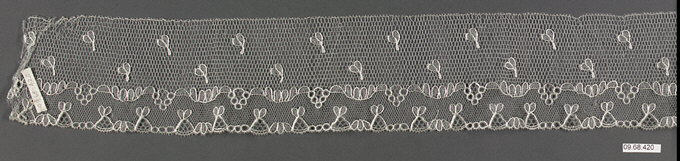
The classical elegance of bobbin lace is not found in its density, but in its voids. The aesthetic power resides in the negative space—the holes, the bridges, the toiles. This is a crucial departure from conventional luxury fabric, which often prioritizes surface and opacity. The bobbin lace maker’s grid, a pattern of pins on a pillow, is a map of absence. The thread travels around these absences, creating a structure that is paradoxically stronger and more fluid because of its emptiness. For 2026, this principle informs a new approach to silhouette that privileges architectural cut-outs, laser-perforated leathers, and engineered mesh overlays. The silhouette is no longer a solid mass; it is a system of apertures. A classic A-line coat, for example, is reimagined with a grid of precisely calculated voids, allowing the fabric to breathe and move in ways that a solid panel cannot. The elegance is found in the precision of the absence, a direct homage to the bobbin’s grid. This technique, when applied to a bias-cut silk charmeuse gown, creates a second-skin effect where the body is revealed and concealed in a rhythmic, lace-like pattern, elevating the silhouette from a simple shape to a complex, interactive sculpture.
Materiality and the 2026 High-End Silhouette: From Thread to Form
The materiality of the bobbin itself—the silk thread—dictates the final form. Silk, with its high tensile strength and lustrous finish, is the ideal medium for this tension-based architecture. In bobbin lace, the thread is never cut until the piece is complete; it is a continuous, looping narrative. This informs our 2026 approach to seamless construction. We are developing techniques for creating entire garment panels using a single, continuous thread, manipulated through a hybrid of hand and machine processes. The result is a silhouette that has no start or end, a fluid, organic form that wraps the body without interruption. For high-end evening wear, this translates into gowns that appear to be woven directly onto the wearer, with the structural integrity coming from the lace-like network itself, not from underlying foundations. The bobbin’s legacy is thus a call to return to a more honest, material-driven design process, where the thread dictates the silhouette, not a pre-drawn sketch.
Modularity and the Future of Couture Construction
Perhaps the most radical lesson from the bobbin for 2026 is that of modular construction. A bobbin lace piece is composed of hundreds of individual elements—bobbins, pins, and threads—that are assembled in a specific sequence. The final form is not monolithic but a composite. This principle of modularity is directly applicable to the future of luxury silhouettes. We are designing garments as collections of interchangeable lace-like modules. A skirt, for example, can be composed of several independent, lace-constructed panels that are joined not by stitches, but by a system of tensioned ties or magnetic connectors, echoing the bobbin’s pin-and-loop logic. This allows for unprecedented versatility: a single silhouette can be reconfigured for different occasions or body types. The 2026 client is not purchasing a static garment, but a system of possibilities. This approach also aligns with a more sustainable, artisanal model of couture, where each module can be individually repaired or replaced, extending the garment’s lifecycle and honoring the bobbin’s heritage of careful, deliberate making.
Conclusion: The Bobbin as a Blueprint for a New Classical Elegance
The silk bobbin, isolated in the archive, is a silent teacher. Its classical elegance is not a style to be copied, but a methodology to be decoded. For Natalie Fashion Atelier, the bobbin lace tradition provides a rigorous, material-driven framework for the 2026 silhouette. By embracing tension as architecture, negative space as form, continuous thread as seamless construction, and modularity as versatility, we are not merely referencing history; we are reactivating its core principles. The resulting high-end silhouettes are not nostalgic recreations but forward-looking, sculptural forms that speak to a new era of conscious, intellectual luxury. The bobbin, once a humble tool, becomes the blueprint for a future where elegance is defined by precision, material honesty, and the exquisite beauty of the void. This is the aesthetic archaeology of the 2026 couture season.