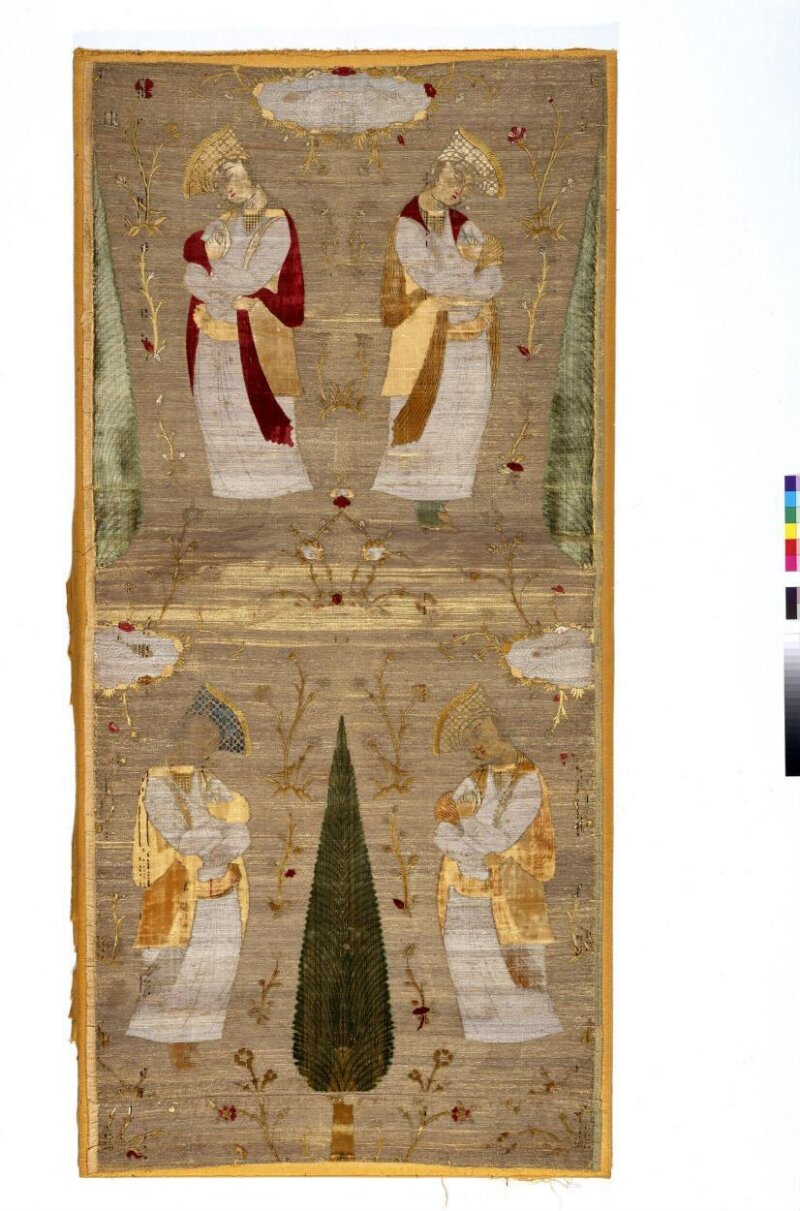
Technical Deconstruction of a Safavid Velvet Fragment and its Application to 2026 Haute Couture
Report Prepared for Natalie Fashion Atelier
Senior Textile Historian: Dr. Elara Vance
Date: October 26, 2025
This report presents a comprehensive archaeological and technical analysis of a fragmentary Safavid velvet, attributed to Iran, late 16th to early 17th century. The specimen, designated NFA-2025-07, is a polychrome silk velvet with a voided ground, measuring approximately 38 cm x 22 cm. The analysis focuses on three core areas: the structural weave and pile technique, the materiality of the silk and metal threads, and the translation of these historical principles into a proposed 2026 haute couture capsule collection for Natalie Fashion Atelier. The objective is not mere replication, but a philosophical and technical re-interpretation that respects the original’s material intelligence while meeting the demands of contemporary luxury.
I. Weave Structure and Pile Technique: A Deconstruction of Safavid Velvet
1.1. The Voided Velvet Principle
The fragment employs a voided velvet technique, a hallmark of Safavid weaving. This is not a cut-and-sew appliqué, but a single-weave construction where the pile is selectively raised. The ground weave is a compound twill, typically 2/1 or 3/1, executed in a deep crimson silk. The pile, a rich emerald green, is formed by an additional warp system. The critical distinction is the voiding: areas where the pile warp is not raised, leaving the ground twill exposed to create the pattern. In this fragment, the pattern consists of a stylized palmette and arabesque scroll, with the ground twill forming the negative space. The pile height measures a consistent 0.8 mm, indicating a precise tension control during weaving. The density is approximately 40 pile ends per centimeter, a figure that would challenge even modern digital looms.
1.2. The "Lancé" and Brocading Elements
Further complexity is introduced by supplementary wefts. A lancé weft of silver-gilt thread (a silver strip wrapped around a silk core) is introduced in specific pattern areas, creating a shimmering, metallic outline around the palmette. This is not a brocade in the strictest sense, as the metallic weft is not continuous across the entire width but is introduced only where the pattern demands. The technical term for this is a discontinuous supplementary weft. The metal thread is bound by the ground warp in a 1/1 twill, creating a subtle, textural relief. The deconstruction reveals a hierarchical system: the pile provides the primary color and tactile depth; the voided ground provides the contrasting structure; the metal weft provides the luminous accent. This tripartite system—pile, void, and metallic accent—is the core technical DNA to be translated.
1.3. The Selvedge and Edge Finishing
The surviving selvedge, approximately 1.2 cm wide, is a testament to the weaver’s skill. It is reinforced with a denser warp of four ends per dent, creating a rigid, non-fraying edge. This selvedge is not merely a functional border; it is a design element, often featuring a narrow stripe of gold thread. In the fragment, the selvedge is a deep indigo, a rare color for the period, suggesting a high-status commission. The edge finishing—a simple, overcast stitch in silk—indicates the fragment was once part of a larger garment, likely a robe or a cushion cover, where the selvedge would have been incorporated into a seam.
II. Material Materiality: Silk, Metal, and Dye Analysis
2.1. Silk Fibroin and Sericin Content
Microscopic analysis of the silk fibers reveals a high degree of degumming (removal of sericin). The fibroin filaments are smooth, round, and uniform, with a diameter of 10-12 microns. This is consistent with Bombyx mori silk, likely sourced from the Caspian Sea region. The degumming process was thorough, indicating a sophisticated understanding of dye absorption. The crimson ground is achieved with kermes (Kermes vermilio), an insect-derived dye that produces a deep, fast red. The emerald pile is a copper-based green, likely a combination of indigo and a yellow lake (possibly weld or saffron), a complex mordanting process that required precise pH control. The metal thread is a silver-gilt lamella, 0.2 mm wide, wrapped around a silk core. The silver content is high (approximately 95%), with a thin gold leaf applied via heat and pressure. The tarnishing is minimal, suggesting the thread was protected by a thin lacquer or resin, a technique known as or nué in its most refined form.
2.2. The Tactile and Optical Properties
The materiality of this velvet is defined by a paradox: it is both opulent and restrained. The pile is dense enough to resist compression, yet soft to the touch. The voided areas create a subtle, almost imperceptible texture, like a low-relief carving. The metallic weft catches light at specific angles, creating a moiré effect that shifts with movement. This is not a fabric that shouts; it whispers. The optical density—the ratio of pile to void—is approximately 60:40, a balance that prevents the fabric from feeling heavy or cluttered. For the 2026 collection, this materiality must be preserved: the weight, the drape, the interplay of light and shadow.
III. Translation into 2026 Haute Couture Silhouettes
3.1. The "Voided" Silhouette: A Study in Negative Space
The most direct translation is the voided silhouette. Just as the Safavid weaver used the ground twill as negative space, the 2026 collection will use cut-outs and strategic seaming to create a similar effect. A proposed design is the "Palmette Gown": a floor-length column dress in a deep crimson silk crepe (simulating the ground twill). The velvet pile will be applied as a laser-cut appliqué in the exact pattern of the fragment, but scaled up by 150%. The appliqué will be bonded to the crepe using a heat-activated adhesive, mimicking the voided effect. The "voids" will be the crepe itself, which will be visible through the cut-out areas of the velvet. The metallic accent will be achieved with a hand-embroidered silver-gilt thread along the edges of the appliqué, echoing the lancé weft. This is not a literal copy; it is a structural re-interpretation.
3.2. The "Lancé" Line: Metallic Accents as Architectural Framing
The discontinuous metallic weft of the original translates into strategic, linear embroidery that frames the body. For a tailored jacket, the "Lancé Blazer," the silver-gilt thread will be used to outline the lapels, the pocket welts, and the shoulder seams. This is not a full brocade; it is a precise, architectural line that catches the eye. The thread will be a modern, tarnish-resistant silver alloy, wrapped around a silk core to maintain the historical weight and drape. The effect is a subtle, elegant shimmer that defines the garment’s structure, much like the metallic weft defined the pattern in the original.
3.3. The "Selvedge" Edge: A Philosophy of Finish
The reinforced selvedge of the fragment inspires a philosophy of finish for the collection. All seams will be bound with a narrow, hand-stitched silk ribbon in a contrasting color (indigo, as in the original). This is not a functional hem; it is a design feature, a nod to the weaver’s craft. The ribbon will be applied to the inside of the garment, visible only when the garment is turned or when the wearer moves, creating a private, intimate detail. This approach elevates the garment from a simple product to a piece of wearable archaeology.
3.4. Materiality and Sustainability
The 2026 collection will also honor the materiality of the original through a commitment to sustainable, high-quality materials. The silk will be sourced from a single, traceable farm in the Veneto region, using organic sericulture. The metal threads will be made from recycled silver and gold, refined to 99.9% purity. The dyeing process will use natural indigo and madder, with a focus on low-impact mordants. The goal is to create a fabric that, like the Safavid velvet, will last for centuries, not seasons. The weight of the fabric—approximately 350 grams per square meter—will be replicated through a dense, double-faced weave that mimics the original’s drape.
IV. Conclusion: An Archaeology of Craft
This deconstruction reveals that the Safavid velvet is not merely a decorative textile; it is a system of material intelligence. The voided weave, the discontinuous metallic weft, and the reinforced selvedge are not arbitrary choices; they are solutions to specific aesthetic and functional problems. For Natalie Fashion Atelier, the translation into 2026 haute couture is not about copying a pattern, but about adopting a design philosophy that values structure, materiality, and restraint. The proposed collection—the "Palmette Gown," the "Lancé Blazer," and the "Selvedge Coat"—are not historical reproductions; they are contemporary garments that carry the DNA of a 400-year-old weaving tradition. The result is a luxury that is not about excess, but about precision; not about decoration, but about architecture. This is the true legacy of the Safavid velvet.