The Gold Standard: Deconstructing Classical Elegance for 2026 Silhouettes
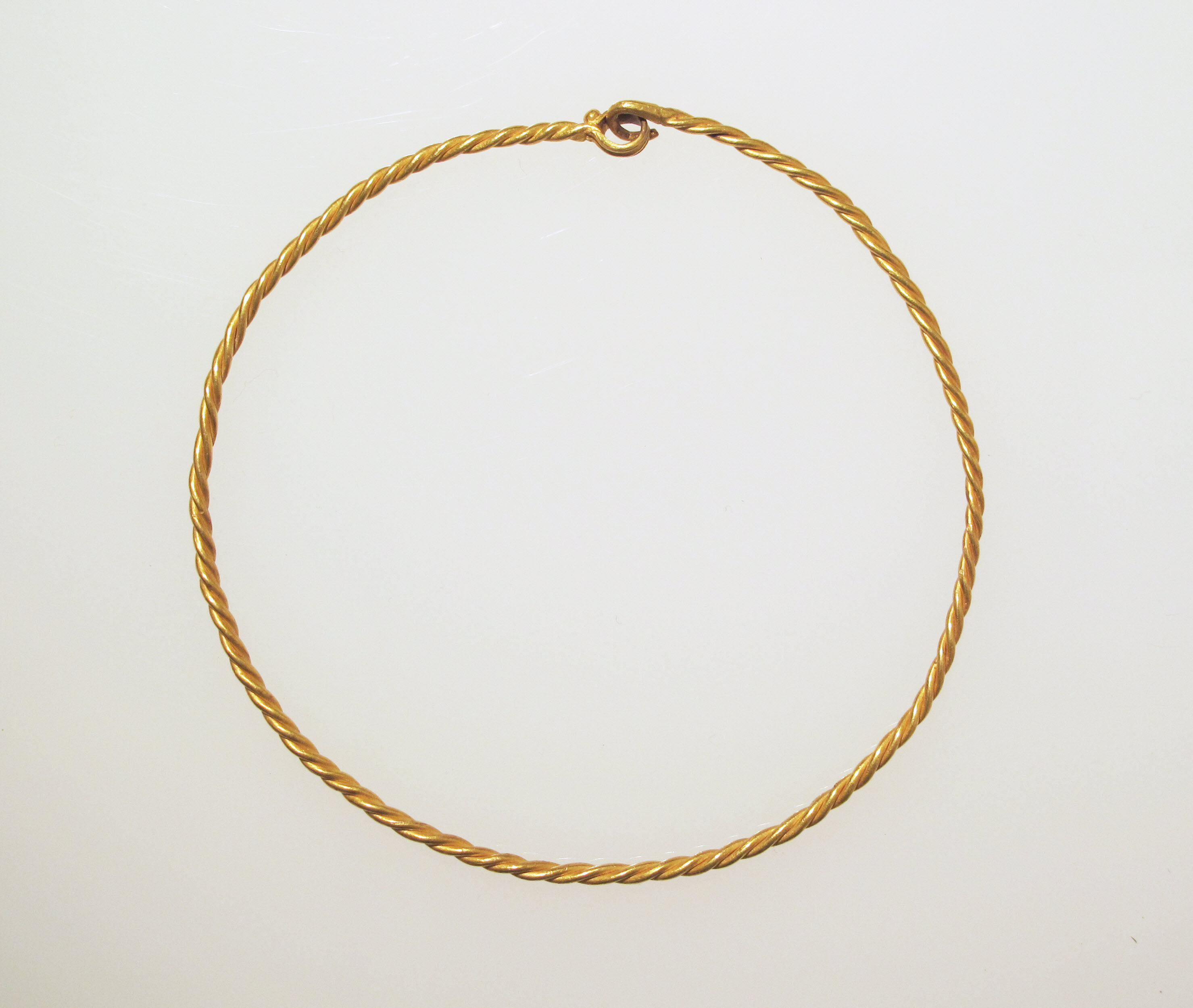
The bracelet, in its most primal form, is a circle—a closed loop of intention, a boundary between the self and the world. Yet, within the archive of global heritage, this simple geometry becomes a profound vessel for narrative. Our current research artifact, a golden bracelet inspired by the archive node referencing a Mirror with Split-Leaf motif, presents a unique dialectic. One side is a polished silver mirror, a surface of pure reflection, inlaid with intricate golden palm leaves. The obverse is a cold sarcophagus slab, where a life story is told in bas-relief. This duality—between the ephemeral reflection and the eternal narrative, between polished surface and textured depth—provides the foundational thesis for our 2026 haute couture silhouettes. We are not merely designing jewelry; we are translating a philosophy of materiality into the architecture of the garment.
Materiality as Dialectic: The Gold Dichotomy
Gold, in this context, is not a monolithic symbol of wealth. It is a semiotic material, its meaning derived from its interaction with its counterpart. The polished silver of the mirror represents a contemporary ideal: a surface of flawless, instantaneous reflection. The gold inlay of the palm leaves is not applied; it is embedded, suggesting a deep, almost geological integration. This is a lesson in material hierarchy for 2026. We must move beyond appliqué and toward structural inlay. The silhouette will not be decorated with gold; it will be constructed through it.
From Surface to Structure: The Inlay Principle
For the 2026 collection, this principle manifests in the articulation of the shoulder and the hip. Instead of a gold lamé fabric, we propose a technique of metallic lattice inlay within a base of matte, sculpted wool or silk faille. The gold threads are not woven but rather inserted into the fabric’s warp and weft at precise, load-bearing points. This creates a silhouette that is both rigid and fluid—a paradox that echoes the mirror’s reflective surface. The gold acts as an exoskeleton, defining the shape of the sleeve or the drape of a peplum, while the base fabric breathes and moves. This is an architectural approach to couture, where the metallic element is the tensile structure, not the decorative trim.
Textural Narrative: The Bas-Relief Embodiment
The opposite side of the archive node—the sarcophagus slab with its bas-relief—demands a different translation. Here, gold is not a surface but a narrative topography. The 2026 silhouette must incorporate tactile storytelling. We achieve this through raised, sculptural seams that trace the body’s contours like a map. These seams are not hidden; they are celebrated, constructed from a dense, hand-embroidered gold thread that creates a low, three-dimensional relief. The narrative of the garment is told through these seams—a journey from the collarbone to the waist, echoing the life story on the sarcophagus. This is haute couture as archaeological excavation, where the wearer’s body becomes the artifact, and the gold seams are the inscriptions.
Silhouette Architecture: The 2026 Manifestation
The 2026 silhouette, informed by this golden bracelet, is defined by asymmetrical tension. The mirror side suggests a clean, unbroken line—a columnar or A-line form that is almost severe in its purity. The sarcophagus side introduces volume and rupture. The silhouette will not be a single shape but a dialogue between two opposing volumes.
The Split-Leaf Construction
The palm leaf motif, split and inlaid, is the key to the garment’s cut. We introduce the Split-Leaf Drape: a panel of fabric that is cut on the bias, then folded and anchored at a single point, creating a leaf-like asymmetry. One side of the drape is finished with a polished, almost mirror-like satin. The other side is heavily textured with gold embroidery, mimicking the bas-relief. This is not a simple asymmetry; it is a structural dichotomy. The garment’s silhouette changes as the wearer moves, revealing one narrative and then the other. This is the 2026 evolution of the transformable silhouette, not through mechanical zippers but through inherent fabric tension and strategic weighting.
The Gold as Counterweight
Gold, in its physical density, becomes a counterweight for the silhouette. The bracelet’s weight is not distributed evenly; it is concentrated in the gold inlay. Similarly, the 2026 garment will feature strategic gold weighting at the hem or the nape of the neck. This is not for ornamentation but for gravitational control. A gold chain, woven into the hem of a bias-cut gown, creates a specific fall and a particular tension. It anchors the fabric, creating a silhouette that is both deliberate and organic. This is a direct reference to the craftsmanship of the bas-relief, where every line is a calculated incision into the stone.
Conclusion: The Eternal Loop
The bracelet, as a closed loop, reminds us that luxury is not linear. The 2026 silhouette is not a departure from history but a re-entering of the archival circle. By deconstructing the classical elegance of the gold bracelet—its mirror, its inlay, its relief—we arrive at a silhouette that is archaeologically informed and futuristically executed. The gold is no longer an accessory; it is the skeleton of the silhouette. The garment becomes a wearable archive, a mirror that reflects not just the present but the deep, resonant past. For Natalie Fashion Atelier, this is the only standard that matters.