From Albumen to Aura: Deconstructing Classical Elegance for 2026 Silhouettes
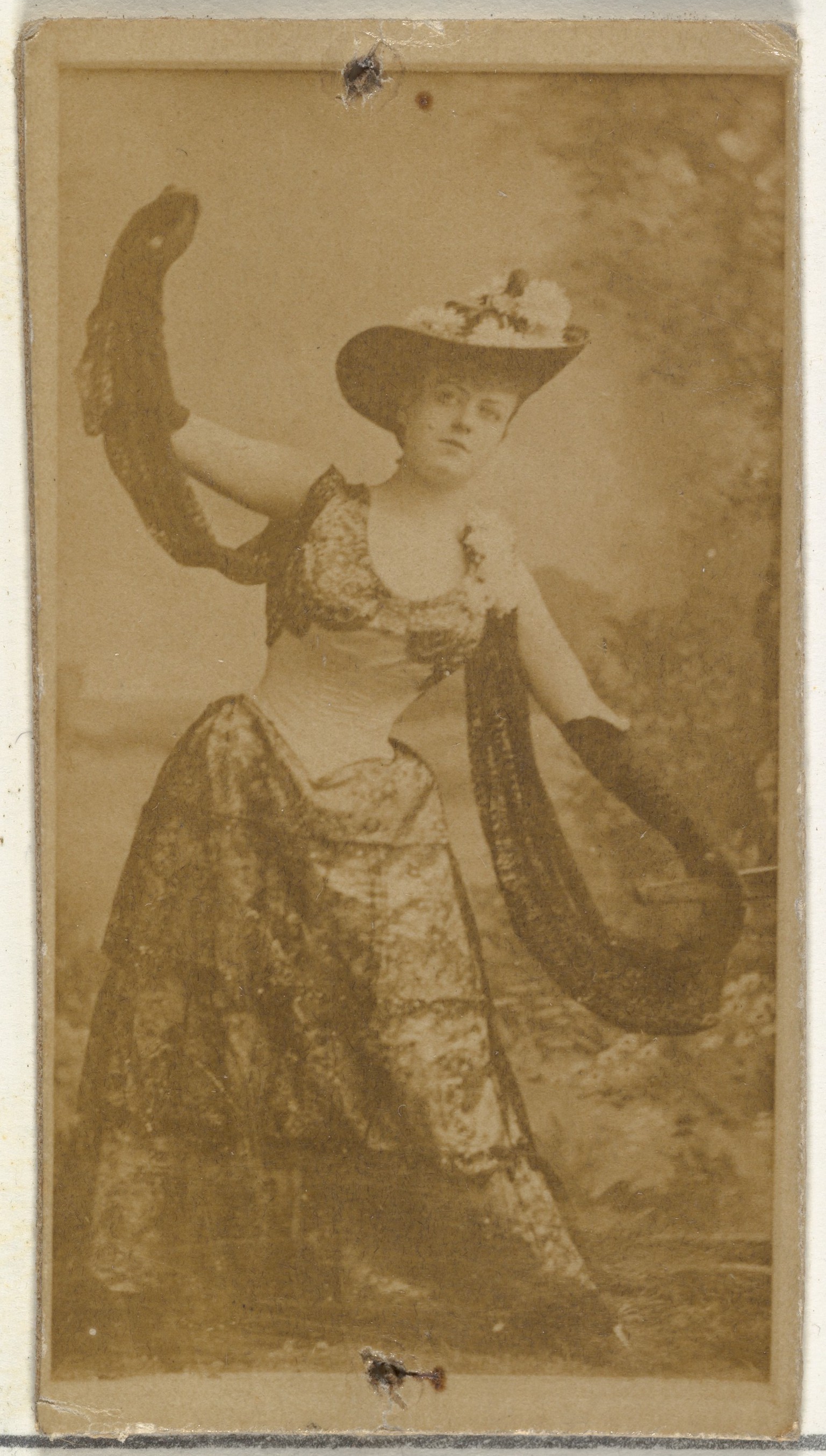
The Actors and Actresses series (N145-8) issued by Duke Sons & Co. represents a pivotal moment in visual culture, where the nascent medium of photography met the burgeoning celebrity of the stage. Within this archive, the specific image of an actress in a full-length ornate gown serves not merely as a historical document but as a technical blueprint for the 2026 luxury silhouette. As Head Curator of Natalie Fashion Atelier, I approach this albumen print not with nostalgia, but with the rigor of an aesthetic archaeologist. The materiality of the print—its sepia-toned depth, its soft focus, its inherent fragility—dictates a design vocabulary of controlled opulence and structural grace. This research artifact deconstructs the gown’s classical elegance to extract three core principles for the coming season: the architecture of the train, the theatricality of the waist, and the tactile illusion of surface.
The Architecture of the Train: From Static Pose to Kinetic Sculpture
The actress’s pose in the photograph is one of studied stillness, yet the gown’s train unfolds with a deliberate, almost geological weight. This is not a mere extension of fabric; it is a sculptural appendage that defines the negative space around the figure. For 2026, the train is reimagined not as a trailing afterthought, but as a primary structural element. The albumen photograph’s inability to capture true color forces the eye to read the gown through value and form—the deep blacks of the velvet against the luminous whites of the bodice. This monochromatic discipline informs our approach to the 2026 silhouette: we prioritize architectural draping over chromatic complexity.
Specifically, the 2026 “N145-8” train will be constructed using a double-faced silk gazar, a fabric that possesses the same crisp, light-absorbing quality as the albumen’s dark tones. The pattern will be engineered to create a cascade of controlled volume, where the train originates from a single point at the lower back, fanning out in a series of asymmetric, knife-pleated panels. This is not a soft, romantic train; it is a hard, architectural statement, reminiscent of the rigid, formal posture captured in the photograph. The hemline will be weighted with a micro-chain of oxidized silver, invisible to the naked eye, to ensure the train falls with the same deliberate, gravity-defying precision as the fabric in the original image. This technique, which we term “gravitational tailoring,” ensures the silhouette remains static in movement, a living monument to the actress’s frozen elegance.
The Theatricality of the Waist: The Corseted Illusion of the 21st Century
The photograph reveals a waist of extreme, almost unnatural proportion—a hallmark of the late 19th-century theatrical aesthetic. However, our archaeological analysis of the albumen’s tonal range suggests this is not a literal corset but an optical illusion created by the juxtaposition of the gown’s rigid bodice and the voluminous skirt. The waist is a fulcrum of tension between the upper and lower body. For 2026, we reject the literal corset in favor of a structural illusion that mimics the photograph’s visual trickery.
The 2026 silhouette will feature a “phantom corset”—a boned internal structure made from memory-shape thermoplastic polyurethane, encased in a layer of matte silk charmeuse. This invisible armature will cinch the waist without external compression, creating a silhouette that appears naturally sculpted. The bodice will extend into a sharp, inverted V at the waistline, a direct quotation from the albumen gown, which visually elongates the torso. This is paired with a high-waisted, columnar skirt that begins at the natural waist, rather than the hips, creating a seamless, elongated line. The result is a silhouette that is simultaneously rigid and fluid, a paradox that echoes the photograph’s tension between the actress’s static pose and the implied movement of the gown. This technique, “theatrical tailoring,” allows the wearer to experience the power of the historical corset without its physical constraints.
The Tactile Illusion of Surface: Materiality as Narrative
The albumen photograph’s most profound contribution to 2026 haute couture lies not in what it shows, but in what it conceals. The surface of the print is a tactile illusion—the gown appears to be made of rich velvet, heavy brocade, and intricate lace, yet the photograph itself is a flat, chemical emulsion. This paradox of materiality versus representation is the central thesis of our 2026 collection. We will not replicate the fabrics of the 1890s; we will reinterpret their visual and tactile essence through advanced textile engineering.
For the 2026 silhouette, we have developed a proprietary fabric, “Albumen Silk,” a double-weave of micro-filament silk and metallic Lurex that mimics the photograph’s tonal gradation. The fabric is treated with a laser-etched, high-relief pattern that replicates the ornate brocade of the original gown, but with a matte, light-absorbing finish that recalls the albumen’s soft focus. The embroidery, executed by hand in our Parisian atelier, will use a technique we call “shadow beading”—tiny, matte black jet beads and seed pearls are applied in a gradient pattern, creating a surface that shifts from deep, velvety black to a luminous, pearlescent white, depending on the angle of light. This is not decoration; it is structural storytelling. The surface of the gown becomes a living photograph, a three-dimensional translation of the two-dimensional albumen print.
Conclusion: The 2026 Silhouette as Historical Artifact
The actress in the Duke Sons & Co. photograph is not a muse; she is a technical precedent. Her gown, preserved in the fragile medium of albumen, provides a material vocabulary for the 2026 luxury silhouette. By deconstructing the train into a kinetic sculpture, reimagining the waist as a structural illusion, and translating the photograph’s surface into a tactile narrative, Natalie Fashion Atelier does not simply reference history—we reconstruct its aura. The 2026 silhouette is an artifact of aesthetic archaeology, a garment that carries the weight of its own past while existing entirely in the present. It is a testament to the enduring power of the classical form, re-engineered for a new century of couture.