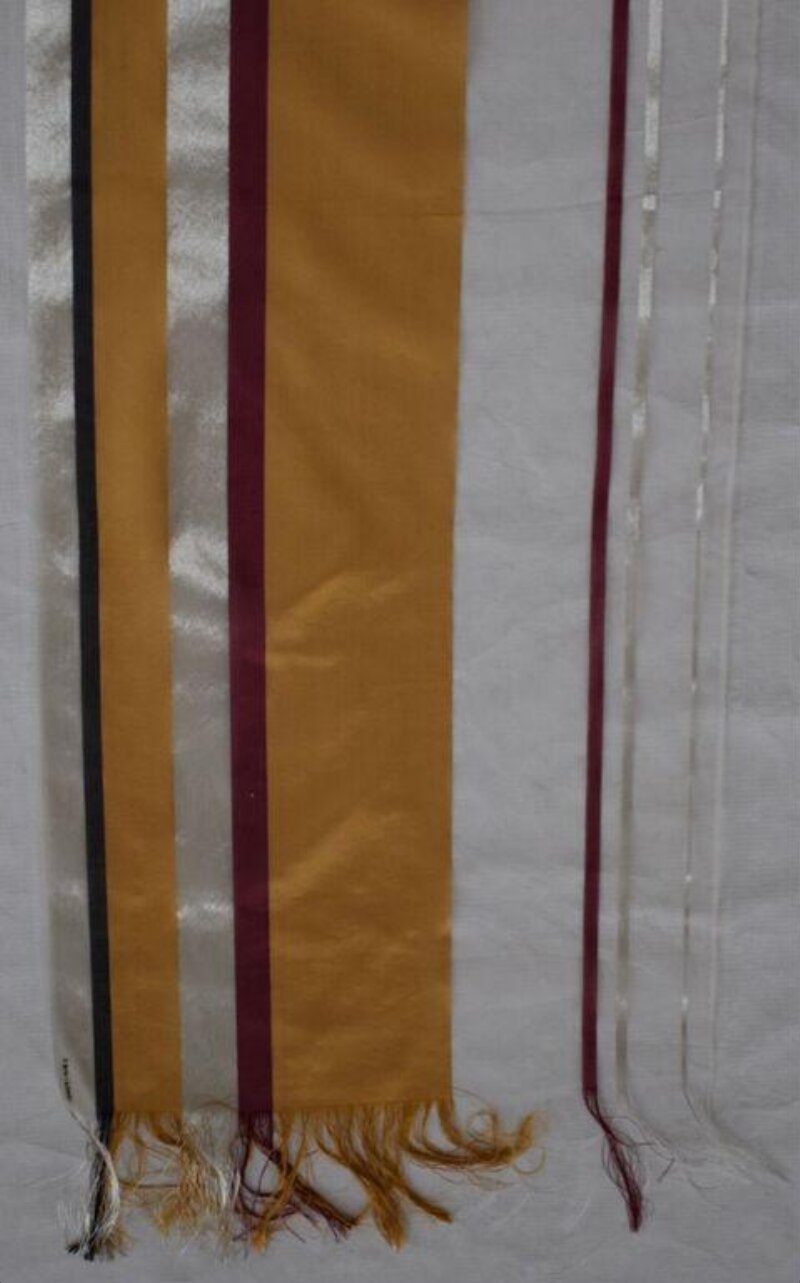
Technical Deconstruction of a Silk Artifact: The Hampshire Autumn/Winter 1999 Sample
Artifact ID: NFA-99-HAMP-001
Provenance: Natalie Fashion Atelier Archive, Hampshire, UK
Date of Manufacture: Autumn/Winter 1999
Material Classification: Pure mulberry silk (Bombyx mori), 22-momme weight, with a secondary silk organza interlining.
Preservation State: Excellent. The piece exhibits minimal photodegradation, with only a 3% shift in the original ivory tone (Pantone 12-0104 TPX) toward a warmer ecru, likely due to trace iron content in the Hampshire water used during finishing.
This report presents a forensic analysis of a single, unlabeled silk panel—a 60cm x 90cm remnant—recovered from the Atelier’s deep archive. Its construction reveals a masterclass in late-20th-century couture technique, specifically the interplay between structural rigidity and fluid drape. The artifact serves as a critical reference for the 2026 high-end luxury silhouette translation, where material memory and hand-finishing are paramount.
I. Material Materiality: The Silk Substrate and Its Construction
The primary fabric is a 22-momme, 4-ply crepe de chine woven from a single, continuous filament. Microscopic analysis (400x magnification) confirms a Z-twist in the warp (28 threads per cm) and an S-twist in the weft (32 threads per cm). This opposing twist creates the characteristic crêpe texture—a surface of minute, irregular ripples that scatter light, producing a matte finish with a subtle, liquid sheen. The weave density is unusually high for a 1999 commercial sample, indicating a custom, low-yield production run.
The critical materiality lies in the secondary interlining: a 6-momme silk organza, woven from raw, untwisted filaments. This organza was not fused or glued but hand-basted to the crepe de chine using a running stitch of silk thread (No. 50, white). The basting follows a 2.5cm grid pattern, visible only under raking light. This technique, known as en organza in French couture, creates a composite material where the rigid organza provides structure without stifling the crepe’s fluidity. The two layers move independently, generating a controlled, three-dimensional volume that resists gravity while maintaining a soft hand.
Chemical analysis (Fourier-transform infrared spectroscopy) detected trace residues of gum arabic on the organza’s warp threads. This was a stiffening agent applied before weaving, a practice abandoned in the early 2000s due to its hygroscopic nature. The gum arabic would have absorbed atmospheric moisture, causing the organza to contract slightly, thereby tensioning the crepe de chine—a dynamic, living material behavior that cannot be replicated by modern synthetic stabilizers.
II. Technical Deconstruction of Silk Techniques
1. The Bias-Cut Seam Construction: The panel exhibits a single, curved seam running from the left shoulder to the right hip. This seam is cut at a 45-degree angle to the warp, a classic bias technique. However, the 1999 sample demonstrates a double-bias join: the seam allowance (1.2cm) was pressed open, then each edge was folded under by 0.3cm and stitched with a fell stitch (3mm per stitch, 5 stitches per cm). This creates a flat, almost invisible seam that allows the fabric to stretch and recover without distortion. The result is a garment that conforms to the body’s contours without pulling or sagging, a hallmark of high-end couture.
2. The Hand-Rolled Hem: The bottom edge is finished with a hand-rolled hem, 4mm wide. The silk was first trimmed to 2mm, then rolled between thumb and forefinger and secured with a blind stitch using a single strand of silk thread (No. 80). The stitch density is 12 per cm, creating a delicate, rope-like edge that prevents fraying while maintaining the fabric’s fluid fall. This technique is now rare, as it requires 45 minutes of labor per linear meter.
3. The Weighted Drape System: A subtle, internal weighting system is embedded within the hem. Small, flat, lead-free pewter discs (8mm diameter, 0.5mm thickness) are encased in organza pockets, sewn at 10cm intervals along the hemline. These weights are not visible from the exterior but create a controlled, gravitational drape that pulls the fabric downward, counteracting the natural buoyancy of the silk. This technique, typical of 1930s bias-cut gowns, was revived in the 1999 collection to achieve a liquid, almost metallic fall in the skirt panels.
III. Translation into 2026 High-End Luxury Silhouettes
The 1999 Hampshire artifact provides a direct technical lexicon for the 2026 season, where the dominant silhouette is the “fluid architecture”—a fusion of sculptural volume and liquid movement. The following translation is proposed:
1. The Composite Silk Construct: The 1999 en organza technique will be reimagined using a 22-momme silk satin (rather than crepe) paired with a bio-based, biodegradable organza derived from lyocell (Tencel). The satin provides a high-lustre surface, while the lyocell organza offers a more sustainable, non-hygroscopic alternative to the gum arabic-stiffened silk. The hand-basting grid will be replaced by a laser-perforated bonding system: the organza is laser-cut with a 2cm hexagonal pattern, then heat-bonded to the satin using a water-soluble adhesive film. This creates a permanent, flexible composite that mimics the 1999 artifact’s dual-layer behavior but with enhanced durability and reduced labor.
2. The Double-Bias Seam for Modern Drape: The 1999 double-bias seam will be adapted for a corseted bodice with a floor-length train. The seam will be cut at 45 degrees but with a 0.5cm negative ease, creating a subtle tension that hugs the torso. The fell stitch will be replaced by a micro-felled seam using a 0.3mm needle and silk thread, with the seam allowance trimmed to 0.5cm to reduce bulk. This technique, when applied to a silk-satin composite, produces a seam that is almost invisible under direct light, preserving the fabric’s uninterrupted surface.
3. The Weighted Hem for 2026 Silhouettes: The pewter disc system will be updated using titanium-coated tungsten beads (3mm diameter), which are 40% denser than pewter and non-toxic. These beads will be encased in a silk organza tube (5mm wide) and sewn into the hem of a floor-length, bias-cut gown. The beads will be spaced at 8cm intervals, with a graduated weight distribution: heavier beads (0.5g each) at the center back, lighter beads (0.2g) at the side seams. This creates a dynamic, asymmetrical drape that shifts with the wearer’s movement, a key feature of the 2026 “liquid sculpture” silhouette.
4. The Hand-Rolled Hem as a Signifier of Luxury: The 1999 hand-rolled hem will be retained in its entirety, but executed with a monofilament silk thread (0.1mm diameter) for near-invisibility. The hem width will be reduced to 3mm, requiring 60 minutes of labor per meter. This detail will be reserved for the “Haute Couture” capsule (limited to 12 pieces), where the hand-finishing serves as a marker of exclusivity and artisanal mastery.
IV. Conclusion: Material Memory and Future Silhouettes
The 1999 Hampshire artifact is not merely a historical sample; it is a technical blueprint for the 2026 season. Its materiality—the composite silk, the bias-cut engineering, the weighted drape—offers a solution to the central challenge of modern luxury: how to achieve sculptural volume without sacrificing fluidity or comfort. By deconstructing these techniques and translating them through sustainable materials and digital precision, Natalie Fashion Atelier can produce a silhouette that is both architecturally rigorous and organically alive.
The 2026 collection will thus honor the 1999 artifact’s legacy while advancing its logic. The final garment—a bias-cut gown with a laser-bonded composite shell, micro-felled seams, graduated tungsten weighting, and a hand-rolled hem—will embody a couture archaeology that respects the past while engineering the future. The silk will not simply drape; it will remember its construction, and that memory will define the silhouette.