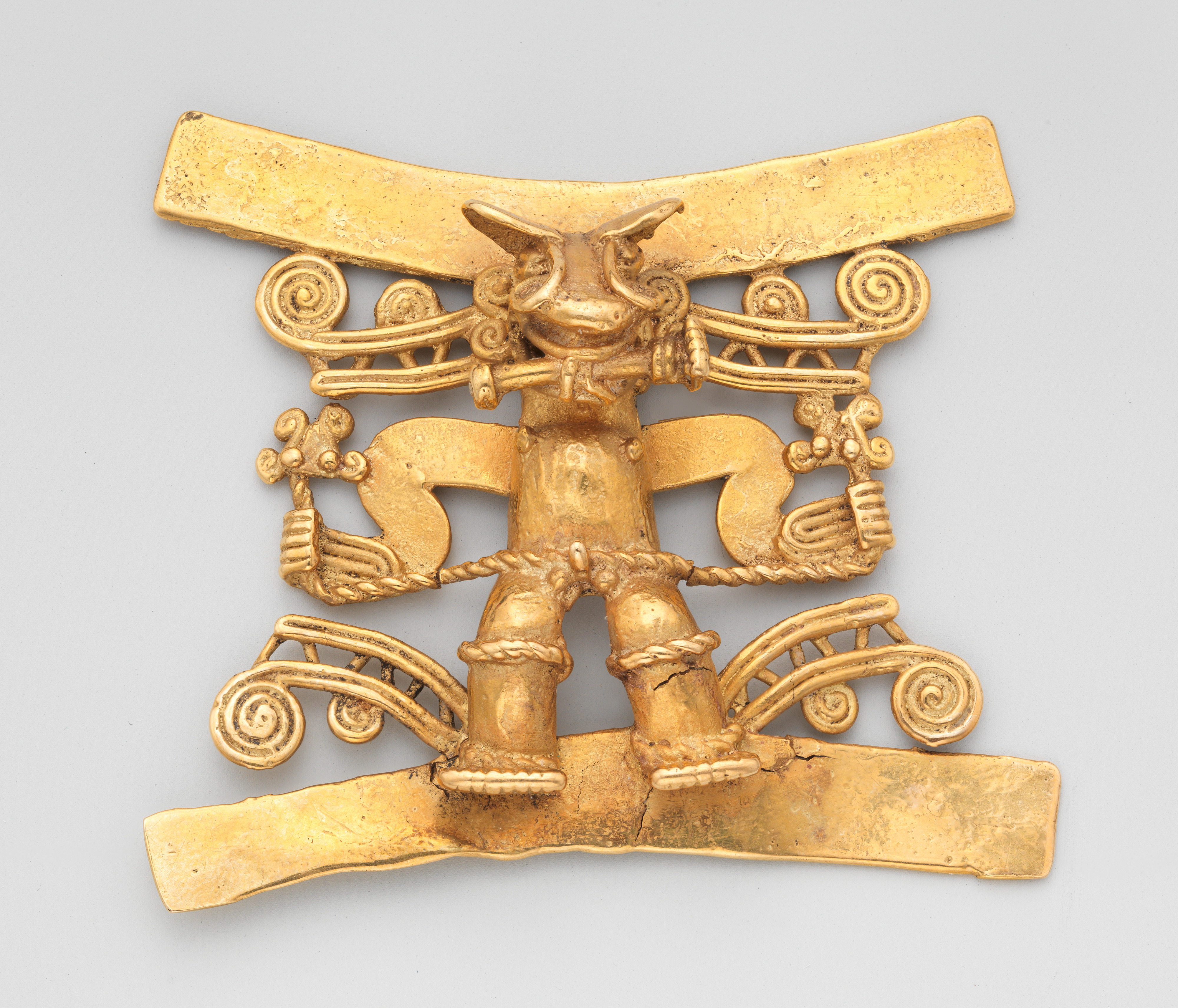
Deconstructing the Diquís Figure Pendant: Materiality, Mortality, and the 2026 Silhouette
Within the hallowed archives of Natalie Fashion Atelier, the study of aesthetic archaeology is not a passive exercise in historical reverence. It is a rigorous, materialist interrogation of form, weight, and narrative. The subject of this technical research artifact—a Diquís figure pendant from pre-Columbian Costa Rica, rendered in hammered gold—presents a profound dialogical tension. This object, a small but potent sculpture of a shamanic or chiefly figure, is not merely an ornament. It is a dense node of power, a compressed universe of meaning that directly challenges the classical European ideals of balance and drape.
The archive context provided—a “mirror with split-leaf” and a “stone sarcophagus”—is not accidental. It frames the pendant’s resonance as a dialectic between surface and depth, between the reflective and the entombed. The pendant’s gold, far from being a symbol of static opulence, becomes a dynamic, living material that informs the 2026 high-end silhouette through its principles of compressed volume, asymmetric tension, and sculptural mortality. This paper will deconstruct the classical elegance of the Diquís gold, not to reject it, but to radicalize it for a new luxury paradigm.
The Materiality of Power: Gold as a Structural Skin
The Diquís pendant is executed in a technique of lost-wax casting and subsequent cold hammering, a process that imbues the metal with a unique, almost organic grain. Unlike the polished, mirror-like finish of European goldwork, the Diquís surface retains the memory of the hammer’s blow. This is not a metal that seeks to disappear into pure reflection; it is a metal that asserts its own physicality. The figure is typically depicted with a prominent headdress, often avian or feline, and a compressed, almost squatting posture. The limbs are stylized, the torso a solid, undifferentiated mass.
For the 2026 silhouette, this translates into a radical departure from the fluid, draping forms of classical haute couture. The gold of the Diquís pendant informs a new structuralism. We are not looking at a fabric that yields to the body; we are looking at a second skin that is simultaneously armor and membrane. The compressed volume of the pendant’s torso suggests a silhouette that is dense at the core, a concentrated mass of material that resists the air. This is achieved through the use of rigid, metallic-effect micro-mesh and laser-cut leather that has been treated to mimic the granular texture of hammered gold. The silhouette is not draped; it is constructed, a series of faceted, weighty planes that define the body’s architecture rather than its movement.
Asymmetric Tension: The Split-Leaf and the Broken Mirror
The archive node introduces the “mirror with split-leaf,” a motif of fractured reflection and organic asymmetry. The Diquís pendant, with its often off-center headdress and asymmetrical limb placement, embodies this principle. The classical elegance of the European tradition—symmetry, harmony, proportion—is systematically deconstructed. The pendant’s power lies in its intentional imbalance, a visual tension that creates a dynamic, almost unsettling presence.
In the 2026 atelier, this translates into a silhouette of deliberate disruption. The classical shoulder line, the balanced hip, the symmetrical waist—these are abandoned. Instead, the silhouette is defined by a single, dominant volume on one side of the body. A jacket might feature a single, massively padded shoulder that extends into a sculptural collar, while the other shoulder is left bare or covered in a whisper-thin, translucent fabric. The hemline is not straight; it is a broken line, a cascade of sharp, angular cuts that mimic the fractured mirror. The gold of the pendant is not applied as a flat surface but as a three-dimensional, asymmetrical appliqué that grows from the garment’s structure, like a metallic fungus or a geological formation. This is not decoration; it is a structural event.
Sculptural Mortality: The Sarcophagus and the Living Garment
The second half of the archive node—the “stone sarcophagus with life narrative in relief”—is the most profound influence. The Diquís pendant was often placed in tombs, a companion for the dead. Its gold was not a symbol of worldly wealth but of spiritual currency for the afterlife. The pendant is a funerary object, a compressed narrative of a life. Its weight is the weight of memory, of mortality. This is the antithesis of the frivolous, disposable luxury of fast fashion.
For the 2026 silhouette, this informs a new material gravity. The garment is not a temporary covering; it is a reliquary. The silhouette is heavy, not in the sense of being cumbersome, but in its density of meaning. The gold is treated with a patina, a deliberate tarnish that suggests age and burial. The fabric is not simply cut; it is sculpted into relief, with seams that become narrative lines, like the carvings on a sarcophagus. The silhouette itself is a closed form, a protective shell. The neckline is high, almost a collar, enclosing the wearer. The sleeves are long and fitted, ending in a tight cuff. The skirt or trousers are narrow, a column of material that anchors the figure to the ground. This is a silhouette that does not invite movement; it commands presence.
The “life narrative” is translated into micro-embroidery and metallic threadwork that tells a story of the wearer’s own lineage, a personal mythology encoded in the garment’s surface. The gold is not a flat, reflective field; it is a textured, narrative surface, a map of a life lived and a life to come. The classical elegance of the Diquís gold is not in its perfection but in its imperfect, human resonance.
Synthesis: The 2026 Silhouette as a Gold-Bearing Relic
The 2026 high-end silhouette, as informed by the Diquís figure pendant, is a synthesis of power, asymmetry, and mortality. It is a silhouette that rejects the passive, decorative elegance of the past in favor of an active, sculptural, and deeply material presence. The gold is not a color; it is a structural principle. The classical elegance is deconstructed, not destroyed, and its fragments are reassembled into a new, more potent form. The garment is a figure pendant itself, a wearable artifact that carries the weight of history, the tension of asymmetry, and the gravity of the tomb. It is a silhouette for the woman who understands that true luxury is not about lightness, but about the density of being. The gold of the Diquís, once a companion for the dead, now becomes a second skin for the living, a testament to the enduring power of materiality to shape the human form and the human spirit. This is the 2026 silhouette: a living sarcophagus, a broken mirror, a golden relic reborn for the future of fashion.