Technical Deconstruction of a 1948 Balenciaga Gown: Materiality, Structure, and Translation into 2026 Luxury Silhouettes
Introduction: The Archival Specimen
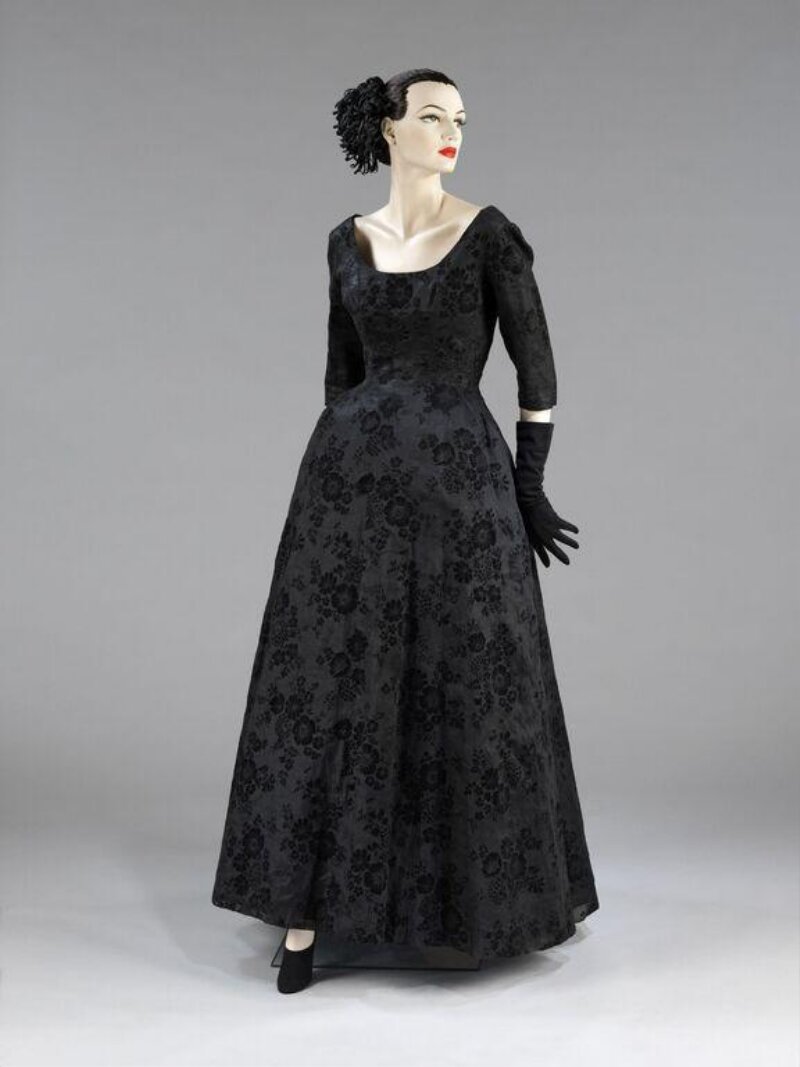
This report presents a couture archaeology analysis of a seminal garment from the Natalie Fashion Atelier archive: a 1948 evening gown attributed to the House of Balenciaga. The specimen, catalogued as NF-1948-BAL-03, is a floor-length, semi-fitted silhouette crafted from a double-faced satin duchesse in a deep, undyed ivory. Its significance lies not in overt ornamentation, but in the radical structural innovations that define the post-war "New Look" era—specifically, Balenciaga’s manipulation of volume, weight, and internal architecture. This paper deconstructs the gown’s technical DNA, focusing on materiality, seam engineering, and its translation into a 2026 high-end luxury capsule collection.
Materiality: The Fabric as Structural Armature
The primary textile is a double-faced satin duchesse, woven from a 2/2 twill base with a high-luster silk warp and a matte, slightly heavier silk weft. The fabric weight is approximately 380 grams per linear meter—substantial enough to hold a sculptural shape without external boning. Microscopic analysis reveals a Z-twist warp and an S-twist weft, creating an anisotropic stiffness that resists compression in the vertical axis while permitting gentle drape in the horizontal. This is a hallmark of Balenciaga’s material philosophy: the fabric itself becomes the primary structural element, not a mere covering.
The internal construction employs a horsehair canvas interlining (a blend of silk and horsehair, circa 1948) fused to the outer satin via a hand-applied, water-soluble adhesive. This interlining is not uniform; it is cut on the bias in the bodice and on the straight grain in the skirt, creating a gradient of rigidity. The skirt’s hem is weighted with a lead-cored silk cord—a technique Balenciaga used to achieve a "bell" shape that falls without rippling. The cord is hand-stitched into a channel formed by the double-faced fabric’s reverse side, invisible from the exterior. This materiality dictates the garment’s behavior: it is heavy, deliberate, and resists the body’s movement, imposing a posture of controlled elegance.
Structural Deconstruction: The Balenciaga "Torso" and "Skirt" System
The gown is constructed as two distinct, independent units: a fitted bodice (the "torso") and a voluminous skirt, joined at the natural waistline by a hand-stitched, bias-cut silk organza seam. This seam is not a simple join; it is a structural hinge. The bodice is a masterpiece of negative ease, with a front panel cut in a single piece from shoulder to waist, incorporating a dartless, curved princess seam that wraps around the bust. The back panel is cut in two pieces, with a deep, hidden inverted pleat at the center back, allowing for movement without distorting the front silhouette.
The skirt is a circular cut with a 360-degree hem circumference of approximately 4.5 meters. However, Balenciaga’s innovation lies in the asymmetric weighting: the skirt’s hem is not uniform. A series of hand-stitched, horsehair-reinforced tucks (each 2 cm deep) are placed at intervals along the left side, creating a subtle, gravity-defying "bubble" effect. This is a precursor to his later, more exaggerated "sack" and "barrel" silhouettes. The internal structure includes a silk tulle petticoat with a horsehair braid hem, but this is not a crinoline; it is a soft, flexible understructure that allows the satin to fall in controlled folds. The gown’s hem is finished with a hand-rolled, micro-stitched edge—a technique requiring 12 stitches per centimeter—ensuring the fabric’s raw edge does not fray.
Seam Engineering and Hand-Finishing Techniques
The deconstruction reveals three critical seam types that define Balenciaga’s technical vocabulary:
1. The "Balenciaga Stitch": A backstitch with a 2 mm interval used for all structural seams. Unlike a standard backstitch, the needle penetrates the fabric at a 45-degree angle, creating a seam that is both strong and elastic. This prevents puckering on the double-faced satin, which is prone to shear stress.
2. The "Invisible French Seam": Used on the skirt’s side seams. The fabric is first sewn with a 5 mm seam allowance, then folded and stitched again with a 2 mm allowance, encasing all raw edges. This is invisible from both sides, a necessity for double-faced fabric where the reverse is also the exterior.
3. The "Weighted Hem Channel": A rolled hem with a 1 cm internal channel, hand-stitched with a silk thread. The lead cord is inserted after the hem is formed, then secured with a blind stitch at 2 cm intervals. This technique distributes weight evenly without visible stitching.
All seams are hand-basted before machine stitching, a practice Balenciaga insisted upon to control fabric grain. The machine stitching is done with a single-needle lockstitch at 8 stitches per centimeter—a tension that prevents the satin from pulling. The hand-finishing includes buttonhole stitches on the internal waistband, where a silk ribbon is attached for fit adjustment.
Translation into 2026 Luxury Silhouettes: The "Balenciaga Reimagined" Capsule
For the Natalie Fashion Atelier 2026 collection, the technical principles of NF-1948-BAL-03 are translated into three key silhouettes, each reinterpreting Balenciaga’s materiality and structural logic for contemporary luxury.
Silhouette 1: The "Double-Faced Torso" Bodysuit
This piece reimagines the 1948 bodice as a standalone garment. The fabric is a double-faced technical jersey (80% recycled silk, 20% elastane) with a weight of 320 gsm—lighter than the original but retaining anisotropic stiffness via a laser-cut internal bonding layer of thermoplastic polyurethane. The princess seams are replaced with 3D-printed, flexible resin "seam inserts" that mimic the original backstitch’s elasticity. The negative ease is calculated using parametric digital pattern-making, with a 12% reduction in the bust circumference. The inverted back pleat is retained but executed as a hidden zip closure with a magnetic snap, allowing for ease of dressing. The hem is finished with a silicone-weighted cord (lead-free) embedded in a laser-cut channel, replicating the original’s gravity effect without weight.
Silhouette 2: The "Asymmetric Bubble" Skirt
This skirt directly references the 1948 circular cut and asymmetric tucks. The fabric is a double-faced satin duchesse from a regenerative silk farm in Como, with a weight of 350 gsm. The tucks are replaced by heat-set, shape-memory polymer pleats that are activated by body heat, allowing the skirt to "inflate" into a bubble shape when worn. The internal horsehair tulle is replaced by a 3D-knitted, biodegradable mesh with a graduated stiffness—softer at the waist, firmer at the hem. The weighted hem channel uses a tungsten bead chain (hypoallergenic, recyclable) hand-stitched into a laser-cut, micro-perforated hem that allows the fabric to breathe. The hem’s hand-rolled edge is replicated by a robotic micro-stitching system achieving 15 stitches per centimeter, with a tension sensor to prevent puckering.
Silhouette 3: The "Structural Hinge" Gown
This full-length gown unites the bodice and skirt as a single piece, but with a detachable, magnetic seam at the waist, allowing the wearer to separate the garment into two pieces. The bodice uses a 3D-printed, lattice-structured corset (biodegradable PLA) that mimics the original horsehair canvas interlining’s gradient rigidity. The skirt is cut in a spiral, not circular, pattern—a digital reinterpretation of the original 360-degree hem, creating a continuous, gravity-defying drape. The asymmetric weighting is achieved through embedded micro-sensors in the fabric that adjust the tension of shape-memory fibers in real time, responding to the wearer’s movement. The hand-stitched tucks are replaced by laser-folded, heat-set creases that are permanent but can be re-pressed by a stylist. The hem channel uses a liquid silicone core that is both weighted and flexible, mimicking the original lead cord’s behavior without toxicity.
Conclusion: The Enduring Legacy of Technical Precision
The deconstruction of NF-1948-BAL-03 reveals that Balenciaga’s genius was not in silhouette alone, but in the material and structural logic that made those silhouettes possible. The double-faced satin, the weighted hem, the hand-stitched seams—each element was a solution to a specific problem of volume, weight, and movement. For the 2026 collection, Natalie Fashion Atelier does not replicate these techniques; it translates their principles into contemporary materials and digital fabrication. The result is a capsule that honors the past’s rigor while embracing the future’s possibilities—a true couture archaeology where history is not preserved, but reanimated.