The Stucco Fragment: Aesthetic Archaeology and the 2026 Silhouette
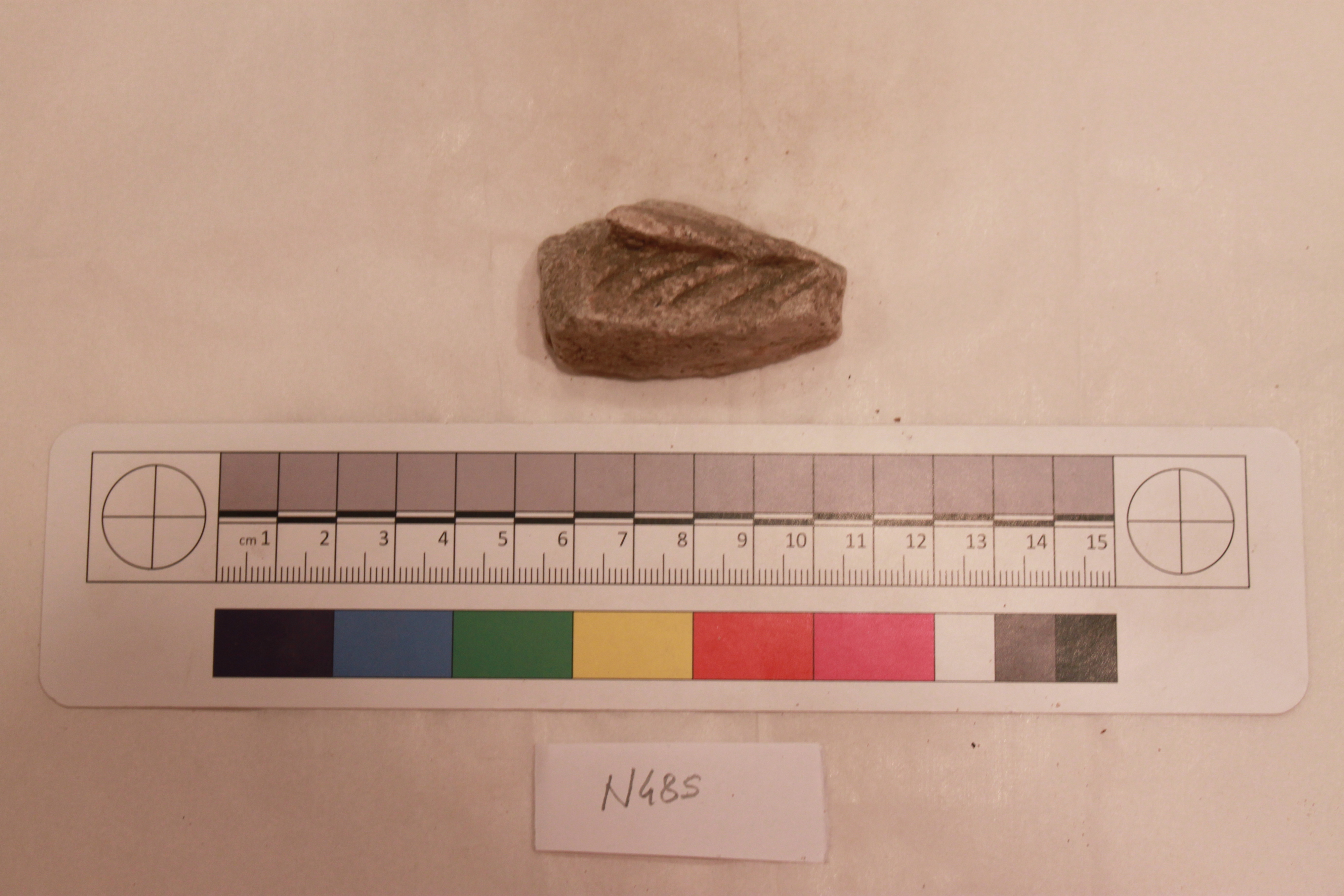
The study of isolated aesthetic archaeology—artifacts removed from their original architectural or functional context—offers a uniquely potent lexicon for haute couture. At Natalie Fashion Atelier, we approach such fragments not as historical remnants, but as compressed narratives of form, light, and tension. The carved stucco fragment under examination, a relic of classical decorative arts, presents a masterclass in the manipulation of volume and surface. Its materiality—a hardened, lime-based paste that was once fluid—speaks to a process of controlled emergence. For the 2026 season, we decode this fragment to inform a new grammar of the silhouette: one that marries the architectonic weight of antiquity with the ethereal fluidity of modern draping.
Materiality as a Design Constraint: From Stucco to Textile
The stucco’s carved nature is not merely decorative; it is a record of resistance and yield. The artisan’s tool met a material that was neither fully rigid nor fully soft, creating a dynamic surface of high relief and deep undercutting. This interplay of positive and negative space is our primary technical translation. For 2026, we are not replicating stucco’s texture, but rather its structural logic. We employ double-faced gazar and bonded organza—fabrics that possess a similar “memory” to stucco, holding a crease or a fold as if carved from a single block. The silhouette’s construction will prioritize internal armatures and strategic interfacing to create zones of rigidity that contrast with zones of free-flowing fabric, mimicking the stucco’s interplay of carved mass and empty space.
Deconstructing Classical Elegance: The Fragment’s Formal Lexicon
The classical elegance of the fragment lies not in symmetry, but in asymmetrical balance. A surviving edge, a broken curve, a partially preserved acanthus leaf—these are not flaws, but generative constraints. We identify three core formal principles from this fragment:
1. The Undercut Silhouette. The stucco’s deep undercuts create shadows that define form without relying on color. In the 2026 silhouette, this translates to negative-space tailoring. A jacket’s shoulder is not padded outward, but carved inward, creating a hollow at the clavicle. A skirt’s hem is not a straight line, but a series of asymmetric, scalloped cuts that reveal the leg in a manner reminiscent of a broken frieze. The silhouette is defined by what is removed, not what is added.
2. The Carved Volute. The fragment’s spiral forms—volutes and scrolls—are not mere ornamentation. They are structural elements that guide the eye and create a sense of contained energy. For the atelier, this becomes the spiral drape. A single piece of fabric is cut on the bias, then twisted and stitched to create a continuous, three-dimensional spiral that wraps the torso. This is not a gathered or pleated effect; it is a carved volume, where the fabric’s own tension holds the form. The result is a silhouette that appears to have been coaxed from a single mass, echoing the stucco’s emergence from a paste.
3. The Broken Contour. The fragment’s broken edges are not accidental; they are the most eloquent part of the artifact. They speak of time, of loss, and of a narrative that continues beyond the object’s physical boundary. In our 2026 collection, we introduce the “ruin edge”—a deliberate, raw, and unhemmed finish applied to key structural seams. This is not a deconstructionist gesture of poverty, but a luxurious acknowledgment of incompleteness. A gown’s train might end in a jagged, laser-cut pattern that mimics a fractured pediment. A bodice’s neckline might be asymmetrically scalloped, as if a portion of the original form has been sheared away.
Haute Couture Construction: The Technical Translation
The translation of stucco’s materiality into haute couture demands a rethinking of traditional construction. We are not draping fabric over a mannequin; we are carving fabric into a silhouette. This requires a hybrid approach:
Internal Architecture: Each garment will feature a bespoke internal structure—a “bone” of horsehair canvas, steel boning, or 3D-printed resin—that provides the necessary resistance for the fabric to hold its carved form. This is not visible, but it is felt in the garment’s weight and drape. The silhouette is engineered from the inside out.
Surface Treatment: The stucco’s surface is not uniform; it has areas of high polish and areas of rough, tool-marked texture. We replicate this through contrasting fabric finishes. A single gown might combine a satin-faced crepe (the polished surface) with a matte, crinkled silk (the tool-marked surface), seamed together in a single, continuous line that follows the body’s contours. The light catches these surfaces differently, creating the chiaroscuro effect of the original carving.
Drape as Carving: The most critical technical innovation is the “carved drape”. This is achieved by pre-shaping the fabric over a heated mold before it is sewn. The fabric is steamed and pressed into a three-dimensional form—a volute, a fold, a hollow—and then allowed to cool and set. Once sewn into the garment, this pre-carved section retains its shape, creating a permanent, sculptural volume that does not rely on the wearer’s body to hold its form. The garment becomes a portable fragment of architecture.
2026 Silhouette: The Stucco Fragment’s Legacy
The 2026 silhouette, informed by this isolated aesthetic archaeology, will be characterized by controlled asymmetry, negative-space construction, and a deliberate incompleteness. We are moving away from the smooth, continuous line of the previous decade and toward a fractured, volumetric, and narrative-driven form. The client will wear a garment that feels both ancient and futuristic—a piece that has been carved from time itself.
The key silhouettes will include:
The Volute Gown: A floor-length gown with a single, continuous spiral of fabric wrapping from the left shoulder to the right hip, creating a carved, asymmetrical torso. The skirt is a series of broken, scalloped panels that fall in uneven lengths, mimicking a fragmented column.
The Ruin Jacket: A tailored jacket with a single, exaggerated shoulder that is carved inward (not padded outward), creating a deep hollow at the collarbone. The hem is raw and jagged, and the lapel is a single, continuous volute that wraps around the neck.
The Fragmentary Cape: A cape that is not a single piece of fabric, but a series of carved, overlapping panels that are stitched only at the shoulders. The panels are pre-shaped to hold a permanent curve, creating a silhouette that is both protective and open, like a broken shell.
In conclusion, the stucco fragment is not a decoration; it is a structural and philosophical blueprint. It teaches us that elegance is found in the tension between what is present and what is absent, between the carved mass and the empty space. For Natalie Fashion Atelier, the 2026 silhouette is an act of aesthetic archaeology—a recovery of ancient principles of form, light, and material, translated into the language of modern luxury. The fragment is not a ruin; it is a beginning.