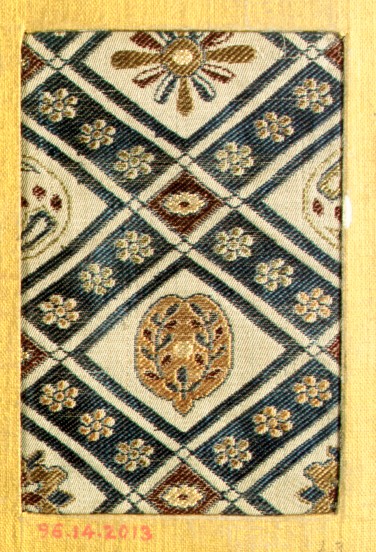
Deconstructing the Classical: The Silk Kimono as a Blueprint for 2026 Haute Couture
The pursuit of aesthetic archaeology within the Natalie Fashion Atelier archive often leads to the most profound revelations. Isolated from its cultural continuum, a single artifact—the Heian-period silk kimono—presents not a relic of costume history, but a masterclass in material philosophy. This paper deconstructs the classical elegance of this Japanese heritage piece, specifically its structural logic and the intrinsic behavior of its primary material, silk. The objective is to extrapolate a technical framework for 2026 luxury silhouettes that transcend mere revivalism. The kimono, in its purest form, is not a garment of the body, but a dialogue between the flat plane of the textile and the three-dimensional volume of the wearer. It is this dialogue, governed by the tensile strength and fluid drape of silk, that informs our forthcoming collection.
The Architectural Grammar of the Flat Plane
The classical kimono’s genius lies in its radical economy of cut. Composed of nearly straight, rectangular panels, it eschews darts, curved seams, or complex pattern grading. This is not a simplification, but a sophisticated suppression of tailoring in favor of material expression. For the 2026 silhouette, we propose a re-engagement with this orthogonal construction. By utilizing silk’s natural bias and its capacity for controlled collapse, we can create garments that are geometrically simple in their flat state but infinitely complex in their draped form. The sleeve (sode), traditionally a deep, hanging rectangle, becomes a study in negative space. In our interpretation, the sleeve is detached from the bodice along a calculated seam, allowing the silk to fall in a continuous, unbroken line from the shoulder. This creates a silhouette that is simultaneously architectural and ethereal, a volume that moves with the wearer rather than being forced into a pre-determined shape.
Materiality as Form: The Behavior of Silk in the 2026 Silhouette
The selection of silk is not arbitrary; it is a material imperative. The classical kimono utilizes a specific weave—often a habutae or a rinzu (silk crepe)—that possesses a unique structural memory. This silk does not simply drape; it holds a crease, a fold, a deliberate tension. For the 2026 high-end silhouette, we exploit this property to create a new category of “structured fluidity.” The garment is engineered to exist in two states: a pristine, almost architectural stillness when at rest, and a dynamic, flowing movement when in motion. This is achieved through a technique we call “tensioned draping.” By inserting a discreet, internal silk organza stay along the vertical seam lines—a nod to the kimono’s internal structure—we create a system of controlled tension. The outer silk, often a 22-momme charmeuse, is then allowed to billow and gather between these tension points. The result is a silhouette that is both voluminous and controlled, a direct descendant of the kimono’s flat-to-form logic.
The Aesthetic Archaeology of the Obi: A Study in Compression and Release
No deconstruction of the kimono is complete without an analysis of the obi. This broad sash, traditionally tied in a complex bow at the back, is not merely a decorative element; it is a structural counterpoint to the garment’s expansive volume. The obi compresses the torso, creating a defined waistline while simultaneously allowing the fabric above and below to billow freely. For 2026, we reinterpret this principle through a system of “internalized obi” or “compression frames.” These are not external belts but rather integrated, bias-cut silk panels that wrap the torso from within. They are crafted from a heavier, double-faced silk satin, providing a structural anchor. The outer layer of the gown—a whisper-thin, 8-momme silk chiffon—is then attached to this internal frame at precise points. The effect is a silhouette that appears to be in a state of perpetual release: the fabric cascades from the compression point, creating a dramatic, asymmetric volume that recalls the kimono’s back bow but in a modern, asymmetrical, and often front-facing presentation. This technique allows for a radical manipulation of proportion, elongating the torso while creating a powerful, sculptural hemline.
2026 Silhouette Typologies: From the Kosode to the Couture Gown
From this archaeological analysis, we derive three distinct silhouette typologies for the 2026 collection:
Typology One: The Linear Cascade. Directly referencing the kosode (the small-sleeved kimono), this silhouette is defined by its extreme verticality. The garment is cut from a single, continuous length of silk, with minimal seaming. The neckline (eri) is a deep, sweeping V that extends to the mid-back, mimicking the kimono’s deep collar. The fabric is allowed to fall in a straight, unbroken line from the shoulder to the floor, with volume concentrated at the back, echoing the okumi (the front overlap panel). This is a silhouette of pure, unadulterated materiality, where the silk’s weight and luster are the primary design elements.
Typology Two: The Asymmetric Compression. This silhouette is a direct application of the obi principle. A single, sculptural seam runs from the left shoulder to the right hip, creating a dramatic diagonal. The fabric on the left side is compressed and gathered into a dense, structured volume, while the right side cascades in a free, fluid drape. The asymmetry is not arbitrary; it is a calculated study in balance and imbalance, a visual representation of the tension between the flat plane and the three-dimensional form. The silk, here a heavy crepe de chine, is chosen for its ability to hold a sharp, sculptural fold.
Typology Three: The Deconstructed Sleeve. The final typology isolates the sode as a standalone architectural element. The garment is a simple, columnar sheath in a matte silk twill. From the shoulder, a deep, detached sleeve—cut from a single, rectangular panel of silk charmeuse—extends to the floor. This sleeve is not attached at the armhole; instead, it is anchored at the shoulder seam and at the wrist, creating a dramatic, wing-like volume. The wearer’s arm is free, and the sleeve moves independently, creating a fluid, kinetic silhouette. This is the most radical deconstruction, a direct translation of the kimono’s flat sleeve into a contemporary, sculptural form.
Conclusion: The Enduring Logic of the Flat Plane
The isolated study of the Japanese silk kimono reveals a timeless design logic: that the most profound luxury is found not in complexity of construction, but in the mastery of material and the deliberate suppression of the tailor’s hand. For 2026, the Natalie Fashion Atelier silhouette will be defined by this principle. The silk is not a passive surface for decoration; it is the active agent of form. By returning to the orthogonal, the flat, and the tensioned, we create a new language for couture—one that is both historically informed and radically contemporary. The classical elegance of the kimono is not a style to be copied, but a structural philosophy to be deconstructed and rebuilt for the modern body. This is the essence of aesthetic archaeology: not to preserve, but to transform.