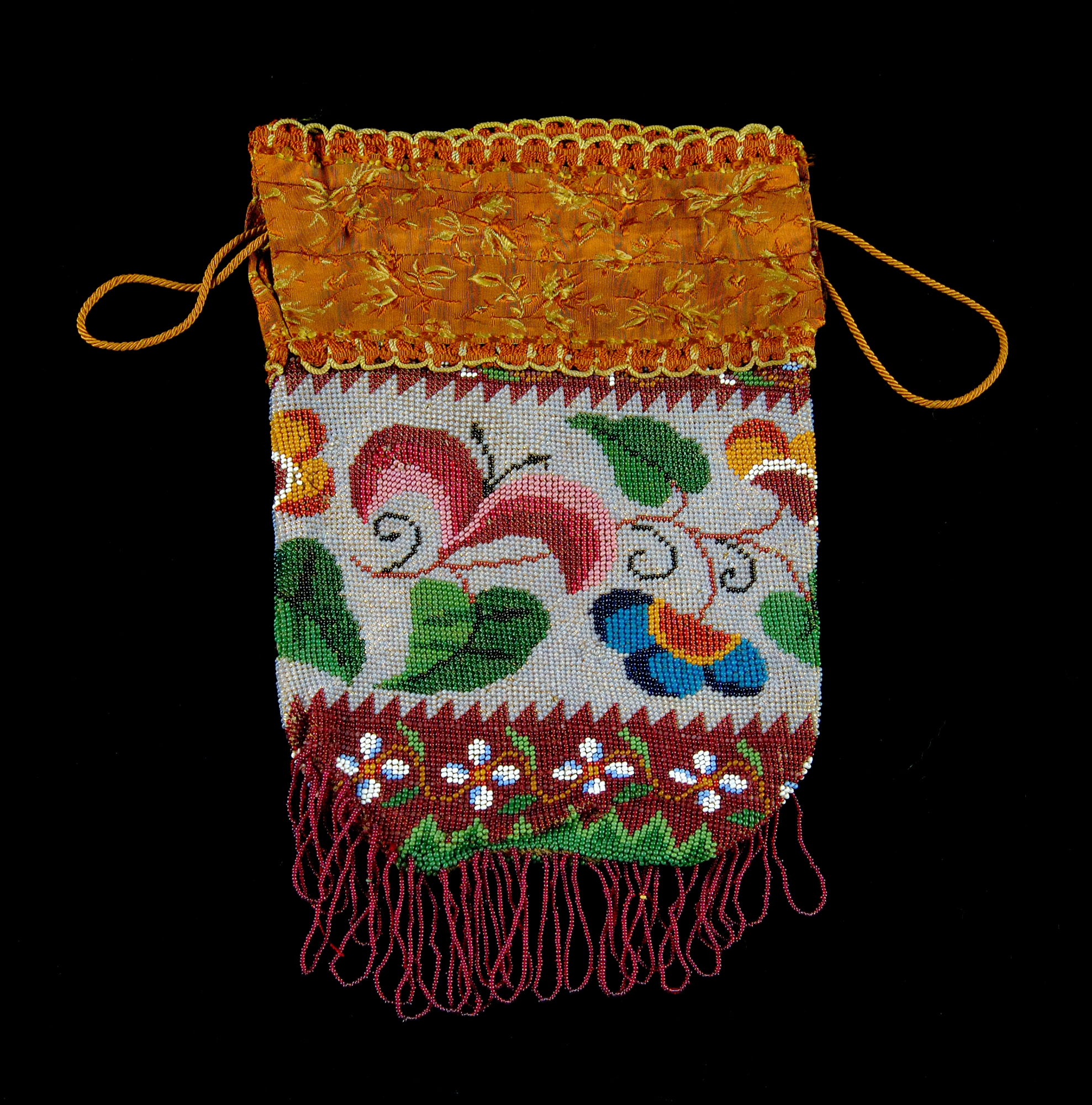
Archaeology of the Pouch: An American Silhouette in Glass, Linen, and Silk
Within the isolated context of aesthetic archaeology, the American "pouch" emerges not as a mere accessory, but as a foundational silhouette of contained volume and pragmatic elegance. Distinct from the structured European lexicon, its heritage is one of democratic utility, born of necessity and travel. When deconstructed through the rarefied lens of haute couture, its classical elegance is revealed in its philosophy of soft architecture—a principle of deliberate, wearable containment. For Natalie Fashion Atelier, this archive piece, specified in the unexpected material triad of glass, linen, and silk, provides a profound blueprint for the 2026 luxury silhouette. It proposes a future where fragility and strength, transparency and opacity, structure and fluidity coexist to redefine modern elegance.
Deconstructing the Classical Elegance: A Tripartite Material Dialectic
The genius of this artifact lies in its material conversation, where each element performs a precise sartorial function, transcending its mundane origins to achieve couture-level discourse.
Glass: The Architecture of Fragility. The incorporation of glass is the most radical intervention. It is not decorative beading, but likely employed as a structural or focal element—perhaps as a blown vessel form, a polished planar insert, or a network of fused rods. It introduces an immutable, rigid geometry amidst soft textiles, creating a dialogue between hard and soft. Its transparency or translucency offers glimpses of the interior, of the linen and silk within, making the private act of containment a public, aesthetic event. This speaks to a classical elegance rooted in honesty and unexpected contrast, where strength is derived from acknowledged fragility.
Linen: The Memory of Structure. American linen, with its heritage of workwear and honest craftsmanship, provides the pouch's foundational memory. It offers a dry, tactile counterpoint to silk, holding the shape of the pouch through its inherent body and crisp weave. It embodies the pragmatic, grounded aspect of American elegance. In the artifact, linen likely forms the internal support or the external shell, its fibers holding the imprint of use, creating a silhouette that is defined yet adaptable. Its elegance is in its textural authenticity and its ability to soften around the form it contains.
Silk: The Fluid Interiority. Silk—perhaps a charmeuse, duchess satin, or raw silk—represents the luxurious interior, the intimate lining that caresses what is held. It is the element of sensual surprise, the hidden couture finish. Its fluidity allows the pouch to collapse and reform, its luster or subtle sheen contrasting with the matte austerity of linen and the cold clarity of glass. This material triad creates a complete sensory and philosophical narrative: glass for vision and form, linen for memory and structure, silk for touch and concealment.
Informing the 2026 Silhouette: From Artifact to Avant-Garde
For the 2026 collection, this archaeological study directly informs a new paradigm of high-end silhouettes, moving beyond literal interpretation to philosophical embodiment.
The Transparent Volume. The glass element catalyzes a exploration of revealed construction and volumetric honesty. We foresee silhouettes incorporating engineered transparent or semi-transparent panels—not in synthetic polymers, but in treated silks organdies, laminated linens, or even innovative glass-textile composites. A coat’s internal structure, a bodice’s boning, or the gathering of a skirt could be partially revealed, making the architecture of the garment part of its aesthetic. This creates a 2026 silhouette that is intellectually engaging and demystifies couture craftsmanship, aligning with a desire for authenticity and technical awe.
Soft Architecture and Contained Ease. The pouch's core silhouette—a contained, relaxed volume—informs a departure from the hyper-tailored. The 2026 silhouette embraces the elegance of intentional, soft containment. This manifests in blouson jackets with linen-backed structure that collapse into elegant drape, in silk dresses with hidden, pouch-like volume at the back or hip that moves with the body, and in trousers with integrated, soft cargo volumes rendered in precious silk jacquard. The ease is deliberate, the volume precisely calculated, reflecting a post-pandemic desire for comfort without sacrificing sophistication.
The Dialectic of Texture and Finish. The material conversation directly dictates a 2026 focus on radical textural juxtaposition. Surfaces will converse: the dry, paper-like handle of a washed linen will be set against the liquid glaze of a silk satin on a single garment. Hard, polished finishes (inspired by glass) will abut matte, fibrous ones. This creates depth and tactile intrigue, demanding closer inspection and rewarding connoisseurship. A single evening coat might feature a linen collar, a glass-beaded "structural" yoke, and a silk fluid back, embodying the full artifact narrative.
Conclusion: The Isolated Archive as a Future Compass
This isolated American artifact, through its humble premise and sophisticated material execution, provides a surprisingly complete roadmap for forward-looking luxury. It teaches that elegance lies in the balance of opposites: fragility and resilience, exposure and secrecy, utility and opulence. For Natalie Fashion Atelier, the 2026 silhouette is not a radical invention, but a refined evolution informed by this archaeology. It will be a silhouette of intelligent volume, where garments are designed as curated containers for the body, built from contrasting material dialogues that speak to both heritage and innovation. The pouch, therefore, is elevated from a functional object to a philosophical treatise—its classical, pragmatic elegance meticulously deconstructed to clothe the nuanced, contemplative modernity of 2026.