Fragment as Foundation: The Bobbin Lace Aesthetic in 2026 Haute Couture
Introduction: The Archaeology of a Single Fragment
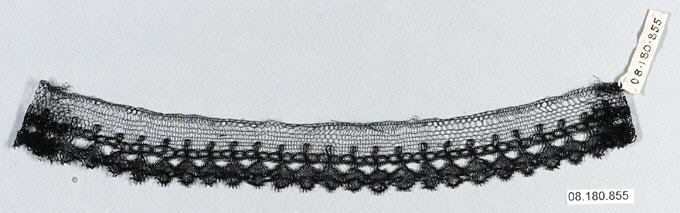
The isolated fragment of bobbin lace, preserved in the Natalie Fashion Atelier archive, presents a singular opportunity for aesthetic archaeology. This piece, likely originating from the late 17th-century Flemish or French workshops, is not a complete garment but a remnant—a delicate network of twisted and crossed threads that once adorned a cuff, a collar, or a liturgical vestment. In its isolation, the fragment speaks with a unique clarity. Stripped of its original context, it becomes a pure study in structural tension, negative space, and the paradox of strength derived from fragility. For the 2026 luxury silhouette, this fragment is not a nostalgic reference but a technical blueprint for a new kind of elegance: one that is simultaneously deconstructed and reinforced, transparent and opaque, historical and hyper-modern.
Deconstructing Classical Elegance: The Technical Grammar of Bobbin Lace
Classical elegance, as embodied by bobbin lace, is predicated on a rigorous, almost architectural logic. The fragment reveals a mastery of structural counterpoint. The continuous thread, wound on bobbins, is manipulated over a pillow according to a pricked parchment pattern. The resulting fabric is a lattice of toilé (the solid, woven ground) and réseau (the net-like background), punctuated by picots (tiny loops) and cordons (thicker outlining threads).
To deconstruct this elegance is to isolate its core principles for the 2026 silhouette:
- Negative Space as Structure: The holes in the lace are not absences; they are active, designed voids that define the shape. This informs a silhouette where strategic cutouts and laser-perforated leather or bonded organza replace solid panels, creating a garment that breathes and moves with the body.
- Tension and Drape: The rigidity of the cordonnet (the outlining thread) provides a firm edge, while the flexible réseau allows for fluid draping. For 2026, this translates into silhouettes that juxtapose stiff, almost architectural shoulders with liquid, cascading skirts, a dynamic tension that defines the new Parisian line.
- Transparency and Layering: The bobbin lace fragment is inherently layered—threads cross over and under one another, creating a depth that is not flat. This principle directly informs the 2026 “layered transparency” trend, where multiple sheer fabrics (silk tulle, micro-mesh, fine wool gauze) are engineered to create a moiré effect, mimicking the visual complexity of the lace without replicating its exact pattern.
Materiality: From Flax to Future Fibers
The original fragment is likely crafted from fine linen or silk thread, materials chosen for their tensile strength and ability to hold a crisp twist. For the 2026 atelier, the materiality of bobbin lace is translated through a lens of advanced textile engineering.
Reimagining the Thread: We replace natural fibers with bio-fabricated silk and recycled metallic alloys spun into micro-filaments. The result is a lace that is inherently structural, capable of holding a sculptural shape without internal boning. A jacket bodice, for example, is constructed entirely from a 3D-knitted bobbin lace pattern using a single, continuous thread of liquid metal-infused nylon. This is not a print; it is a true, engineered lace that functions as a second skin.
Reimagining the Ground: The traditional réseau is reinterpreted as a laser-cut, heat-bonded mesh made from cellulose acetate. This provides the necessary negative space while offering a crisp, non-fraying edge that allows for precise, architectural draping. The toilé becomes a dense, micro-pleated panel of silk gazar, offering opacity and volume where needed.
Informing the 2026 Silhouette: Three Archetypes
From the fragment’s isolated grammar, three distinct silhouette archetypes emerge for the Natalie Fashion Atelier 2026 collection:
Archetype I: The Structural Void (The “Cordonnet” Silhouette)
This silhouette is defined by its strong, graphic outline, echoing the cordonnet of the lace. The garment is a sculptural exoskeleton—a jacket or a top where the body is the negative space. The structure is created by rigid, interlocking panels of lacquered cotton cord or 3D-printed resin, mimicking the twisted threads. The interior is left open, revealing a sheer underlayer of micro-mesh. This is a silhouette of controlled absence, perfect for the client who demands architectural drama with a floating, ethereal presence. The hemline is sharp, the shoulders broad, and the waist defined only by the negative space.
Archetype II: The Fluid Net (The “Réseau” Silhouette)
Here, the focus is on the flexible, all-over pattern of the net ground. The silhouette is a continuous, draped column of engineered lace. A floor-length gown is constructed from a single, seamless knit that mimics the hexagonal or diamond grid of the réseau. The fabric is weighted at the hem with fine metallic beads to ensure a perfect, liquid fall. The neckline is a deep, cowl-like plunge, and the back is open, revealing the intricate grid against the skin. This silhouette is about continuous movement and sensuous transparency, redefining classical draping for the modern body.
Archetype III: The Fragmented Relic (The “Toilé” Silhouette)
This silhouette directly references the isolated fragment itself. It is a deconstructed, asymmetrical ensemble where solid, opaque panels (the toilé) are suspended within a web of sheer netting. A skirt, for example, might feature a single, large panel of dense silk faille at the front, while the back and sides are entirely transparent, laser-cut lace. The fragment is the focal point, appearing as a detachable, embroidered “relic” on a sheer base. This silhouette speaks to the archaeological process itself—the act of discovery, of isolating a beautiful remnant and making it the centerpiece of a new creation. It is a narrative garment, designed for the collector who values conceptual depth and historical dialogue.
Conclusion: The Future of Fragile Strength
The isolated bobbin lace fragment is not a relic to be preserved behind glass. It is a generative algorithm for a new kind of luxury. By deconstructing its classical elegance—its tension, its negative space, its structural logic—we unlock a vocabulary for the 2026 silhouette that is simultaneously fragile and formidable. The new Parisian line is not about recreating the past, but about extracting its core principles and applying them with advanced material science and architectural precision. The fragment becomes the foundation. The void becomes the form. And the thread, whether of flax or bio-fabricated silk, remains the singular, continuous narrative that connects the atelier of the 17th century to the atelier of 2026. This is the future of elegance: a deconstructed, reconstructed, and deeply intelligent dialogue with heritage.