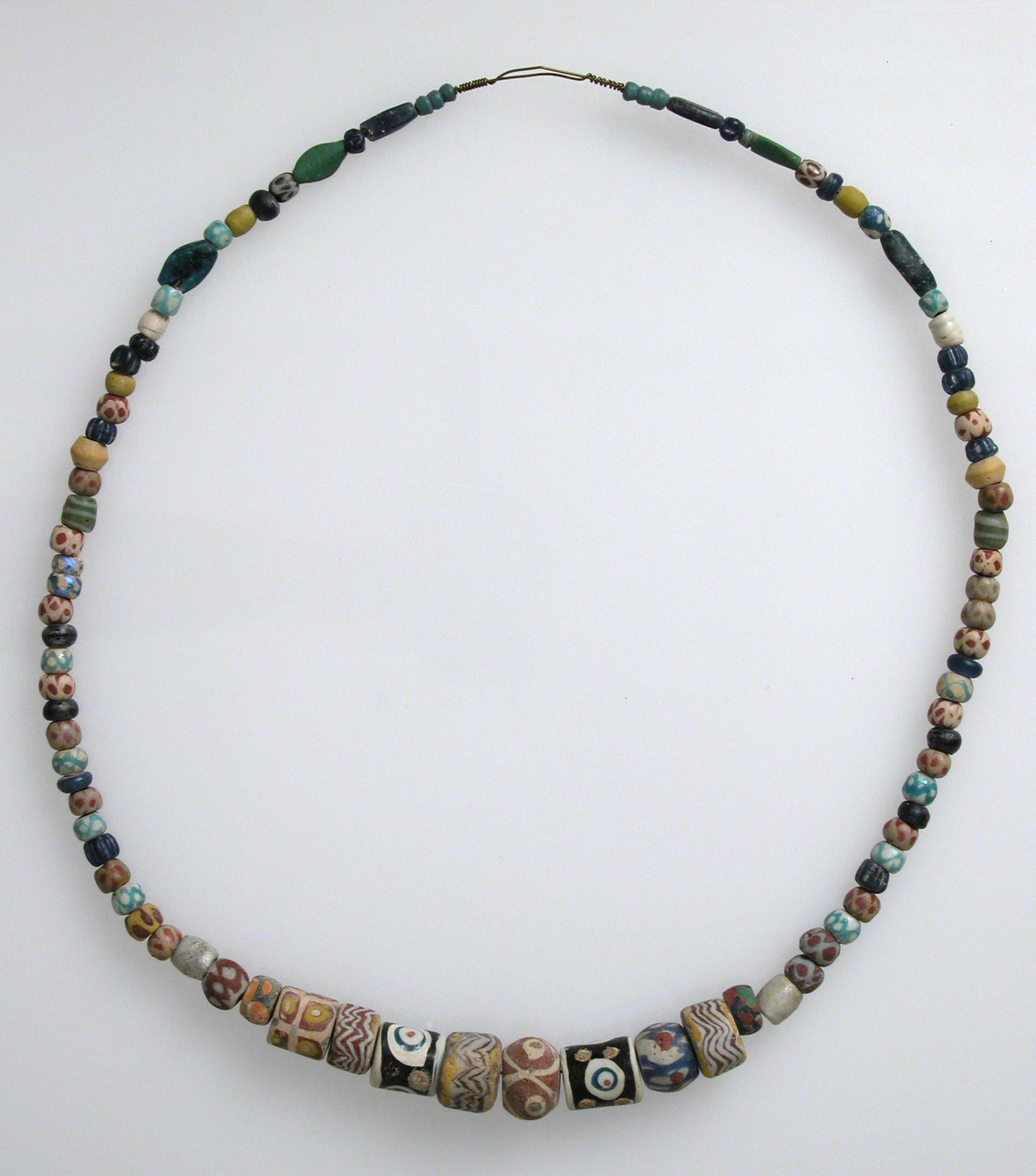
Deconstructing the Frankish Necklace: Amber, Amethyst, Glass, and Copper Alloy as a 2026 Silhouette Lexicon
Within the hallowed archives of Natalie Fashion Atelier, the study of aesthetic archaeology serves not as a mere retrospective glance, but as a rigorous methodology for forecasting the future of form. This technical research paper examines a specific artifact: a Frankish necklace fragment, circa 6th-7th century CE, composed of amber, amethyst, glass, and copper alloy. Isolated from its funerary context, this object is not a relic of adornment, but a blueprint for volumetric tension and textural narrative. The following analysis deconstructs the classical elegance of this composite piece, translating its material and structural logic into a coherent thesis for 2026 haute couture silhouettes. We posit that the necklace’s inherent contradictions—weight versus air, opacity versus translucency, organic versus industrial—directly inform a new paradigm of architectural drapery and sculptural embellishment.
I. Materiality as Structural Syntax
Amber: The Fossilized Light and Volumetric Drape
The amber beads, with their internalized inclusions and warm, honeyed translucency, represent a state of suspended animation. For the 2026 silhouette, amber is not merely a color or a bead; it is a principle of fossilized volume. The material’s inherent lightness contradicts its visual weight. In our research, we translate this into a new generation of thermo-molded organza and bio-resin overlays. The silhouette is informed by the amber bead’s ability to capture light from within. We propose a double-layered shell jacket where an outer, rigid, amber-toned resin lattice is suspended over a fluid, champagne-hued silk charmeuse. The gap between layers mimics the inclusion within the amber, creating a breathable, weightless volume that moves independently of the body. This is not a draped fabric; it is a captured atmosphere, a direct architectural quotation of the bead’s internal light.
Amethyst: The Rigid Point and Chromatic Asymmetry
The amethyst beads, with their deep, regal purple and crystalline faceting, introduce a principle of punctuated rigidity. Unlike the amber’s organic warmth, the amethyst is a geometric anchor. For 2026, we deconstruct this into a strategic shoulder architecture. The silhouette is informed by the amethyst’s role as a visual terminus within the necklace’s composition. We propose a single-sleeve bolero or a capelet with a weighted hem, where the amethyst’s hue is not applied as a print, but as a dyed-to-match structural panel of heavy duchesse satin. The asymmetry is key: one shoulder is defined by a rigid, amethyst-toned sculpted form (a direct reference to the bead’s faceted nature), while the opposing side falls in a liquid, unconstructed cascade of amber-toned crepe. This creates a dynamic equilibrium, a visual dialogue between the weight of the gemstone and the fluidity of the textile.
Glass: The Chromatic Disruption and Optical Illusion
The glass beads, often a vibrant, almost artificial blue or green against the earthier tones of the amber and amethyst, serve as a chromatic disruption. Their smooth, reflective surface introduces a modern, almost industrial element to the ancient composition. For the 2026 silhouette, glass informs the concept of optical layering. We translate this into a translucent micro-pleated gazar overlay, dyed in a sharp, acid-green or cobalt blue. This overlay is cut on the bias and applied asymmetrically over the primary amber and amethyst volumes. The effect is a moiré pattern of color and light, a visual vibration that echoes the glass bead’s ability to catch and distort its surroundings. The silhouette is therefore not static; it is a perceptual field, shifting with the viewer’s angle and the wearer’s movement. The glass bead teaches us that the most powerful color is not a flat application, but a refractive event.
Copper Alloy: The Tension Structure and Grounding Line
The copper alloy spacers and wire, now patinated to a verdigris green, are the unsung heroes of the necklace’s composition. They provide the tension structure, the rigid armature that forces the softer beads into a specific, repeating pattern. For the 2026 silhouette, copper alloy is translated into visible structural seams and metallic thread couching. We reject the notion of invisible construction. Instead, the copper alloy informs a new exoskeletal tailoring. A gown’s seams are not hidden; they are traced with a hand-embroidered line of oxidized copper thread, creating a topographical map of the garment’s construction. Furthermore, the patina is a key textural element. We propose a burnished copper lamé used as a structural underlayer for a sheer, amber-toned tulle. The copper provides the grounding weight, a metallic skeleton that anchors the ethereal, translucent layers above. This is the principle of archaeological tension: the visible, aged metal holding the precious, fragile materials in place.
II. Silhouette Synthesis: The Frankish Necklace as a 2026 Gown
The synthesis of these four material principles yields a definitive 2026 silhouette: The Archaeological Armature Gown. This is not a dress; it is a constructed environment for the body. The silhouette is defined by three key architectural zones:
Zone 1: The Shoulder and Upper Torso (The Amethyst Anchor)
This zone is a study in asymmetric structural weight. A single, rigid shoulder piece, sculpted from a copper alloy and resin composite and dyed in a deep amethyst tone, extends into a short, architectural sleeve. This piece is not attached to the bodice; it is a floating armature, connected by a single, visible copper alloy chain. The opposite shoulder is bare, allowing the fluidity of the gown’s main body to begin its cascade.
Zone 2: The Bodice and Waist (The Amber Volume and Glass Refraction)
The bodice is a double-layered construction. The base layer is a bias-cut, honey-toned silk charmeuse, mimicking the amber’s fluid warmth. Over this, a second layer of acid-green glass micro-pleats is tensioned from the copper shoulder anchor to a single, low-slung waist point. This creates a diagonal tension line across the torso, echoing the necklace’s repeating pattern. The volume is not gathered; it is captured and released by the structural seams.
Zone 3: The Skirt and Train (The Copper Grounding and Patina Narrative)
The skirt falls in a single, uninterrupted column of heavy, burnished copper lamé, from the waist to the floor. This provides the visual and physical weight of the entire composition. However, the lamé is cut with a deep, almost invisible slit from the waist, revealing an inner layer of amber-toned tulle. A hand-embroidered patina pattern—a topographical map of oxidized copper—traces the lamé’s seams, creating a narrative of age and transformation. The train extends an additional meter, its hem weighted with a single, large, uncut amethyst cabochon and a cluster of amber beads, anchoring the entire silhouette to the floor.
III. Conclusion: The Future of Form is Found in the Fragment
The Frankish necklace, when subjected to the rigorous lens of aesthetic archaeology, ceases to be a historical ornament. It becomes a technical manifesto for 2026. The amber teaches us to capture light as volume. The amethyst teaches us to punctuate asymmetry with weight. The glass teaches us to disrupt color as a refractive event. The copper alloy teaches us to expose the skeleton of construction as a narrative element. The resulting silhouette—The Archaeological Armature Gown—is not a costume. It is a wearable thesis on the enduring dialogue between materiality and form, proving that the most radical future of haute couture is, paradoxically, buried in the past. This is the lexicon of Natalie Fashion Atelier: where every bead is a blueprint, and every fragment is a foundation for the next epoch of elegance.