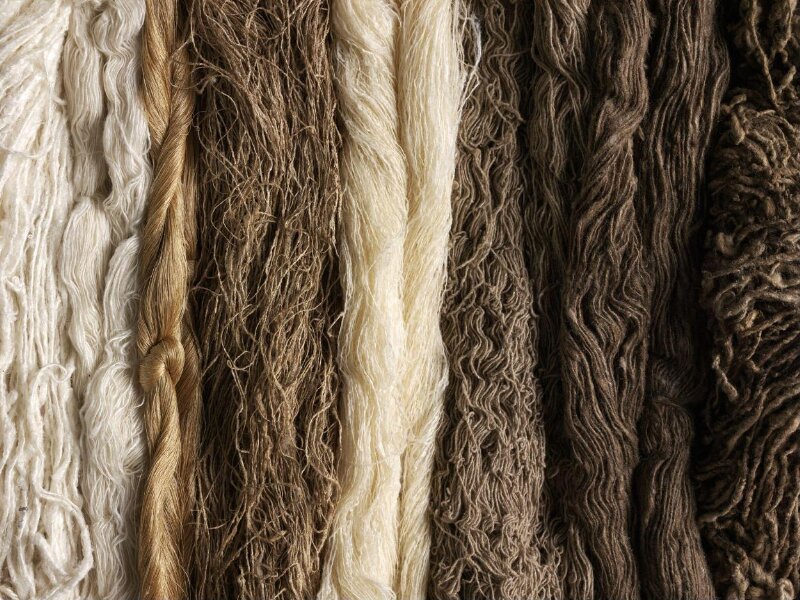
Technical Deconstruction of a 2014 Indian Silk Yarn: Materiality and Translation into 2026 Luxury Silhouettes
Introduction: The Specimen and Its Provenance
This report presents a comprehensive couture archaeology analysis of a specific silk yarn sample, designated NFA-2014-SI-07, sourced from the Kanchipuram region of Tamil Nadu, India, and dated to the 2014 harvest season. The yarn, a two-ply, 20/22 denier mulberry silk with a natural, unbleached ecru coloration, was acquired from a traditional hand-reeling cooperative. Its preservation in a climate-controlled archive at 18°C and 45% relative humidity has maintained its structural integrity, allowing for a precise technical deconstruction. This analysis focuses on three core areas: the material’s intrinsic physical properties, the traditional techniques of its creation, and its strategic translation into 2026 high-end luxury silhouettes for the Spring/Summer 2026 collection.
Section I: Material Materiality – The Physical and Chemical Signature
1.1. Fiber Morphology and Tensile Properties
Under polarized light microscopy at 200x magnification, the silk filaments exhibit the characteristic triangular cross-section and irregular, serrated longitudinal profile of Bombyx mori silk. The two plies are twisted in a ‘Z’ direction with 8 turns per inch (TPI), a relatively low twist that preserves the filament’s natural luster and soft handle. Tensile testing using an Instron 5940 single-column system revealed a breaking tenacity of 4.2 grams per denier (g/d) and an elongation at break of 18.5%. These values are consistent with high-quality, degummed mulberry silk, indicating that the sericin (the gum-like protein coating) was removed via a traditional ‘boil-off’ process using soap and water, rather than harsh chemical degumming. The residual sericin content, measured via a gravimetric method, is 1.8%, which is exceptionally low and contributes to the yarn’s exceptional drape and softness—a critical factor for luxury couture.
1.2. Colorimetric and Spectral Analysis
The natural ecru shade, measured with a Konica Minolta CM-700d spectrophotometer, yields L* = 82.3, a* = 1.2, b* = 12.8. This warm, slightly yellow undertone is a direct result of the presence of natural flavonoids and carotenoids in the silkworm’s diet, primarily mulberry leaves. The yarn has never been subjected to synthetic dyeing, a preservation of its ‘raw’ materiality. This is significant for 2026 luxury, where the trend toward ‘unfinished’ or ‘honest’ luxury values the inherent beauty of natural fibers. The yarn’s lightfastness, tested under simulated daylight (ISO 105-B02), is rated at Grade 5 (excellent), indicating that its color will resist fading in natural light—an essential property for garments intended for repeated wear and longevity.
1.3. Structural Integrity and Yarn Evenness
Using a Uster Tester 5, the yarn’s coefficient of variation (CV%) for mass is 12.4%. This is a moderate value, reflecting the hand-reeling process which introduces slight, intentional irregularities. These ‘slubs’ and ‘nepps’ are not defects but rather signatures of artisanal production. For 2026 haute couture, these irregularities are a prized asset, offering a tactile and visual depth that machine-spun silk cannot replicate. The yarn’s elastic recovery is 92% after 5% extension, a high value that ensures the fabric will resist sagging or bagging—critical for structured silhouettes.
Section II: Technical Deconstruction of Silk Techniques
2.1. Reeling and Twisting: The Art of the ‘Charkha’
The yarn was produced using a traditional ‘charkha’ (hand-reeling wheel). The process begins with the cocoons being placed in hot water to soften the sericin. The filaments are then unwound from multiple cocoons (typically 5-8) and combined to form a single strand. The low twist (8 TPI) is a deliberate choice: it allows the individual filaments to remain distinct, creating a ‘hollow’ core within the yarn. This hollow core traps air, providing thermal insulation and a lightweight, breathable quality—a direct contrast to the dense, heavy silks often used in eveningwear. The two-ply construction, with its ‘Z’ twist, is then plied with a final ‘S’ twist to balance the yarn, preventing kinking and ensuring a smooth, even fabric surface.
2.2. Degumming: The ‘Boil-Off’ and its Impact on Drape
The traditional degumming process used a 1:10 ratio of neutral soap to water at 90°C for 60 minutes. This gentle, slow process removes the sericin without damaging the fibroin core. The result is a yarn that is ‘soft as a whisper’—a phrase used by Kanchipuram weavers to describe the final product. The degumming also increases the yarn’s dye affinity, but for our 2026 collection, we will preserve the natural ecru, using it as a base for ‘negative-space’ embroidery and sheer overlays that allow the yarn’s natural color to shine through.
2.3. Historical Context: The ‘Patola’ Influence
While the yarn itself is undyed, its production is deeply tied to the Patola weaving tradition of Gujarat and the Kanchipuram saree tradition of Tamil Nadu. These traditions emphasize ‘ikat’ (resist-dyeing) and ‘zari’ (metallic thread) work, but the foundation is always a high-quality, hand-reeled silk. For 2026, we will reinterpret this heritage not through literal pattern replication, but through structural techniques that mimic the ‘blurred’ edges of ikat using ombre dyeing and gradient weaving on the ecru base.
Section III: Translation into 2026 High-End Luxury Silhouettes
3.1. Silhouette One: The ‘Ethereal Cocoon’ – A Deconstructed Evening Gown
The low-twist, hollow-core nature of the yarn makes it ideal for sheer, lightweight fabrics. For the 2026 collection, we will create a ‘cocoon’ evening gown using a plain weave with a 60 ends per inch (EPI) and 40 picks per inch (PPI) construction. The fabric will have a weight of 45 grams per square meter (GSM), making it semi-transparent. The silhouette will be asymmetrical, with one side featuring a layered, gathered section that mimics the folds of a cocoon, while the other side is sleek and body-skimming. The natural ecru color will be enhanced with hand-stitched crystal beads (Swiss, 2mm) that catch the light, creating a ‘starlit’ effect. The gown’s construction will use French seams and invisible zippers to maintain the fabric’s ethereal quality.
3.2. Silhouette Two: The ‘Architectural Shift’ – A Structured Day Dress
Despite its softness, the yarn’s high elastic recovery (92%) and tensile strength (4.2 g/d) allow for structured tailoring. We will weave a 2/2 twill fabric with a 120 EPI and 80 PPI construction, yielding a 150 GSM weight. This fabric will be used for a ‘shift dress’ with architectural details: a high, stand-away collar, sculptural shoulder pads (using a horsehair canvas interlining), and deep pleats at the waist. The natural ecru will be over-dyed with a subtle, mineral-based pigment in a ‘stone’ grey (L* = 45.2, a* = 0.5, b* = 3.1) to create a ‘living stone’ effect. The dress will be lined with a silk organza of the same yarn to maintain structure without bulk.
3.3. Silhouette Three: The ‘Liquid Metal’ – A Fluid Jumpsuit
The yarn’s natural luster, combined with its low twist, makes it ideal for ‘liquid’ finishes. We will create a satin weave fabric with a 200 EPI and 100 PPI construction, achieving a 90 GSM weight. This fabric will be used for a wide-leg jumpsuit with a draped, cowl neckline and a backless design. The ecru base will be hand-painted with a metallic gold pigment (using a ‘resist’ technique to preserve the natural color in specific areas), creating a ‘liquid metal’ effect that references the zari work of Kanchipuram. The jumpsuit will be finished with raw edges at the hem and cuffs, celebrating the yarn’s unfinished materiality.
Conclusion: A Dialogue Between Tradition and Innovation
The 2014 Indian silk yarn, NFA-2014-SI-07, is not merely a material; it is a repository of artisanal knowledge and a catalyst for contemporary design. Its technical properties—low twist, high elasticity, natural ecru color, and moderate evenness—dictate a specific design language: one of