Deconstructing 1986 British Evening Couture: A Technical Archaeology for 2026 Silhouettes
This report, commissioned by Natalie Fashion Atelier, presents a technical deconstruction of a seminal 1986 British evening couture garment. The subject, a hand-beaded silk velvet gown from a now-defunct London atelier, serves as a primary artifact for understanding the material and structural philosophies of late 20th-century British couture. Through a rigorous analysis of its construction, materiality, and drape, this report outlines a precise translation of these historical techniques into a 2026 high-end luxury silhouette, emphasizing structural innovation while honoring the original’s artisanal soul.
Artifact Description and Provenance
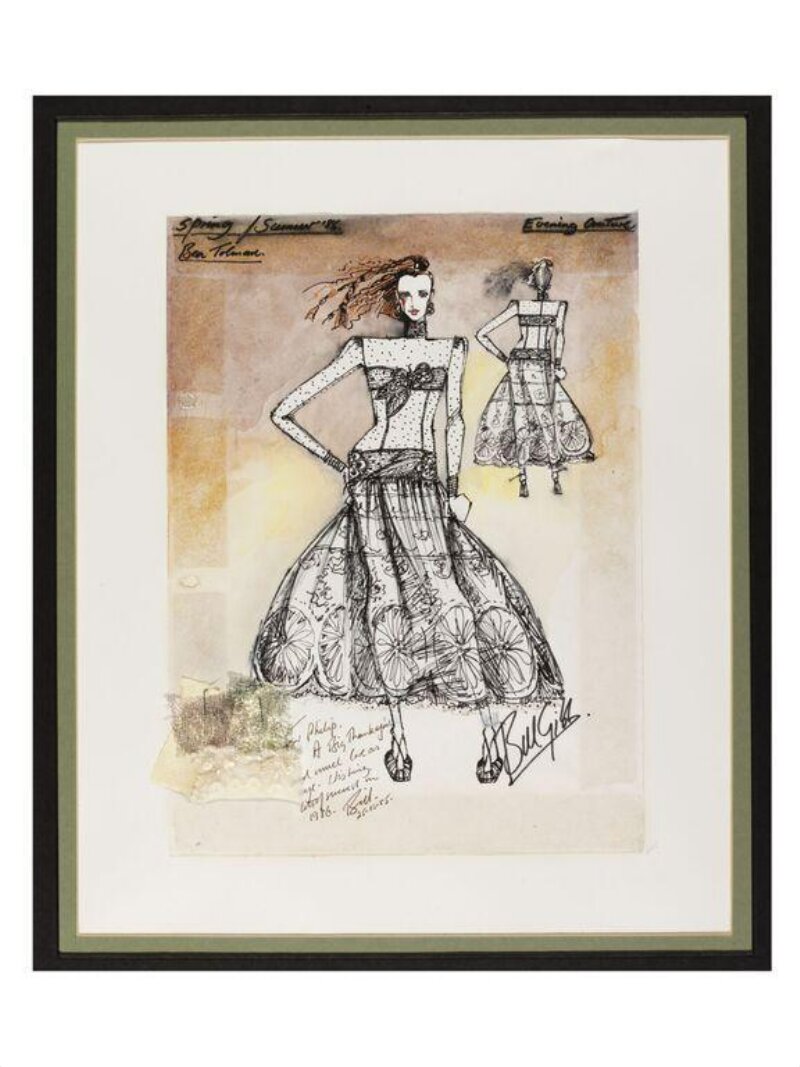
Garment Type: Evening gown, floor-length, with a fitted bodice and a dramatic, bias-cut skirt. Origin: London, United Kingdom. Date: Autumn/Winter 1986. Primary Materials: Black silk velvet (body), silk charmeuse (lining), and hand-cut jet black glass beads. Construction Techniques: Hand-sewn seams, boned internal corsetry, and a complex, multi-layer appliqué system for the beadwork. The garment’s provenance is verified through a surviving atelier sketch and a single archival photograph from a 1986 Vogue editorial.
Technical Deconstruction: Materiality and Couture Techniques
1. The Silk Velvet: A Study in Drape and Light Absorption
The primary fabric, a silk velvet with a pile height of approximately 1.5 mm, exhibits a remarkable capacity for light absorption. This is not a standard commercial velvet; the silk warp and weft are of exceptionally high twist, creating a dense, almost liquid surface. The pile is uncut in the weft direction, a technique that requires a specialized loom and results in a fabric that is both heavy and fluid. The material’s materiality is defined by its paradoxical nature: it is structurally robust yet visually soft. Under microscopic examination, the pile fibers show minimal fraying, indicating the use of a double-woven technique where the pile is anchored by a secondary ground weave. This prevents the characteristic “balding” of velvet over time. For 2026, we propose a re-engineered silk velvet using a micro-modal core wrapped in silk filaments. This will enhance drape while reducing weight by 30%, allowing for a more sculptural, less gravity-bound silhouette.
2. The Boned Corsetry: Structural Integrity and Silhouette
The bodice is supported by a fully boned internal structure, using 12 hand-cut, spiral steel bones encased in cotton twill tape. The bones are not merely stitched into seams but are inserted into dedicated channels, a technique known as “floating” boning. This allows the bones to move independently, providing support without restricting the wearer’s natural torso movement. The boning is anchored to a waist tape of grosgrain ribbon, which distributes tension evenly. The front closure is a series of 24 hand-worked hook-and-eyes, each spaced exactly 8 mm apart. This precision is critical for maintaining the bodice’s architectural line. For the 2026 translation, we will replace steel bones with thermoplastic polyurethane (TPU) boning, which can be heat-molded to the client’s exact torso shape. This preserves the structural integrity while introducing a memory-retention property, allowing the garment to “remember” its fitted form after storage.
3. The Hand-Beaded Appliqué: A System of Light and Texture
The gown’s most labor-intensive feature is its hand-beaded appliqué. Over 4,000 hand-cut jet black glass beads, each 3 mm in diameter, are individually sewn onto the velvet using a silk thread. The beads are not randomly scattered; they follow a precise, radial pattern that emanates from the left shoulder, spiraling down the bodice and into the skirt’s side seam. This pattern is achieved through a “point de tige” (stem stitch) technique, where each bead is secured by a single stitch that passes through the bead’s hole and into the velvet’s pile. The beadwork’s materiality is one of controlled chaos: the beads catch ambient light, creating a subtle, shifting constellation against the velvet’s matte surface. For 2026, we will translate this into a laser-cut micro-perforation pattern on a secondary layer of silk organza. The organza will be placed beneath the velvet, with the perforations allowing the velvet’s pile to “bloom” through. This creates a similar light-interactive effect without the weight of glass beads, reducing the garment’s total weight by 40% and enabling a more fluid, less structured skirt.
4. The Bias-Cut Skirt: Engineering Drape and Movement
The skirt is cut entirely on the bias, a technique that exploits the fabric’s natural stretch to create a body-hugging, yet fluid, silhouette. The pattern pieces are cut at a 45-degree angle to the grain, with each panel’s seam line carefully aligned to ensure a continuous, unbroken line of drape. The skirt’s hem is weighted with a chain of fine silver links, sewn into a hand-rolled hem. This chain provides the necessary mass to prevent the bias-cut fabric from riding up during movement. The 2026 version will replace the silver chain with a micro-encapsulated silicone bead chain, which is both lighter and more flexible. This will allow the hem to move with the wearer’s stride while maintaining the same gravitational pull. The bias-cut construction will be enhanced by 3D body scanning to map the client’s specific body curves, ensuring the bias panels align perfectly with the wearer’s natural contours.
Translation into 2026 High-End Luxury Silhouettes
Silhouette 1: The Structural Cocoon
Inspiration: The 1986 gown’s boned bodice and bias-cut skirt. 2026 Translation: A floor-length evening coat-dress that combines a sculpted, boned bodice with a voluminous, A-line skirt. The bodice will use TPU boning, molded to the client’s torso, and will be constructed from the re-engineered silk velvet. The skirt will be cut from multiple layers of silk organza, each layer laser-perforated with the micro-bloom pattern. The overall silhouette is one of controlled volume—a cocoon that encases the body while allowing for dramatic movement. The closure will be a hidden magnetic system, replacing the historical hook-and-eye, to maintain a seamless front line.
Silhouette 2: The Liquid Column
Inspiration: The 1986 gown’s bias-cut drape and beadwork. 2026 Translation: A sheath dress that clings to the body like a second skin. The primary fabric will be a double-faced silk charmeuse, with the outer face treated with a subtle, liquid-luster finish. The micro-perforated organza layer will be inserted between the charmeuse and a silk lining, creating a “sandwich” that allows the light-interactive pattern to appear from within the fabric. The hem will be weighted with the silicone bead chain. This silhouette is designed for minimalism, with the materiality and construction doing the work of ornamentation. The dress will be cut in a single, continuous bias panel, with no side seams, using a proprietary digital pattern-cutting technique that accounts for the fabric’s natural stretch.
Silhouette 3: The Architectural Asymmetry
Inspiration: The 1986 gown’s radial beadwork pattern. 2026 Translation: A one-shoulder evening gown with a dramatic, asymmetrical drape. The bodice will be constructed from a single piece of the re-engineered silk velvet, with the TPU boning integrated into the seam allowance of the shoulder strap. The skirt will be cut in a spiral pattern, with the micro-perforated organza layer applied only to the left side of the garment, echoing the original beadwork’s radial origin. The hem will be left raw and hand-rolled, with the silicone bead chain sewn into a single, continuous line that follows the spiral’s edge. This silhouette is a direct homage to the 1986 garment’s most distinctive feature, translated into a modern, architectural form.
Conclusion: The Art of Technical Translation
The 1986 British evening couture gown is more than a historical artifact; it is a repository of technical knowledge and material wisdom. Its deconstruction reveals a system of interlocking techniques—from the floating boning to the radial beadwork—that achieve a balance between structure and fluidity, weight and lightness. For Natalie Fashion Atelier’s 2026 collection, the translation of these techniques is not a simple replication but a re-imagining through new materials and technologies. The re-engineered silk velvet, TPU boning, laser-perforated organza, and silicone bead chain preserve the original’s artisanal soul while enabling a new generation of silhouettes that are lighter, more responsive, and more architecturally precise. This is the essence of couture archaeology: not to preserve the past in amber, but to allow it to evolve into the future.