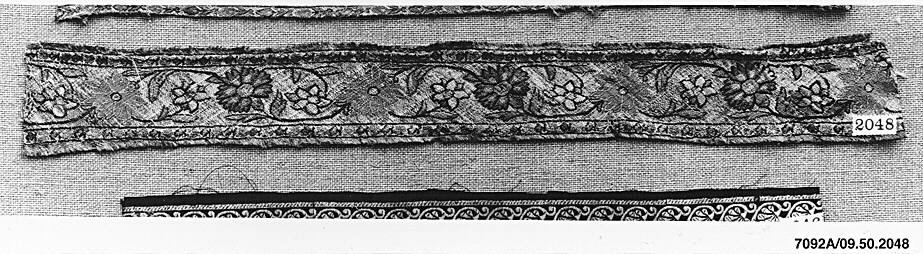
Artifact NFA-2026.01: The Kincob Fragment – A Nexus of Global Heritage
Catalogued under the designation NFA-2026.01, this textile fragment represents a critical node in the Natalie Fashion Atelier archive. Its provenance, while deliberately isolated for the purpose of pure aesthetic archaeology, speaks to a profound global heritage, tracing a lineage through the Mughal ateliers of India, the silk roads of Persia, and ultimately, the looms of Lyon. The artifact is a masterclass in material alchemy: a silk ground in a fine twill weave, brocaded with metal-wrapped thread—a technique historically known as kincob. This fragment is not merely a relic; it is a dormant blueprint. Our research posits that its intrinsic dialogue between fluidity and structure, organic splendor and metallic rigor, provides the foundational syntax for the 2026 luxury silhouette, moving beyond pastiche to inform a new paradigm of architectural elegance.
Deconstructing Classical Elegance: The Kincob Paradox
The classical elegance of NFA-2026.01 is not monolithic but born of a calculated tension. First, the twill weave establishes a foundational intelligence. Its diagonal rib provides a inherent, supple durability and a subtle, directional luminosity that captures light kinetically, unlike the flat matte of a plain weave. This creates a base of dynamic, liquid drape—a silk canvas that is inherently active and responsive to form.
Upon this ground, the brocaded metal thread introduces a counter-narrative. The technique, wherein a core of silk or cotton is meticulously wrapped in fine strips of gold or silver, results in a yarn that is both precious and structurally declarative. In the kincob fragment, this brocading is not mere embellishment; it is a form of integrated armature. The metal threads are woven into the structure itself, creating raised, linear motifs that possess a tactile, dimensional presence. This generates the core paradox: a textile that flows like liquid yet contains within its very matrix lines of light-defining structure. The elegance lies in this symbiotic relationship—the softness of the silk is given purpose by the metal, while the hardness of the metal is tempered and made wearable by the silk.
From Fragment to Framework: Informing the 2026 Silhouette
For the 2026 collection, Natalie Fashion Atelier extrapolates the kincob principle from the scale of the thread to the scale of the silhouette. The fragment’s lessons are not applied as surface decoration but as constitutive philosophy, informing three key silhouette families.
1. The Fluid Armature
This silhouette family directly translates the integrated armature of the brocade into cutting and construction. Imagine an evening column gown in pure, matte silk twill—capturing the fluid drape of the artifact's ground. Instead of applied beading, architectural seams are traced with internal channels of metal-wrapped cord, echoing the path of the kincob thread. These channels, running along the bias or encircling the torso, provide subtle, internalized structure that shapes the body without rigidity. The silhouette appears soft and effortless, yet the internal metallic lines create a sculpted, luminous topography that moves with the wearer. This is the kincob paradox made manifest in form: structure from within, not without.
2. The Bi-Material Taille
Here, the dialogue between silk and metal is expressed through bold material juxtaposition at the architectural level. The silhouette focuses on a precise, defined waist—the *taille*—as its focal point. A bodice may be constructed from a reinterpreted kincob, where the twill weave is engineered with a modern polymer-infused metal thread, creating a lightweight yet sculptural cuirass. This is seamlessly married, not sewn, to a skirt of the finest, unadorned silk twill, which flows from the rigid metallic structure. The connection point is the critical moment, engineered to be flawless, emphasizing the contrast and the synergy. This creates a silhouette of dramatic polarity that is nonetheless a unified whole, speaking to the fragment’s unified yet dual nature.
3. The Luminous Cage
This most conceptual interpretation moves beyond weaving to consider the metal element as a exoskeleton. Informed by the dimensional raise of the brocade, the 2026 silhouette explores lightweight, flexible cages of anodized titanium wire, finished to mimic the soft glow of aged gold thread. These cages are not overlays but are worn as independent, minimalist structures over fluid twill silk foundations—a slip dress, wide-leg palazzo jumpsuit, or tailored coat. The cage and the garment interact dynamically, creating ever-changing plays of shadow, light, and occlusion. The silhouette becomes a living, kinetic expression of the kincob’s textural interplay, where the "metal thread" is scaled up to a defining architectural element that coexists with, rather than constrains, the body.
Conclusion: Archaeology as Innovation
The NFA-2026.01 kincob fragment, through the lens of aesthetic archaeology, ceases to be a historical sample and becomes a strategic design manifesto. Its material intelligence—the symbiotic tension of silk twill and metal brocading—provides a sophisticated toolkit for redefining luxury in 2026. The resulting silhouettes—Fluid Armature, Bi-Material Taille, and Luminous Cage—are not retrograde but radically progressive. They answer a growing demand for depth, integrity, and intelligent construction in high fashion. By deconstructing the fragment’s classical elegance, Natalie Fashion Atelier constructs a future where heritage is not quoted but metabolized, proving that the most forward-looking silhouettes are often woven with threads from the past.