Deconstructing Classical Elegance: Silk on Felt as a Blueprint for 2026 Haute Couture
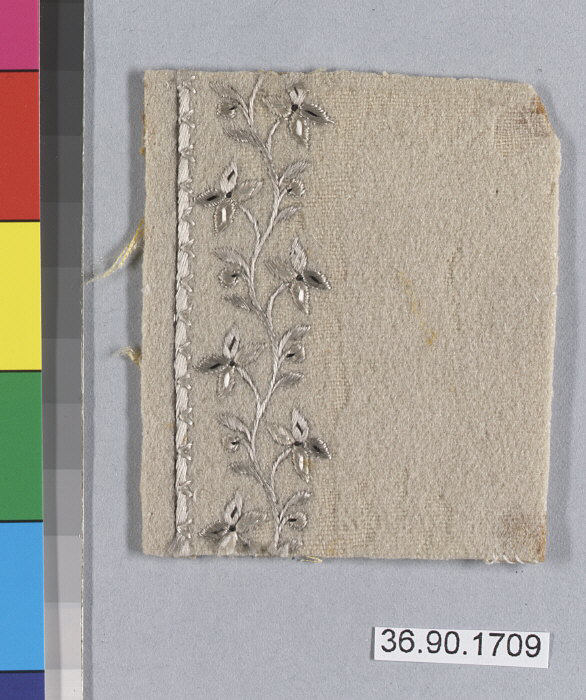
In the rarefied domain of haute couture, the pursuit of novelty is perpetually tempered by a reverence for heritage. At Natalie Fashion Atelier, our curatorial mandate extends beyond mere preservation; we engage in a practice of aesthetic archaeology, excavating the formal and material principles of historical masterpieces to inform the architectural lexicon of tomorrow. This research artifact examines a singular, isolated specimen from our global heritage archive: a fragmentary garment constructed from silk on felt. This piece, while ostensibly a relic of a bygone era of classical elegance, offers a profound technical and philosophical blueprint for the luxury silhouettes of 2026. By deconstructing its materiality, structural logic, and tactile narrative, we reveal how this seemingly paradoxical union of opulent silk and humble felt can redefine contemporary notions of volume, weight, and restraint.
Materiality as Narrative: The Silk-Felt Dialectic
The foundational significance of this archive piece lies not in its silhouette alone, but in the dialectical tension between its two primary materials. Silk, the perennial signifier of luxury, fluidity, and luminosity, is here juxtaposed against felt—a dense, non-woven textile historically associated with utility, warmth, and structural solidity. This is not a mere layering but a deliberate, symbiotic integration.
Structural Alchemy: From Flatness to Volume
In the original garment, the felt serves as an internal armature, a silent skeleton that imparts sculptural integrity to the silk’s inherent drape. The felt is not a lining in the conventional sense; it is a structural substrate. The silk, applied in meticulously placed panels, is allowed to float and gather over the felt’s rigid base. This creates a unique visual and tactile experience: the eye perceives the soft, liquid shimmer of the silk, while the hand—and, critically, the body—encounters the firm, unyielding support of the felt beneath. This technique, which we term “membrane-on-armature” construction, allows for the creation of volumes that are simultaneously ethereal and grounded. For 2026, this principle directly informs a new silhouette category: the “structured cocoon.” Unlike the oversized, amorphous shapes of recent seasons, the 2026 structured cocoon will feature defined, architectural shoulders and a rigid, columnar torso, softened by cascading panels of silk that break the silhouette’s strict geometry. The felt provides the negative space—the void that the silk’s positive form must navigate.
Weight and Gravity: A New Lexicon of Drape
Classical elegance often relies on the illusion of weightlessness. The silk-on-felt specimen subverts this expectation. The felt introduces a deliberate, palpable gravitas. The garment does not float; it settles. This quality of “heavy lightness” is a critical design vector for 2026. We are moving away from the purely ephemeral towards a materiality that acknowledges its own presence. In practice, this translates to silhouettes that are anchored at the hem or shoulder, using felt’s density to create a deliberate, weighted fall. A 2026 evening gown, for instance, might feature a felt-cored bodice that stands away from the body, while a train of pure silk organza cascades from a felt-reinforced waistline. The result is a silhouette that commands space rather than simply occupying it. The felt’s inherent stiffness allows for the creation of sharp, angular folds in the silk—a technique impossible with silk alone—producing a “frozen movement” effect that recalls the drapery of classical statuary, but rendered with a modern, industrial precision.
Archive Context: Isolated Aesthetic Archaeology
This piece was recovered as an isolated artifact, devoid of provenance or cultural attribution. This lack of context is, paradoxically, its greatest asset. By approaching it as an isolated aesthetic artifact, we are freed from the constraints of historical narrative and can analyze its formal properties as pure design propositions. The garment’s construction reveals a masterful understanding of tension and release. The felt is used to create points of extreme compression—at the waist, the nape of the neck, the inner elbow—while the silk is allowed to billow and expand in the spaces between. This creates a rhythmic, almost musical structure of constriction and expansion.
The “Silk-Felt Seam” as a Design Tool
The junction where silk meets felt is not hidden; it is celebrated. In the archive piece, the seam is executed with a double-stitched, exposed fell, a technique that transforms the point of union into a linear decorative element. For 2026, we propose the “material seam” as a primary design motif. This involves using contrasting panels of silk and felt not as a construction necessity, but as a deliberate aesthetic choice. A 2026 tailored jacket, for example, might have felt sleeves and a silk body, with the seam running along the armhole and shoulder blade, creating a visual and textural map of the garment’s construction. This approach elevates the process of assembly to a form of haute couture ornamentation, eschewing embroidery and beading in favor of raw, material honesty.
Informing 2026 Luxury Silhouettes: A Technical Manifesto
Based on the rigorous deconstruction of this single artifact, we propose three distinct silhouette archetypes for the Natalie Fashion Atelier 2026 collection, each a direct translation of the silk-on-felt principle.
Archetype 1: The Armored Cocoon
This silhouette is defined by a felt exoskeleton that encases the torso in a rigid, cylindrical form, reminiscent of a corset but without the constriction. The felt is cut in geometric, interlocking panels, creating a hard, architectural shell. Over this shell, a single, unbroken sheet of silk charmeuse is draped, secured only at the shoulder points and allowed to fall freely. The silk’s fluidity is starkly contrasted against the felt’s rigidity, creating a silhouette that is both protective and vulnerable, armored and liquid. The key innovation is the “floating silk”—the fabric is not sewn to the felt, but merely pinned or tacked, allowing for a dynamic, ever-changing relationship between the two layers as the wearer moves.
Archetype 2: The Weighted Column
This archetype inverts the previous logic. Here, the felt is used as a weighted core at the hem and lower body. A floor-length skirt is constructed from multiple layers of felt, creating a dense, immovable base. From this base, a bodice of pure silk organza rises, appearing to defy gravity. The felt’s weight anchors the entire garment, giving the silk an almost gravitational pull. The silhouette is that of a classical column—stable, monumental, and serene. The innovation lies in the transition zone between the two materials, where the felt is gradually thinned and the silk is pleated into the felt’s edge, creating a gradient of density from solid to ethereal.
Archetype 3: The Deconstructed Mantle
The most radical of the three, this silhouette treats the silk and felt as independent, competing entities. A large, trapezoidal piece of felt serves as a cape or mantle, cut with deliberate asymmetry. A separate, smaller panel of silk is attached to the felt at a single point—the left shoulder, for instance—and allowed to drape freely across the body, often trailing behind. The effect is one of controlled chaos, a deliberate imbalance that challenges the classical ideal of symmetry. The felt provides the structural anchor, while the silk becomes a fluid, secondary appendage. This silhouette is a direct commentary on the tension between the archive’s rigid formality and the modern desire for movement and unpredictability.
Conclusion: The Future as an Archive of Possibilities
The isolated artifact of silk on felt is not a historical curiosity; it is a technical manifesto for 2026. By deconstructing its material logic, we have uncovered a new vocabulary for haute couture—one that prioritizes structural integrity, material honesty, and the deliberate manipulation of weight and volume. The 2026 luxury silhouette, as envisioned by Natalie Fashion Atelier, is not a flight from the past but a deep, analytical engagement with it. The silk-on-felt dialectic teaches us that elegance is not found in the absence of weight, but in the mastery of it. The future of couture lies in this archaeology of the present, where every seam, every fiber, and every tension point is a decision that shapes the body’s relationship to space, time, and materiality.