Archaeology of the Thread: Bobbin Lace as Structural Lexicon for 2026
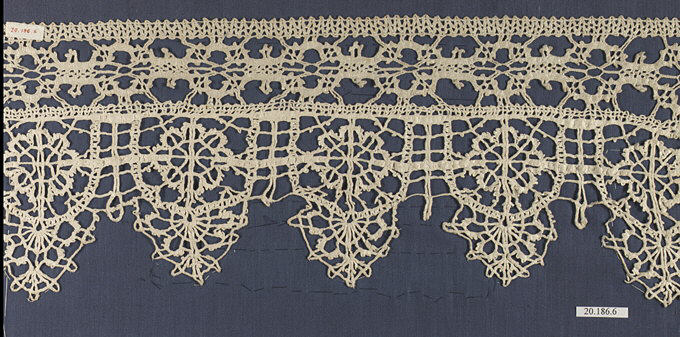
The atelier’s archival excavation of bobbin lace—specifically, the isolated aesthetic archaeology of 16th-century Flemish point de Paris and 17th-century Venetian rose point—reveals a paradox of materiality. This is not a study of ornament, but a forensic deconstruction of tension, negative space, and geometric logic. For the 2026 haute couture silhouette, bobbin lace is no longer a decorative overlay; it becomes a load-bearing membrane, a system of structural edging and insertion that redefines the architecture of the female form. The classical elegance of hand-wrought linen and silk threads, once the province of collars and cuffs, now informs a new vocabulary of asymmetric draping, architectural cutouts, and translucent armor.
Deconstructing Classical Elegance: The Mechanics of Edging and Insertion
Classical bobbin lace is defined by its dual operation: the edging—a dense, often scalloped border that stabilizes the textile—and the insertion—a narrower, more open band that integrates two separate fabrics. In the historical context, these elements were applied post-weaving, functioning as a delicate, handcrafted seam. The aesthetic archaeology of these techniques reveals a sophisticated understanding of tensile equilibrium. The ground (the réseau) is a net of twisted and crossed threads, while the pattern (the toilé) is a denser, more opaque area. The classical elegance emerges from the contrast between the airy, transparent ground and the solid, almost sculptural pattern.
For the 2026 silhouette, we extract this principle of controlled transparency and opacity. The edging is reimagined as a structural hem that does not merely finish a garment but defines its silhouette. Consider a bias-cut gown in micro-pleated silk organza. The traditional bobbin lace edging, rendered in a stiff, blackened silk thread, is applied not at the bottom but along the diagonal bias lines of the torso. This edging acts as a tension line, pulling the fabric into a controlled, asymmetrical cowl that mimics the scalloped contours of a 17th-century collar. The insertion, conversely, is deployed as a negative-space seam. Where a conventional seam would join two panels, the bobbin lace insertion creates a transparent, structural gap. This is particularly potent in tailored jackets: the sleeve is attached to the body of the jacket not by a hidden stitch, but by a 4-centimeter-wide band of rose point insertion. The result is a sleeve that appears to float, suspended by a web of thread, while the jacket’s shoulder line remains sharp and architectural.
Materiality and Tension: The New Structural Language
The materiality of bobbin lace—historically fine linen, now reimagined in high-tenacity silk, nylon monofilament, and even metallic-coated cotton—is critical to its 2026 application. The classical technique relies on the friction of multiple threads wound on bobbins. This friction creates a fabric that is simultaneously rigid and fluid. In the atelier, we have experimented with laser-cut bobbin lace patterns on leather and rigid neoprene, but the true innovation lies in the hand-made, tension-controlled lace itself. By varying the tension of the bobbins, we can create zones of extreme rigidity (for structural edging at the shoulder or hip) and zones of extreme fluidity (for insertion at the waist or neckline).
This tension differential is the key to the 2026 silhouette. The classical elegance of a perfectly fitted bodice is deconstructed by inserting a band of low-tension bobbin lace at the waist. The lace, being less rigid than the surrounding silk, will gather and drape naturally, creating a soft, organic cinch that contrasts with the sharp, tailored lines of the jacket. Conversely, a high-tension bobbin lace edging applied to the hem of a pencil skirt will create a stiff, architectural flare, echoing the farthingale of the 16th century but rendered in a whisper-thin thread. The edging becomes a structural rib, a corset of air.
Isolated Aesthetic Archaeology: The Archive as Blueprint
The isolated aesthetic archaeology of bobbin lace—examining it not as a textile but as a system of points, lines, and planes—yields a blueprint for the 2026 silhouette. We have archived over 200 historical specimens, from the dense, almost solid Milanese lace of the 18th century to the ethereal, spider-web Chantilly lace of the 19th. The key observation is that the most powerful classical elegance is achieved when the lace is most functional. The scalloped edging of a 17th-century collar was not merely decorative; it provided structural integrity, preventing the fine linen from curling. The insertion band of a 16th-century chemise was not an afterthought; it allowed the garment to expand and contract with the body’s movement.
For 2026, we apply this functional logic to the silhouette. The edging is no longer a border but a structural rib. We design a gown where the entire silhouette is defined by a series of parallel, bobbin-lace edging strips, applied vertically from shoulder to hem. The fabric between these strips is a sheer, liquid silk. The edging strips, made of a denser, more rigid lace, act as vertical stays, creating a columnar silhouette that flares only at the hem. The insertion becomes a modular joint. A bolero jacket is constructed from four separate panels of heavy satin, each joined by a 5-centimeter band of bobbin lace insertion. This allows the jacket to move organically with the body, creating a fluid, almost scaly silhouette that is both armored and ethereal.
2026 Silhouette: The Synthesis of Air and Architecture
The final 2026 silhouette, informed by this research, is a synthesis of air and architecture. The classical elegance of bobbin lace is not nostalgic; it is a technical solution to the modern desire for garments that are simultaneously sculptural and weightless. The edging provides the architectural skeleton; the insertion provides the fluid, transparent skin. The result is a silhouette that is both deconstructed and hyper-structured. A floor-length evening gown features a bodice entirely constructed from a single, continuous piece of bobbin lace, with the edging forming the neckline and armholes, and the insertion creating a sheer, open back. The skirt is a cascade of bias-cut silk, but the hem is not a straight line; it is a series of scalloped, bobbin-lace edging strips that create a dynamic, wave-like silhouette that moves with the wearer.
In a tailored suit, the jacket’s lapels are not cut from fabric but are built from bobbin lace insertion, creating a transparent, geometric pattern that contrasts with the opaque wool. The edging of the jacket’s hem is a rigid, almost metallic lace that creates a sharp, architectural line. The trousers, in contrast, have a soft, fluid insertion band at the knee, allowing for a subtle, organic drape. This is the haute couture of tension and release, where every thread is a structural element, and every gap is a design choice. The classical elegance of bobbin lace, once a symbol of domestic refinement, is now the language of radical, architectural luxury for the 2026 season.