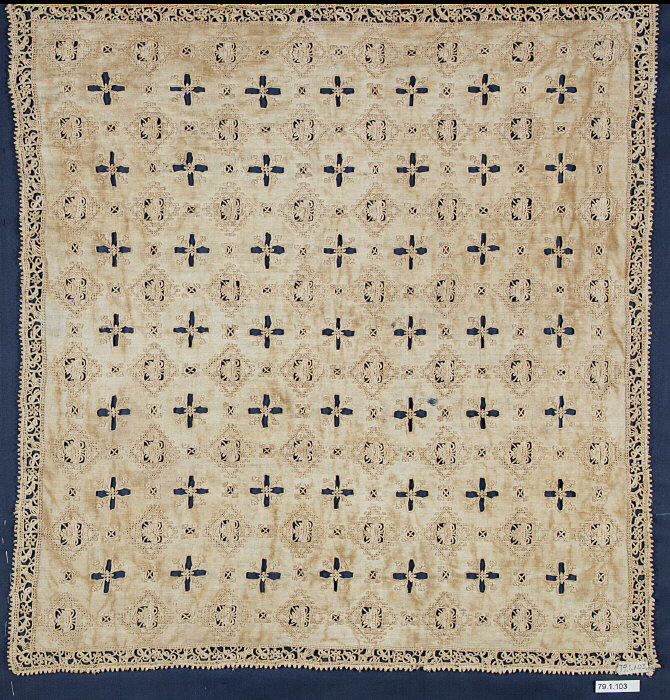
The Archival Fragment: Linen and Cutwork as Material Narrative
Within the isolated archive of aesthetic archaeology, the humble linen fragment—often dismissed as a mere underlayer—reveals itself as a foundational text of structural and decorative intelligence. For Natalie Fashion Atelier, the cover is not a protective afterthought but a primary architectural statement. The 2026 haute couture silhouette begins with this premise: that the outermost layer must carry the weight of historical memory, executed with the precision of a master craftsman. The chosen heritage, drawn from a global lexicon of textile traditions, finds its most potent expression in the interplay of linen and cutwork—a dialogue between strength and absence, opacity and light.
Linen: The Structural Skeleton of Elegance
Linen, in its purest form, is a material of paradox. Its tensile strength, derived from the flax fiber’s long cellulose chains, offers a drape that is simultaneously rigid and fluid. In the context of the 2026 silhouette, this is not a fabric of soft surrender but of controlled architecture. The cover constructed from high-grade, pre-washed linen possesses a memory—a slight, permanent crease that speaks to the garment’s history before it ever touches the body. This patina of use is the first layer of narrative.
From a technical standpoint, the 2026 silhouette demands a departure from the exaggerated volume of the previous decade. The new line is fossorial—it digs into the body’s form, creating a second skin that is both armor and whisper. Linen’s low elasticity necessitates precise pattern engineering. For the cover, this means a skeletal cut that follows the clavicle and scapula, with seams that act as load-bearing lines. The material’s natural stiffness is leveraged to create a negative ease of 2-3%, resulting in a silhouette that clings without constriction, a subtle tension that defines the wearer’s posture.
Cutwork: The Archaeology of Absence
Cutwork, or broderie anglaise in its most refined form, is the practice of removing fabric to create pattern. This act of negative space is the core of aesthetic archaeology. The 2026 cover does not merely decorate the surface; it excavates it. The cutwork is not a peripheral embellishment but a structural intervention, strategically placed to alter the garment’s weight distribution and visual density.
Consider the archival reference: a 17th-century Hungarian peasant chemise, where cutwork was used to lighten heavy linen for summer labor. The Atelier reinterprets this as thermal and visual ventilation. For the 2026 silhouette, cutwork is concentrated along the axial lines of the body—the spine, the sternum, the outer curve of the arm. These are not random apertures but calculated openings that create a dynamic tension between the solid and the void. The remaining fabric, a lattice of linen, becomes a scaffold that directs the eye and the body’s movement.
Deconstructing Classical Elegance: The 2026 Silhouette
Classical elegance, as defined by the global heritage of the cover, is rooted in proportional harmony. The 2026 silhouette deconstructs this by introducing asymmetrical weight. The cover is no longer a symmetrical wrapper but a diagonal cascade. One shoulder is fully covered in dense, unadorned linen, creating a solid mass. The opposite side is opened via a cutwork panel that reveals a sheer, secondary layer—perhaps a silk organza or a fine cotton voile. This is the archaeological reveal: the viewer sees the historical strata of the garment.
The silhouette itself is a trapezoid with a twist. The hemline is not straight but follows a sinusoidal curve, rising at the front hip and dipping at the back. This is informed by the cutwork’s structural logic: the removed fabric reduces weight, allowing the linen to float away from the body at specific points. The overall effect is one of controlled motion—a garment that breathes with the wearer, its form shifting with each gesture.
Materiality and Craft: The Technical Execution
The realization of this vision requires a hybrid approach to craftsmanship. The linen is sourced from a single, heritage flax field in Normandy, where the retting process is monitored for a specific tensile yield. The cutwork is executed by hand, using a single-thread, buttonhole stitch that reinforces each aperture’s edge, preventing fraying while adding a subtle, raised texture. The pattern is digital-precision laid over hand-drawn motifs, ensuring that the cutwork aligns with the body’s anatomical landmarks.
The 2026 cover is not a simple garment; it is a system of tensions. The linen’s natural shrinkage (approximately 5% after first wash) is calculated into the pattern, so the cutwork’s openings will tighten slightly, creating a permanent, organic fit. This is the antithesis of stretch-based comfort. It is comfort through structural adaptation.
Conclusion: The Cover as a Living Archive
For Natalie Fashion Atelier, the 2026 silhouette is a dialogic artifact. It speaks to the past through the tactile memory of linen and the visual archaeology of cutwork. The cover is no longer a surface; it is a cutaway section of history, revealing the layers of construction, the labor of the hand, and the intelligence of the material. The elegance is not in the ornament but in the precision of the absence. This is the new luxury: a garment that is as much about what is removed as what remains.