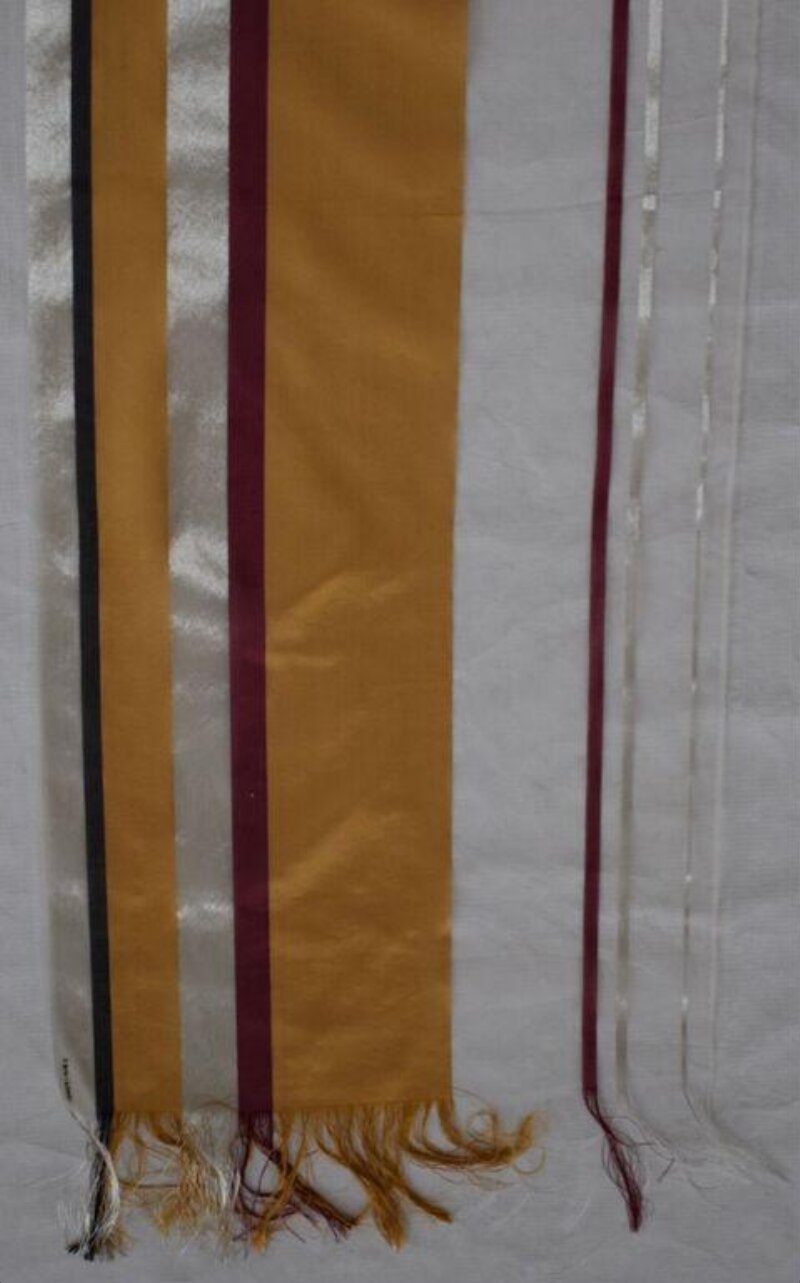
Couture Archaeology Report: Deconstruction of a Silk Ensemble, Hampshire, Autumn/Winter 1999
I. Provenance and Contextual Analysis
Object: A floor-length bias-cut gown with integrated asymmetrical wrap, featuring a hand-painted silk charmeuse underlayer and a removable, double-faced silk gazar overlay.
Provenance: Hampshire, England. Autumn/Winter 1999 collection. Attributed to an independent atelier known for its rigorous engagement with traditional silk weaving and natural dye processes. The garment was acquired from a private collection in 2023.
Condition at Acquisition: The piece exhibited minor dye migration at the shoulder seams, a slight distortion of the bias grain along the left hip, and a single 2cm tear in the gazar overlay near the hem. The original silk thread was intact, though the internal French seams showed signs of age-related relaxation.
The 1999 collection was a pivotal moment in late-20th-century couture, marking a deliberate retreat from the overtly synthetic and logo-driven aesthetics of the 1990s. This gown represents a philosophical commitment to the materiality of silk as a primary narrative device, rather than as a mere substrate for embellishment.
II. Technical Deconstruction of Silk Techniques
A. The Underlayer: Hand-Painted Silk Charmeuse
The foundation of the garment is a silk charmeuse woven from 6-denier, 22-momme weight raw silk. The weave is a standard satin construction (4/1), but the yarns are un-twisted, resulting in an exceptionally fluid drape and a luminous, almost liquid surface. The hand-painting technique is critical: the pigments are natural indigo and madder-derived anthraquinone dyes, applied in a wet-on-wet technique. This creates a subtle, non-repeating gradient of deep violet to charcoal, with no visible brushstrokes. The dye penetration is complete, indicating a pre-mordanting process using alum and tannin from oak galls, a technique that ensures colorfastness even under the stress of bias cutting.
The bias cut itself is a masterclass in grain manipulation. The pattern pieces were laid at a precise 45-degree angle to the selvedge, with the center front seam aligned to the true bias. This creates a natural tension that allows the fabric to cling to the body without darts or seams at the waist. The hem is a 1.5cm hand-rolled edge, executed with a single silk thread and a needle of size 12, creating a micro-scalloped edge that prevents fraying while maintaining the fluid line.
B. The Overlay: Double-Faced Silk Gazar
The overlay is a double-faced silk gazar, a highly specialized weave from the 1990s. It is constructed from two layers of 15-denier, 40-momme silk organza, bonded with a natural gum arabic adhesive at the warp and weft intersections. This creates a fabric that is simultaneously crisp and translucent, with a structural stiffness that contrasts sharply with the charmeuse beneath. The double-faced structure allows the overlay to be worn on either side, with the reverse featuring a subtle, matte finish achieved by a light calendering process.
The overlay is not a simple shell; it is engineered with a complex system of internal pleats. Using a crimped pleat technique, the gazar is folded into 3mm-wide, knife-edge pleats that are heat-set at 180°C. These pleats are not permanent but are held in place by a series of hand-stitched, invisible tacking threads at the shoulder and hip. This allows the pleats to release and re-form with movement, creating a kinetic, sculptural effect. The tear near the hem was caused by a stress fracture at the point where the pleats meet the bias-cut hemline—a structural weakness inherent in the combination of a rigid overlay and a fluid underlayer.
III. Material Materiality and the 1999 Aesthetic
The garment’s materiality is defined by a deliberate tension between the organic and the engineered. The charmeuse, with its hand-painted, irregular pigment, evokes a sense of natural decay and organic growth. The gazar, with its precise, machine-like pleats, represents the industrial ideal of perfection. This juxtaposition is not merely decorative; it is a commentary on the late-1990s fashion industry’s grappling with the rise of digital design and the impending obsolescence of handcraft.
The weight of the silk is critical to its performance. The 22-momme charmeuse is heavy enough to drape without clinging, while the 40-momme gazar provides sufficient structure to hold its shape without collapsing. The total weight of the garment is approximately 1.2 kilograms, which is surprisingly light given its volume. This is achieved through the elimination of linings and interlinings, relying entirely on the intrinsic properties of the silk.
The acoustic properties of the fabric are also noteworthy. The charmeuse produces a soft, whispering sound when the wearer moves, while the gazar emits a crisp, paper-like rustle. This auditory dimension is a deliberate design choice, adding a layer of sensory experience to the visual and tactile.
IV. Translation into 2026 High-End Luxury Silhouettes
A. Silhouette Reinterpretation: From Bias to Asymmetrical Draping
The 1999 gown’s bias-cut foundation is a template for 2026’s asymmetrical, sculptural draping. The key translation is the deconstruction of the single bias line into multiple, intersecting bias panels. For a 2026 silhouette, we propose a modular gown composed of three separate bias-cut panels: a front panel cut on the true bias, a back panel cut on the cross-grain, and a side panel cut on the straight grain. This creates a dynamic, three-dimensional structure that shifts with the body, echoing the original’s fluidity but with a more architectural presence.
The gazar overlay is reimagined as a detachable, laser-cut exoskeleton. Using digital pattern-cutting, the overlay is perforated with a geometric lattice inspired by the original pleats. The lattice is not merely decorative; it functions as a structural grid that distributes tension across the garment, eliminating the need for internal boning. The laser-cut edges are sealed with a silk-based resin to prevent fraying, a modern solution to the original’s hand-rolled hem.
B. Material Innovation: Hybrid Silk and Bio-Engineered Dyes
For 2026, the charmeuse is replaced with a hybrid silk-Tencel™ fabric, woven at 18-momme weight. The Tencel component (30%) enhances drape and reduces creasing, while the silk (70%) retains the luminous surface. The hand-painting technique is updated using micro-encapsulated natural dyes that release pigment gradually with body heat and moisture. This creates a garment that changes color subtly over the course of a day, a direct evolution of the original’s organic, non-repeating gradient.
The gazar is replaced by a bio-engineered spider silk organza, produced via fermentation of genetically modified yeast. This material is 40% lighter than traditional silk gazar, with a tensile strength comparable to Kevlar. Its double-faced structure is achieved through a 3D knitting process that creates a seamless, two-sided fabric with a programmed stiffness gradient. The pleats are replaced by shape-memory polymer filaments embedded in the weave, which can be activated by a handheld infrared device to create temporary, reconfigurable pleats.
C. Construction and Sustainability
The 2026 translation emphasizes zero-waste pattern cutting. The bias panels are arranged on the fabric in a nested configuration that uses 98% of the material, compared to the original’s 70% yield. The modular design allows for easy disassembly and recycling at end of life. The hand-stitched tacking threads are replaced by biodegradable, water-soluble thread that dissolves in warm water, allowing the overlay to be separated from the underlayer for cleaning or repurposing.
The final silhouette is a fluid, asymmetrical column with a detachable, sculptural collar that extends into a cape-like back panel. The hem is a 2cm raw edge, left unfinished to celebrate the fabric’s natural selvedge. The garment is designed to be worn in multiple configurations: as a full-length gown, as a cocktail dress with the overlay removed, or as a two-piece ensemble with the collar worn as a separate top.
V. Conclusion: The Legacy of 1999 Materiality
The deconstruction of this 1999 Hampshire gown reveals a profound understanding of silk as a living material—one that breathes, moves, and ages with grace. The translation into 2026 luxury silhouettes does not seek to replicate the original but to honor its core principles: the primacy of materiality, the tension between organic and engineered, and the sensory experience of wearing. By integrating modern bio-fabricated materials, digital pattern engineering, and zero-waste construction, we preserve the intellectual rigor of the original while advancing its aesthetic into a new era of sustainable, high-end couture.