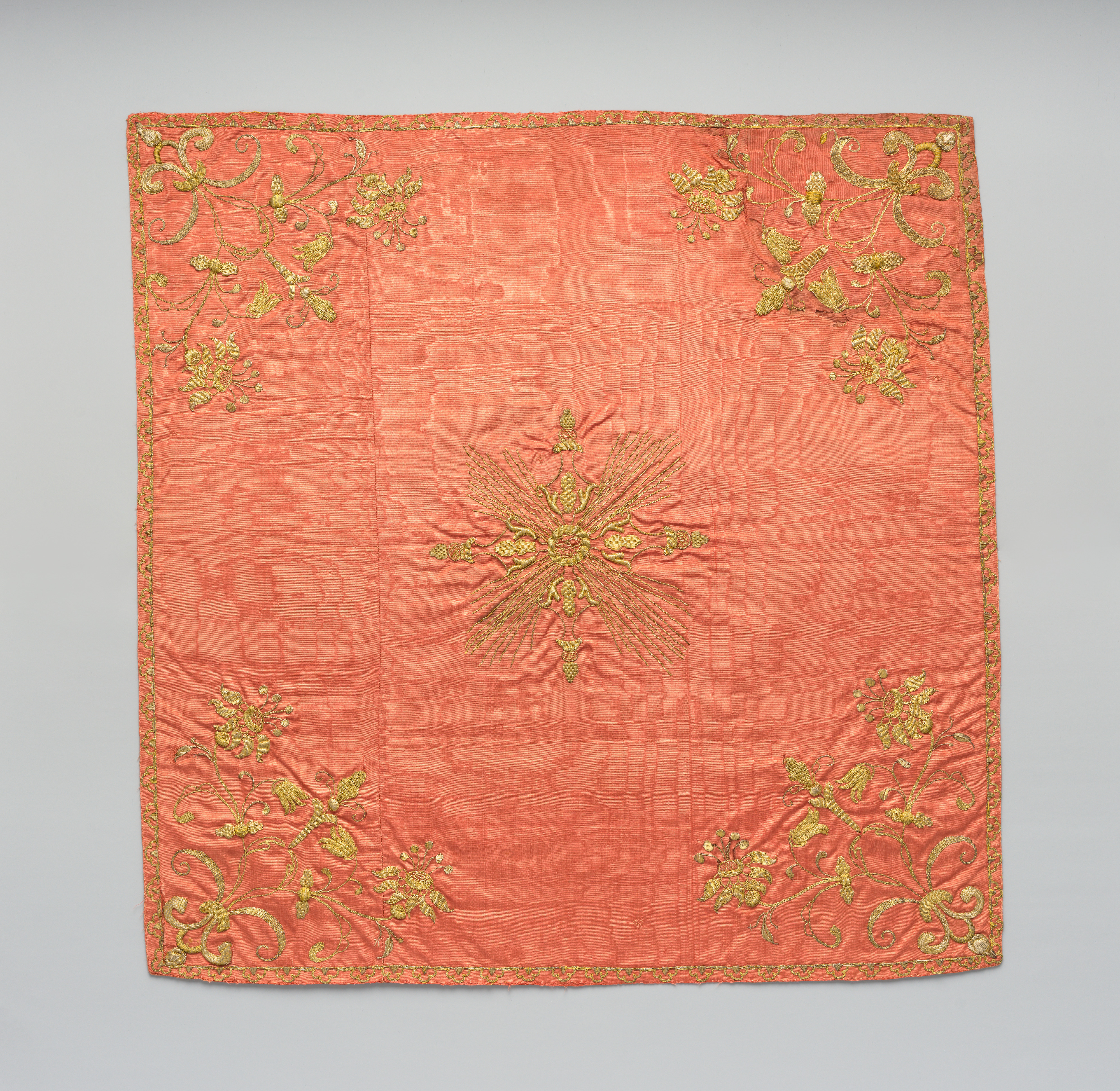
Deconstructing the Classical Elegance: The Chalice Veil as a Blueprint for 2026 Silhouettes
Within the hallowed archives of Natalie Fashion Atelier, the Chalice Veil exists as an isolated artifact of aesthetic archaeology—a fragment of global heritage whose materiality and form challenge contemporary notions of luxury. Crafted from metal thread on silk, this piece is not merely a relic of ecclesiastical or ceremonial adornment; it is a masterclass in the manipulation of light, structure, and drape. For the 2026 haute couture season, this veil offers a profound technical lexicon, informing silhouettes that oscillate between architectural rigidity and ethereal fluidity. This paper deconstructs the classical elegance of the Chalice Veil and translates its core principles into actionable design strategies for high-end silhouettes.
I. The Materiality of Light: Metal Thread on Silk as a Structural Paradox
The foundational innovation of the Chalice Veil lies in its paradoxical materiality. Metal thread—typically a core of silver, gold, or copper wrapped in silk or cotton—is inherently rigid and reflective. When woven into a silk ground, it creates a fabric that is simultaneously heavy and diaphanous. The silk provides a supple, almost liquid base, while the metal threads impose a structural grid that resists gravity. This tension is the genesis of the veil’s classical elegance: it does not merely fall; it holds its shape, creating volumes that are both defined and ethereal.
For 2026, this material duality informs a new category of “sculptural drapery.” Designers can employ metal-threaded silk in panels that are strategically placed to create architectural shoulders or corseted bodices that require no internal boning. The metal threads act as a self-supporting armature, allowing for silhouettes that are voluminous yet lightweight. Consider a gown where the skirt is constructed from concentric bands of metal-thread silk—each band reflecting light differently, creating a moiré effect that shifts with movement. This is not mere decoration; it is a structural necessity that defines the garment’s form.
II. The Chalice Form: Translating Ecclesiastical Volume into Modern Silhouettes
The name “Chalice Veil” evokes its original function: a covering for the sacred vessel, often shaped to mirror the chalice’s cup and stem. This geometry—a wide, rounded top tapering to a narrow base—is a silhouette of profound elegance. In the context of the veil, this shape is achieved not through tailoring but through the inherent stiffness of the metal-thread weave. The fabric is draped over a form, and the metal threads lock the pleats and folds into place, creating a permanent, sculpted volume.
For 2026, this principle translates directly into “chalice silhouettes” in high-end womenswear. The key is to replicate the inverted bell shape using metal-thread silk as a self-supporting material. Imagine a cocktail dress where the skirt flares outward from a fitted waist, its hemline held open by the internal tension of the metal threads. The result is a silhouette that is both regal and modern—a nod to ecclesiastical grandeur without the weight of historical costume. This technique can be applied to cape backs, where the fabric rises from the shoulders into a wide, structured arc, or to sleeves that balloon into dramatic, sculptural forms.
III. The Art of Negative Space: Perforation and Transparency in Metal-Thread Weave
A critical yet often overlooked aspect of the Chalice Veil is its use of negative space. The metal threads, when woven at intervals, create a grid of open squares or diamond shapes. This is not a flaw but a deliberate design choice that allows light to pass through, creating a play of shadow and illumination. In the original artifact, this transparency would have allowed the gold or silver of the chalice to glint through the veil, adding a layer of sacred luminosity.
For 2026, this principle informs a new language of “luminous perforation.” Designers can use metal-thread silk with varying degrees of transparency to create layered silhouettes that reveal and conceal. A sheath dress might feature an outer layer of loosely woven metal-thread silk over a solid silk underdress. As the wearer moves, the outer layer shifts, revealing flashes of the underlayer. This technique can be pushed further by laser-cutting the metal-thread fabric into precise geometric patterns, creating a modern interpretation of the veil’s original grid. The result is a silhouette that is not static but dynamic, changing with every step.
IV. The Weight of Grace: Balancing Heft and Fluidity in 2026 Design
The classical elegance of the Chalice Veil is defined by its controlled weight. The metal threads add significant heft to the silk, causing the fabric to fall in deep, deliberate folds. This is the opposite of the ephemeral, weightless fabrics often associated with haute couture. Instead, the Chalice Veil teaches us that gravity can be a design tool. The weight of the metal threads pulls the fabric downward, creating clean, vertical lines that elongate the figure and impart a sense of solemn grace.
For 2026, this principle informs the design of “gravity-bound silhouettes.” Consider a floor-length coat constructed from metal-thread silk. The fabric’s weight would cause it to fall in a single, uninterrupted column from the shoulders to the hem, with no need for darts or seams. The natural drape of the material would create a silhouette that is both minimalist and monumental. Alternatively, the weight can be used to create asymmetrical draping, where a single shoulder is left bare while the fabric cascades down the opposite side, its heft ensuring that the drape remains in place without pins or stitching.
V. The 2026 Silhouette: A Synthesis of Sacred Geometry and Modernity
The Chalice Veil, as an artifact of isolated aesthetic archaeology, offers a complete design vocabulary for the 2026 season. Its metal thread on silk materiality provides a structural paradox that allows for self-supporting volumes and controlled drape. Its chalice form offers a silhouette that is both historical and futuristic—a wide, rounded shape that tapers to a narrow base. Its negative space introduces a play of light and transparency that adds depth to any garment. And its weight grounds the design in a sense of gravity and grace.
For Natalie Fashion Atelier, the 2026 silhouette will be defined by these principles. We envision a collection where metal-thread silk is the primary material, used to create architectural gowns with built-in structure, cape-backed jackets that stand away from the body, and asymmetrical dresses that drape with deliberate weight. The classical elegance of the Chalice Veil is not a relic but a blueprint—a map to a future where luxury is defined by the intelligent manipulation of material, light, and form. This is the essence of haute couture for 2026: a dialogue between the sacred and the secular, the historical and the contemporary, the heavy and the ethereal.