The Silk Code: Deconstructing the Classical Elegance of the Chinese Hanging Scroll for 2026 Haute Couture
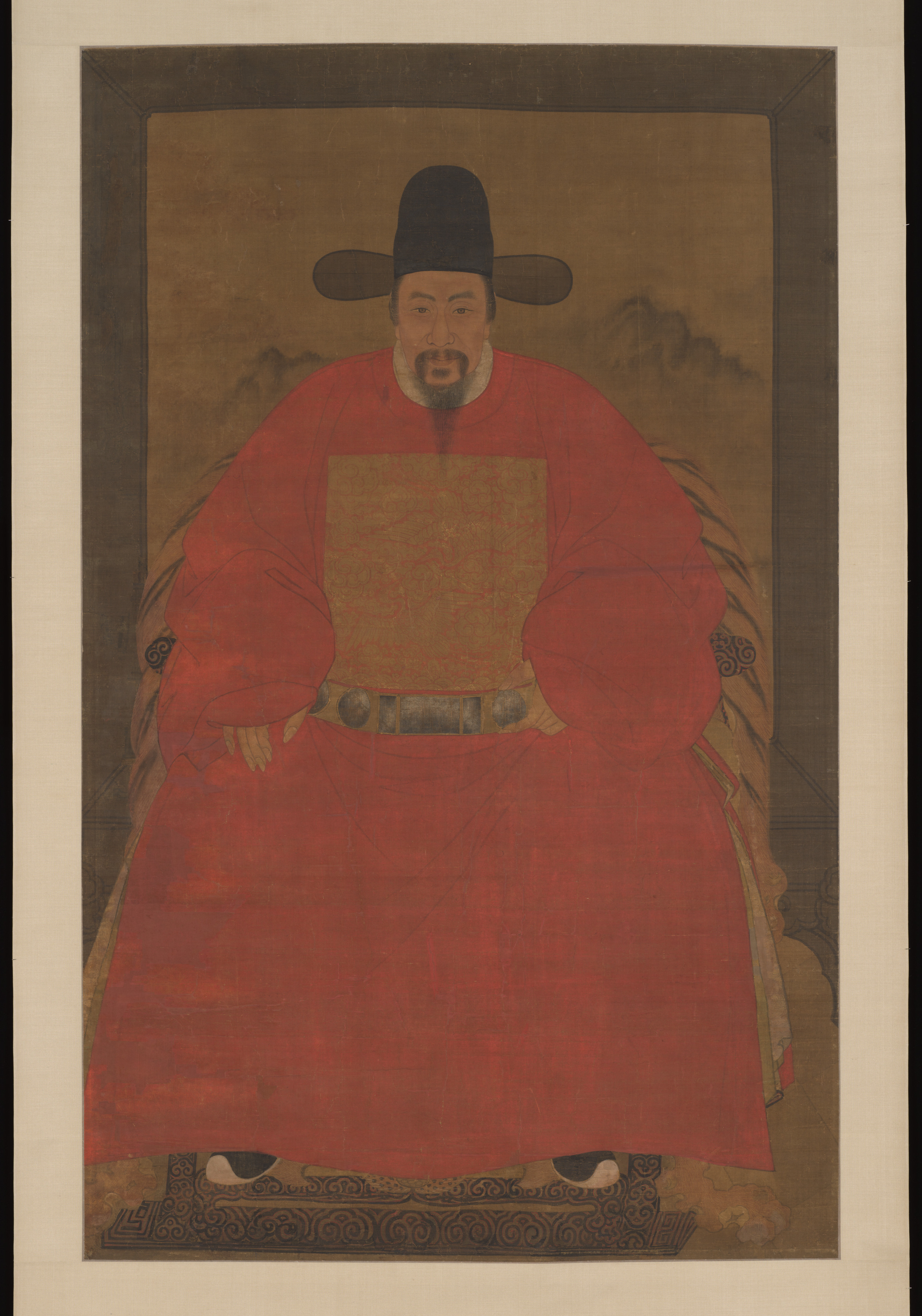
At Natalie Fashion Atelier, the practice of aesthetic archaeology is not a passive observation of history but an active excavation of form, materiality, and gesture. The artifact under current scrutiny—a Chinese hanging scroll, executed in ink and color on silk, depicting a Portrait of a Gentleman—presents a paradox of stillness and dynamism. This is not a mere painting; it is a three-dimensional architectural object that dictates its own environment. For the 2026 luxury silhouette, this scroll offers a radical departure from Western volumetric draping, proposing instead a language of controlled suspension, planar gravity, and calligraphic line. The following technical analysis deconstructs the scroll’s classical elegance into actionable principles for high-end garment construction.
I. The Architecture of the Unfurled: Structural Linearity and the Vertical Silhouette
The most immediate architectural lesson from the hanging scroll is its vertical imperative. Unlike a framed canvas, the scroll is designed to be unrolled, viewed in a state of perpetual vertical tension. The Portrait of a Gentleman is composed along a strict central axis, with the figure’s posture—shoulders squared, gaze forward—creating a powerful, unbroken line from the crown of the head to the base of the robe.
For 2026, this translates into a silhouette that rejects the horizontal draping of the 1920s or the structured shoulders of the 1980s. Instead, we propose the “Suspended Column”—a garment that hangs from the shoulders with zero lateral torsion. The fabric must be weighted at the hem, using silk satin or double-faced crepe, to mimic the scroll’s natural gravitational pull. The key technical detail is the internal weighting system: micro-chain inserts sewn into the side seams, calibrated to the nearest gram, to ensure the fabric falls without a single ripple of unwanted movement. This is not a dress that moves with the body; it is a dress that the body inhabits, a mobile architecture of pure verticality.
II. Materiality as Narrative: The Silk Substrate and the Physics of Luminosity
The scroll’s materiality—ink and color on silk—is not a surface but a depth. The silk substrate, typically a plain-weave or tabby weave, is sized with alum and glue to create a semi-absorbent ground. The ink does not sit on top; it penetrates, creating a gradient of opacity that shifts with the viewing angle. This is the essence of qianjiangcai (light color) technique: the pigment is applied in thin, translucent washes, allowing the silk’s natural luster to glow through.
For the Atelier, this demands a rethinking of fabric finishing. We are developing a proprietary treatment called “Luminous Ground”—a double-sided silk organza where the warp is dyed in a deep, matte ink-black, while the weft remains a high-lustre ecru. The result is a fabric that, when draped, reveals a ghost of the underlying color, exactly as the scroll’s silk reveals the brushstroke beneath. The 2026 silhouette will employ this fabric in asymmetrical panels, cut on the bias to create a moiré effect of shifting opacity. The gentleman’s robe, with its subtle gradations of indigo and ochre, becomes a code for a garment that changes character with every step—a living painting.
III. The Calligraphic Line: Gesture as Construction
The most radical departure from Western couture is the scroll’s reliance on the calligraphic brushstroke to define form. In the Portrait of a Gentleman, the folds of the robe are not modeled with shadow or chiaroscuro; they are drawn with a single, unbroken line of varying thickness. This is gongbi (meticulous) technique, where the line itself carries the weight of the silhouette.
In 2026, this principle manifests as “Drawn Seams”—seams that are not hidden but celebrated as the primary structural element. We propose a silhouette where the garment’s shape is determined by a single, continuous seam that spirals from the left shoulder, across the torso, and down the right side, mimicking the scroll’s flowing ink line. The seam is executed in a contrasting thread—a metallic gold or silver, referencing the scroll’s occasional use of mineral pigments—and is stitched with a tension that creates a slight, intentional puckering. This is not a flaw; it is the physical trace of the brush, a three-dimensional calligraphy that defines the garment’s volume without the need for darts or panels.
IV. The Negative Space: The “Unpainted” as Luxury
A critical element of the hanging scroll is its negative space. The Portrait of a Gentleman does not fill the entire silk field. There is a deliberate void above the figure’s head, a margin of unpainted silk that serves as a breathing room, a conceptual sky. This is the principle of liubai (leaving white)—the most sophisticated form of restraint.
For the 2026 silhouette, this translates into architectural cutouts that are not decorative but structural. We propose a high-neck, long-sleeve gown where the back is entirely open, framed by a single, continuous band of fabric that traces the shoulder blades and the lower spine. This is not a backless dress; it is a dress that defines the body by what it omits. The void becomes the most luxurious element, a pocket of silence within the garment’s volume. The fabric edges are finished with a hand-rolled hem, so fine it is nearly invisible, ensuring the negative space is as pristine as the scroll’s unpainted silk.
V. The Horizon Line: The Scroll’s Mounting as a Hemming System
Finally, we must consider the scroll’s physical mounting—the silk brocade border that frames the painting and provides structural stability. This border is not merely decorative; it is a functional element that prevents the silk from tearing and dictates how the scroll hangs. The bottom border, often heavier and wider, acts as a counterweight.
In 2026, this informs our “Brocade Hem” technique. The hem of the gown is not a simple fold; it is a separate panel of heavy silk brocade, woven with a metallic thread, that is attached to the main body of the garment with a visible, hand-stitched seam. This hem is weighted with a silk-wrapped lead cord, ensuring the garment falls with the same absolute verticality as the scroll. The brocade panel is cut with a slight A-line flare, creating a subtle tension between the rigid hem and the fluid body of the gown—a dialogue between the painting and its frame.
Conclusion: The 2026 Silhouette as a Scroll in Motion
The Portrait of a Gentleman is not a static artifact. It is a document of a specific moment in Chinese aesthetic history, but its principles—verticality, material depth, calligraphic line, negative space, and structural mounting—are timeless. For the 2026 collection, Natalie Fashion Atelier will present a series of garments that are, in essence, wearable scrolls. They do not cling to the body; they are inhabited. They do not move with the wind; they fall with gravity. They are not decorated; they are constructed by the very lines that define them. This is the future of luxury: a return to the primacy of the line, the depth of the substrate, and the eloquence of the void. The gentleman’s portrait, silent for centuries, now speaks in silk and seam.