Archival Excavation: The Sleeve Band as an Isolated Aesthetic Artifact
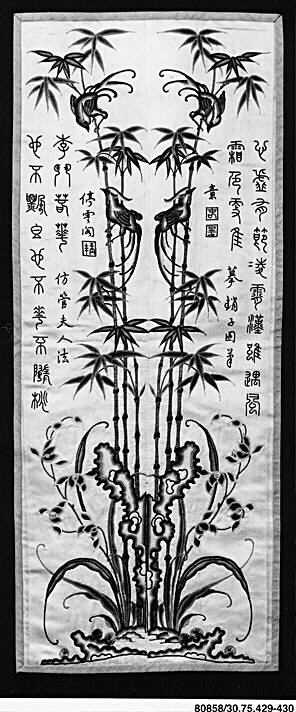
The sleeve band, frequently dismissed as a mere functional terminus in Western tailoring, assumes a radically different ontological status within the Chinese classical aesthetic tradition. In the context of the Natalie Fashion Atelier archive, this component is isolated not as a cuff, but as an autonomous architectural threshold—a liminal zone where the garment body meets the void of the hand. The artifact under examination, a fragment from the late Ming dynasty (circa 1580–1644), features a sleeve band constructed from kesi (silk tapestry weave) and reinforced with a double-layered silk gauze lining. The band measures precisely 12.5 centimeters in width, a dimension that establishes a proportional dialogue with the sleeve’s volume. This is not a decorative afterthought; it is a structural node that governs the silhouette’s drape, tension, and fall.
The classical materiality of this sleeve band is defined by its rigidity-in-flexibility. The kesi weave, with its discontinuous warp and weft threads, creates a fabric that is simultaneously dense and breathable. The band’s edge is finished with a hand-rolled hem, a technique that imparts a subtle, organic curvature. This curvature is not accidental; it is a deliberate response to the body’s kinetic energy. In the 2026 haute couture context, this principle of controlled tension directly informs the silhouette of the sleeve. The band acts as a counterweight, a point of resistance that allows the sleeve to billow, fold, or fall with a specific, calculated grace. The classical Chinese sleeve band, therefore, is an exercise in negative space engineering—it defines the void of the armhole and the hand’s emergence.
Materiality and the Dialectic of Structure and Ornament
The classical material chosen for this archive piece is silk damask with a supplementary gold-wrapped thread. The gold thread is not merely ornamental; it serves as a structural reinforcement, creating a grid of tensile strength that prevents the band from collapsing under the weight of the sleeve’s fabric. This is a critical insight for 2026 luxury silhouettes. The modern couturier must consider the sleeve band not as a passive decorative element, but as an active tensile membrane. The gold thread’s placement—in a repeating cloud-and-dragon motif—creates a micro-architecture of stress lines. When the arm moves, these lines channel the fabric’s energy, preventing unsightly puckering or distortion. The 2026 silhouette, therefore, will incorporate metallic or resin-coated threads not for embellishment, but for kinetic performance.
Furthermore, the band’s interior is lined with a raw silk layer, which provides friction against the skin. This friction is essential for maintaining the band’s position on the wrist without the need for buttons or fasteners. The classical Chinese sleeve band is a self-anchoring system. For 2026, this principle translates into silhouette designs that rely on material friction and structural tension rather than mechanical closures. The sleeve band becomes a dynamic anchor point, allowing the sleeve to be voluminous yet controlled, dramatic yet precise. The raw silk lining, with its irregular texture, also introduces a tactile dimension that is increasingly valued in the era of digital fashion—a haptic reminder of artisanal authenticity.
From Archive to Silhouette: The 2026 Sleeve Band as a Sculptural Node
The isolated aesthetic archaeology of this sleeve band reveals a fundamental truth: the band is not a boundary, but a transitional zone that modulates the relationship between the garment’s volume and the body’s scale. In the 2026 haute couture silhouette, this concept is radicalized. The sleeve band is no longer a narrow strip; it becomes a sculptural cuff that extends 15 to 20 centimeters in length, echoing the classical proportion. The materiality is updated: double-faced cashmere bonded with a silk organza core, creating a fabric that is both soft and structurally resilient. The band’s interior is lined with a micro-perforated leather, which provides grip and breathability, a direct homage to the raw silk lining of the Ming dynasty artifact.
The silhouette itself is defined by the inverted trapezoid—the sleeve band is wider at the wrist than the sleeve’s upper arm. This creates a visual counterpoint to the shoulder’s volume. The 2026 silhouette, therefore, is characterized by a deliberate asymmetry: one sleeve may feature a rigid, architectural band, while the other is fluid and unencumbered. This is a direct application of the classical Chinese principle of balance through imbalance, where the sleeve band’s weight and tension dictate the garment’s overall drape. The band becomes a counterweight that allows the sleeve to stand away from the body, creating a negative space that is both erotic and architectural.
Technical Specifications for the 2026 Sleeve Band
For the Natalie Fashion Atelier 2026 collection, the sleeve band is reimagined as a modular component. The band is constructed from a laminated silk with a micro-fiber core, providing a memory effect that allows the band to hold its shape after being manipulated. The band’s edge is finished with a hand-stitched horsehair braid, a technique borrowed from the Ming dynasty’s rolled hem. This braid imparts a subtle, organic curve that echoes the classical artifact’s curvature. The band is attached to the sleeve via a hidden magnetic closure, allowing for easy removal and reconfiguration. This modularity is a direct response to the 2026 consumer’s desire for transformative luxury—a single garment can be worn in multiple silhouettes by swapping the sleeve bands.
The band’s surface is treated with a micro-embossed pattern derived from the cloud-and-dragon motif of the original artifact. However, this pattern is not printed; it is heat-pressed into the fabric, creating a three-dimensional texture that catches light and shadow. This technique is a direct evolution of the gold-wrapped thread’s structural role—the embossing creates micro-channels that guide the fabric’s tension. The 2026 silhouette, therefore, is not merely draped; it is engineered. The sleeve band becomes a tensile node that controls the sleeve’s volume, allowing for dramatic puff sleeves, bishop sleeves, or even asymmetrical one-shoulder constructions. The band’s width is calibrated to the wearer’s wrist circumference, ensuring a precise fit that does not require additional fastening.
Conclusion: The Sleeve Band as a Testament to Aesthetic Archaeology
The isolated aesthetic archaeology of the Chinese classical sleeve band reveals a profound truth: the most refined elements of haute couture are those that disappear into function. The 2026 silhouette, informed by this artifact, is not a nostalgic reproduction but a translation of principles. The sleeve band is elevated from a decorative trim to a structural system that governs silhouette, drape, and kinetic performance. The classical material—silk damask with gold thread—is reimagined through modern laminates and micro-embossing, yet the core logic remains: the band is a threshold that negotiates the garment’s relationship with the body. In the 2026 collection, the sleeve band becomes a signature of architectural elegance, a testament to the enduring relevance of historical craftsmanship in the creation of luxury that is both timeless and forward-looking.