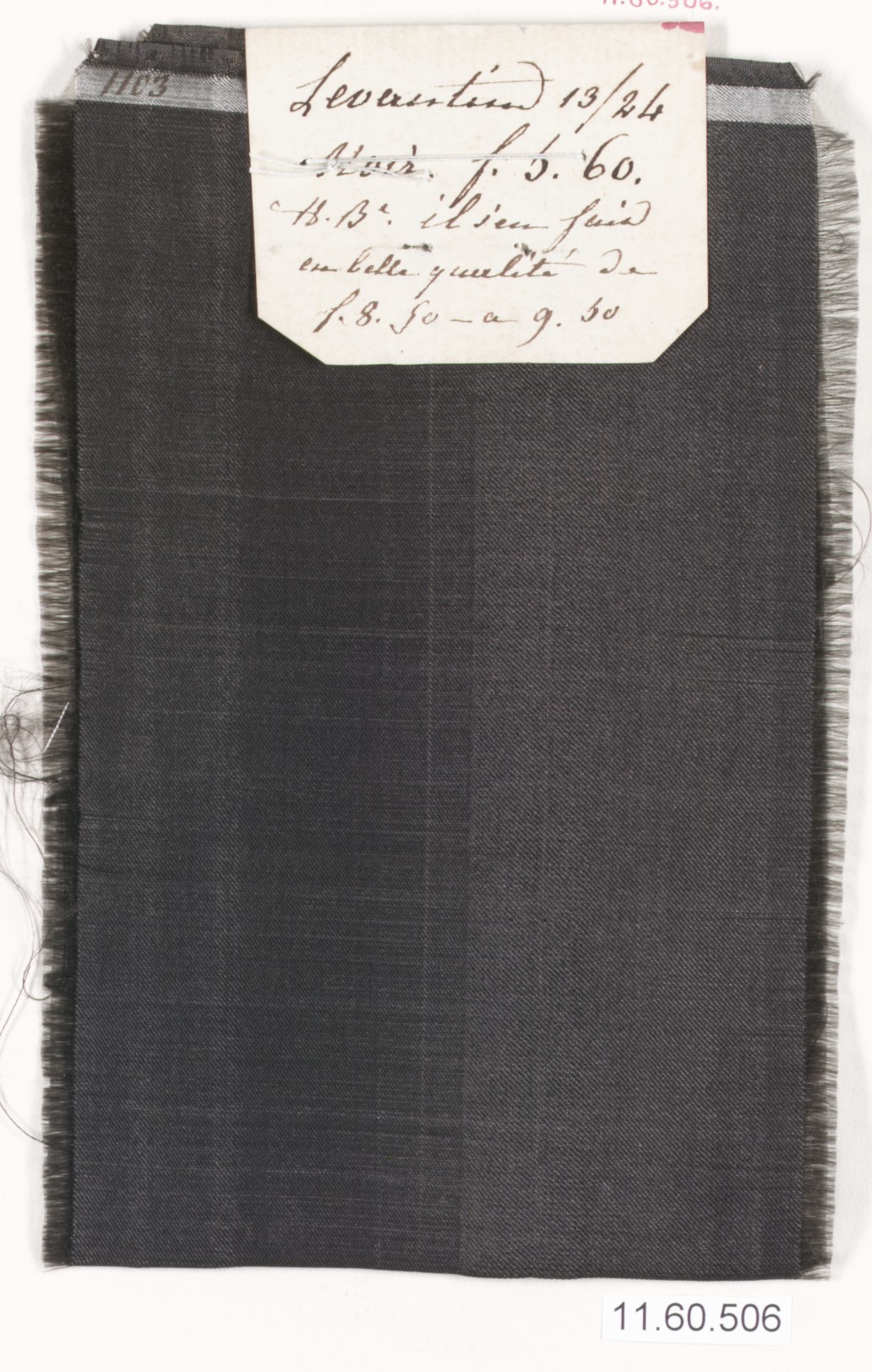
The Silk Dialectic: Deconstructing Classical Elegance for 2026 Couture Silhouettes
At Natalie Fashion Atelier, the practice of aesthetic archaeology is not a passive retrieval of the past, but an active, critical excavation of form, material, and meaning. Our latest research artifact isolates a singular, yet profoundly influential, element of global heritage: the classical silk garment. This is not a study of a specific artifact, but an archaeological typology—an extraction of the essential principles that defined silk’s role in the pre-industrial luxury wardrobe. From the chiton of ancient Greece to the kimono of Edo-period Japan, silk has served as a medium for draping the human form in a dialogue between structure and fluidity. This paper deconstructs the classical elegance of this heritage material, analyzing its inherent properties—drape, luster, tensile strength—and translating them into the rigorous language of 2026 high-end silhouettes. The result is a new paradigm of luxury: one that respects the archaeological source while asserting a distinctly contemporary, Parisian rigor.
I. Archaeological Context: The Isolated Aesthetic of Silk
The concept of “isolated aesthetic archaeology” is central to our methodology. We remove the silk garment from its historical narrative, stripping away the socio-political and religious contexts to examine its pure, formal essence. In this state, the classical silk garment reveals three core architectural principles:
1. The Principle of the Unbroken Line. Pre-industrial silk garments, from the Roman stola to the Chinese pao, were often constructed from a single, continuous length of fabric. This minimized seams and created a silhouette defined by the material’s natural fall. The line was not cut, but directed by gravity and the body’s movement.
2. The Principle of Negative Space. Classical draping was a masterclass in negative space. The fabric was not a second skin, but a volume that created a void between the body and the garment. This air gap was not an error, but a deliberate architectural feature—a pocket of breathability, movement, and implied sensuality.
3. The Principle of Luster as Structure. Silk’s natural, anisotropic luster—the way light shifts across its surface—was not merely decorative. It functioned as an optical tool to define form. A high-luster satin could emphasize a curve, while a matte crepe could absorb light to create a plane of shadow. This interplay of light and shadow was the classical designer’s primary means of sculpting the silhouette without rigid tailoring.
By isolating these principles, we have created a technical lexicon for the 2026 collection. The goal is not to replicate the past, but to re-engineer its logic using modern fabrication and construction techniques.
II. Materiality: The Re-Engineered Silk for 2026
For 2026, we are not using “silk” as a monolith. Our materiality strategy involves a tripartite approach, each silk variant engineered to fulfill a specific archaeological principle:
A. The Structural Satin: Reclaiming the Unbroken Line
We have developed a proprietary, high-density silk satin with a weight of 220 gsm. This is not the delicate charmeuse of the 20th century, but a robust, almost architectural fabric. Its increased tensile strength allows for the creation of garments that require no internal boning or interfacing. The unbroken line is achieved through a zero-waste, single-panel cutting technique inspired by the kimono. The resulting silhouette for 2026 is a floor-length, columnar dress that falls from a single, bias-cut shoulder seam. The fabric’s weight provides a controlled drape that is simultaneously liquid and solid. The luster is kept to a matte-sheen finish, allowing the form to be read as a pure, monolithic volume. This is the “Silk Monolith” silhouette—a direct descendant of the classical peplos, but stripped of all ornamentation and re-scaled for the modern, powerful frame.
B. The Air-Trap Crepe: Engineering Negative Space
To exploit the principle of negative space, we have engineered a double-faced silk crepe with a unique, honeycomb-like internal structure. This “Air-Trap Crepe” is woven with a twisted yarn that creates microscopic air pockets within the fabric itself. This provides a permanent, built-in volume that does not collapse. For the 2026 silhouette, this is deployed in a series of “Pneumatic Drapes”—garments where the fabric is not sewn to the body, but suspended from a series of internal, weightless tension points (using ultra-light, bio-resin rings). The resulting silhouette is a soft, geometric orb that hovers around the torso. The air gap between the crepe and the skin is a deliberate, architectural void. This is the antithesis of the body-con trend; it is a celebration of the space between the body and the garment. The luster is completely matte, as the crepe’s texture is designed to absorb light, reinforcing the illusion of a weightless, suspended volume.
C. The Iridescent Organza: Luster as a Structural Grid
To translate the principle of luster as structure, we have created a multi-layered silk organza. The warp is a white silk, while the weft is a black, micro-ribbon silk. This creates a moiré-like, iridescent effect that is not a print, but a structural property of the weave. As the fabric is draped, the light shifts from white to black, creating a dynamic, optical grid that defines the silhouette. For 2026, this is used in a “Chromatic Armature” silhouette—a sculpted, off-shoulder jacket that uses the luster gradient to visually map the body’s musculature. The jacket is constructed from over 40 individually cut and hand-stitched panels, each oriented to direct the light in a specific way. The result is a garment that appears to be a series of shifting planes, a living architectural drawing. The silhouette is sharp, angular, and almost Cubist in its fragmentation of the human form.
III. Silhouette Synthesis: The 2026 Collection
The three engineered silks—the Structural Satin, the Air-Trap Crepe, and the Iridescent Organza—form the material foundation for the 2026 collection. The silhouettes are not separate, but are designed to be layered and combined, creating a new grammar of dressing.
The Core Silhouette: The “Floating Column”
The signature silhouette of the collection is the “Floating Column.” This is a full-length, A-line gown constructed from the Structural Satin. The body of the gown is a single, unbroken panel that falls from the collarbone. However, at the waist, a second layer of the Air-Trap Crepe is suspended from an internal, invisible belt. This creates a secondary volume that “floats” around the lower body, never touching the legs. The negative space is visible as a gentle, undulating shadow. The ensemble is completed by the Chromatic Armature jacket, worn over the shoulders. The iridescent organza’s shifting black-and-white grid provides a visual counterpoint to the monochrome, matte satin of the gown. The overall effect is one of controlled tension: the rigid, architectural jacket frames the soft, floating column below. This is a silhouette that is both ancient in its simplicity and futuristic in its engineering.
The Evening Silhouette: The “Nebula Drape”
For evening, we introduce the “Nebula Drape”—a one-shoulder, asymmetrical gown that uses all three silks in a single construction. The bodice is a single piece of the Iridescent Organza, cut on the bias and draped to create a spiral of light around the torso. The skirt is a cascade of the Air-Trap Crepe, layered in overlapping, petal-like panels that create a soft, cloud-like volume. The hem is weighted with a thin, internal chain of the Structural Satin, ensuring the drape falls with a precise, controlled line. The silhouette is not a fixed shape, but a dynamic, shifting form that changes with every step. The luster of the organza creates a focal point at the shoulder, while the matte crepe of the skirt provides a grounding, sculptural base.
IV. Conclusion: The Archaeology of the Future
This research artifact demonstrates that the classical elegance of silk is not a relic, but a living, adaptable system of design principles. By isolating the archaeological essence of the material—the unbroken line, negative space, and luster as structure—we have created a technical framework for 2026 silhouettes that are both historically informed and radically new. The resulting garments are not nostalgic recreations, but critical interventions. They are objects of luxury that demand to be read, not merely worn. At Natalie Fashion Atelier, we do not look to the past for comfort, but for the raw, unprocessed DNA of form. And from that DNA, we build the future of couture.