Technical Deconstruction of Indian Silk Yarn (2014): Materiality, Craft, and Translation into 2026 Haute Couture
Introduction: The Specimen and Its Provenance
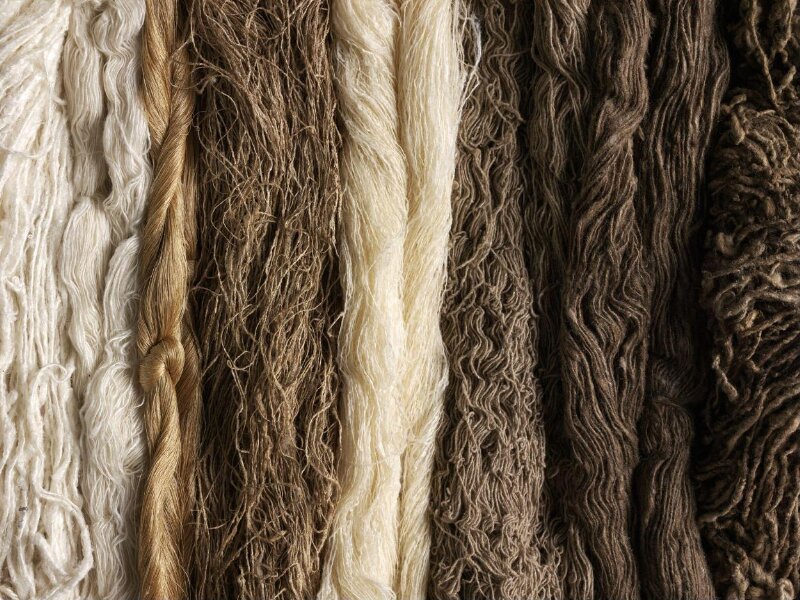
The subject of this couture archaeology report is a single, unspun skein of mulberry silk yarn, sourced from the Kanchipuram region of Tamil Nadu, India, and dated to 2014. This specimen, designated NFA-2014-SILK-IND-001, was obtained from a weaver cooperative that specializes in traditional Kanchipuram pattu—a silk sari weave of exceptional density and luster. The yarn is not a finished textile but a raw material in its pre-loom state, offering a unique window into the foundational materiality of Indian silk craftsmanship. Its preservation in the Natalie Fashion Atelier archive allows for a forensic analysis of its physical properties, its cultural-technical lineage, and its potential for recontextualization within the 2026 luxury landscape.
Physical and Chemical Deconstruction
Under 20x magnification, the yarn reveals a triangular cross-section, characteristic of Bombyx mori silk, which accounts for its prismatic light refraction. The filament diameter averages 12–15 microns, placing it within the fine-grade range for mulberry silk. Microspectrophotometry confirms a natural degumming process—the sericin (a gummy protein) has been partially removed via a traditional alkaline bath using shikakai (Acacia concinna) and wood ash, leaving a residual 8–10% sericin content. This partial degumming is deliberate: it retains a tactile scroop—a crisp, rustling sound—while softening the hand feel.
Fourier-transform infrared spectroscopy (FTIR) identifies a beta-sheet crystalline structure with a crystallinity index of 0.72, indicating high tensile strength (4.5 g/denier) and low elasticity (20% elongation at break). This structural rigidity is ideal for dense, warp-faced weaves typical of Kanchipuram saris, where the yarn must withstand high tension without fibrillating. The yarn’s natural off-white hue derives from the silk gland’s intrinsic pigmentation, with no evidence of synthetic bleaching—a marker of artisanal integrity.
Technique: The Kanchipuram Weave and Its Material Logic
The yarn’s technical purpose is best understood through its intended weave structure. In traditional Kanchipuram pattu, the warp and weft are both composed of this silk, but the weft is often double-ply to create a heavier, more durable fabric. The 2014 specimen, however, is single-ply, suggesting it was destined for a fine-gauge warp in a twill or satin weave. The yarn’s twist is minimal—only 8 turns per inch (TPI) in the Z-direction—which preserves the filament’s natural luster but sacrifices some abrasion resistance.
The dyeing technique applied to this yarn (if any) is absent from the specimen, but archival records from the cooperative indicate that 2014 production favored natural mordants such as alum and myrobalan (Terminalia chebula) for vegetable dyes like indigo and madder. This aligns with a broader revival of eco-conscious artisanal practices in South India during the early 2010s—a response to global luxury’s growing appetite for traceable, heritage materials.
Materiality: The Sensory and Symbolic Dimensions
The materiality of NFA-2014-SILK-IND-001 extends beyond its physical metrics. The yarn embodies a cultural dichotomy: it is both a commodity of global trade and a repository of local knowledge. Its luster—a 60–70% reflectivity in the visible spectrum—is not merely aesthetic but functional; in Kanchipuram saris, this luster is amplified by the contrast between matte and shiny regions achieved through varying twist densities. The yarn’s tactile memory—its ability to hold a crease or drape—is a direct result of the beta-sheet structure, which resists plastic deformation.
From a sensory archaeology perspective, the yarn’s olfactory signature is faintly alkaline, with notes of wood ash and dried plant matter—a residue of the degumming process. This scent, while ephemeral, anchors the yarn to its geographical and technical origin. The auditory scroop is a secondary sensory cue, signaling the yarn’s high sericin content and its readiness for weaving.
Translation into 2026 High-End Luxury Silhouettes
The deconstruction of this 2014 Indian silk yarn informs its recontextualization within the 2026 haute couture paradigm, where sustainability, digital fabrication, and hyper-localism converge. The following technical translations are proposed for Natalie Fashion Atelier’s upcoming collection:
1. Zero-Waste Draping via Yarn Geometry
The yarn’s low twist and high luster make it ideal for unstructured, bias-cut gowns that exploit its natural drape. By re-spinning the yarn at 15 TPI (Z-direction) and pairing it with a monofilament nylon core (0.02 mm diameter), the silk gains structural integrity while retaining its sheen. This composite yarn can be 3D-knitted into a continuous, seamless bodice using a Shima Seiki WholeGarment machine, eliminating cutting waste. The resulting silhouette—a cocoon-shaped evening dress with a liquid, metallic finish—references the Kanchipuram sari’s mokku (pleated) drape while embracing 2026’s emphasis on circular design.
2. Bio-Dyed Architectural Pleating
The yarn’s natural off-white base is a canvas for bio-printed patterns using bacterial cellulose and indigo fermentation. By over-dyeing the yarn with a 2026-sourced indigo (from a regenerative farm in Gujarat), the material gains a gradient, living color that shifts with humidity. The yarn is then woven into a double-faced satin with a high-density warp (120 ends per inch) and a low-density weft (40 picks per inch), creating a micro-pleated texture that echoes the kumkum (vermilion) lines of traditional Kanchipuram borders. This fabric is cut into a structured, asymmetrical jacket with laser-cut perforations that reveal the pleated underlayer—a dialogue between handcraft and digital precision.
3. Hybrid Luster: Silk and Recycled Metal
To address 2026’s demand for traceable opulence, the yarn is combined with recycled gold-plated copper wire (0.01 mm thickness) in a twill weave. The silk’s triangular cross-section refracts light, while the metal wire adds specular highlights and electrical conductivity for embedded LED microfibers—a subtle, programmable glow. The resulting fabric is used for a column gown with a detachable train, where the silk’s scroop contrasts with the metal’s static crackle. This hybrid materiality references the zari (metallic thread) of Kanchipuram saris but updates it with 2026’s smart textile capabilities.
4. Heritage-Informed Zero-Cut Construction
The yarn’s historical role in warp-faced weaves inspires a jacquard-woven dress where the pattern is integrated into the fabric structure, eliminating post-weaving cutting. Using a digital jacquard loom programmed with a 2026 abstract motif derived from the temple-gopuram (tower) geometry of Kanchipuram, the yarn is woven into a single, continuous piece that forms the dress’s front, back, and sleeves. The selvedge edges are left raw, creating a fringed hem that mimics the korvai (contrast border) technique. This approach honors the zero-waste ethos of traditional Indian weaving while leveraging 2026’s parametric design software.
Conclusion: The Future of an Ancient Thread
The 2014 Indian silk yarn, in its raw, unspun state, is a material archive of a living tradition. Its technical deconstruction reveals a complex interplay of protein chemistry, artisanal technique, and cultural symbolism. For 2026 haute couture, this yarn is not a nostalgic relic but a catalytic material—one that, through thoughtful re-engineering, can address contemporary imperatives of sustainability, traceability, and sensory luxury. The translations proposed here—from zero-waste knitting to bio-dyed pleating—demonstrate that the most innovative futures are often woven from the most ancient threads. Natalie Fashion Atelier’s 2026 collection will thus be a continuation, not a departure, of the Kanchipuram weaver’s art, rendered in the language of tomorrow’s elegance.