Deconstructing the Cartographic Elegance: Remy Zeeman’s Nautical Etchings as a Framework for 2026 Silhouettes
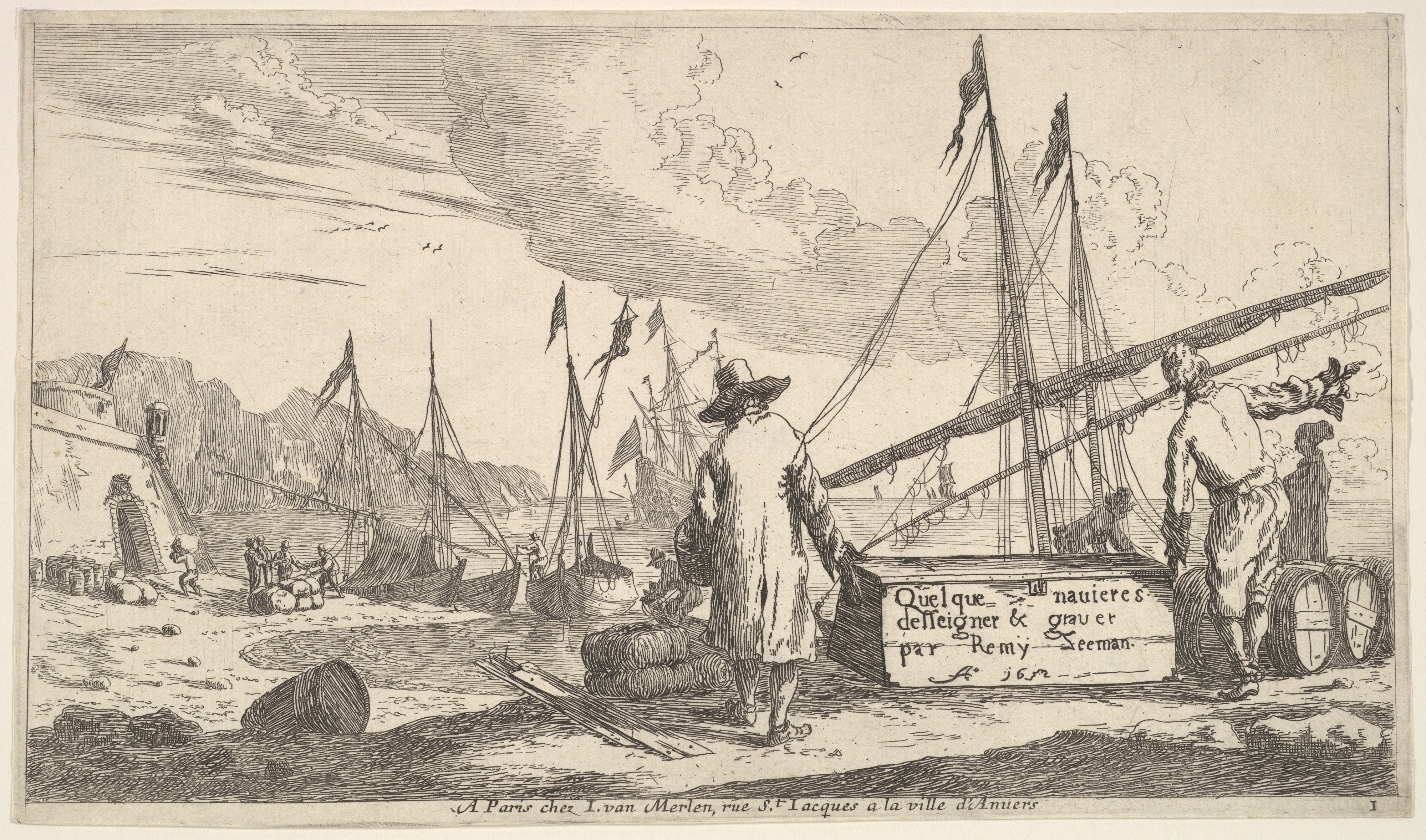
Within the isolated context of aesthetic archaeology, the title page from Remy Zeeman’s 17th-century nautical manual, “Quelque navieres deisseigner & graver,” emerges not as a mere historical document, but as a profound treatise on structured elegance. This etching, a masterclass in the marriage of technical precision and ornamental grace, provides a foundational lexicon for the 2026 haute couture silhouette. It transcends its maritime purpose to articulate principles of line, balance, and controlled volume that are directly applicable to the architectural demands of future luxury. At Natalie Fashion Atelier, we engage not with the literal ship, but with the cartographic discipline of its representation—the confluence of the grid, the curve, and the void—to inform a new paradigm of refined, intellectual dressing.
Archaeology of a Line: The Structural Grammar of the Etching
The etching’s authority is established through a hierarchical composition of lines. The primary vessel is rendered with an unerring, confident stroke that defines its hull—a singular, sweeping curve that suggests both immense latent power and fluid motion. This is counterbalanced by the rigid, perpendicular lines of the masts and the intricate, web-like rigging. This visual dialectic between the organic curve and the architectural grid is the etching’s core contribution. The rigging itself, a complex network of taut lines, creates a secondary, transparent layer of structure over the primary form. Furthermore, the use of negative space—the untouched paper representing sea and sky—is not passive but actively sculpts the subject, emphasizing its silhouette against a calm ground. This is not ornament for ornament’s sake; every mark is a functional component of a coherent visual system, a principle that is the very essence of haute couture construction.
From Nautical Grid to Bodily Architecture: Silhouette Projections for 2026
The translation of this cartographic grammar into bodily architecture necessitates a move from two-dimensional representation to three-dimensional form. The 2026 silhouette, as informed by Zeeman’s work, will be characterized by a foundational clarity of line, where complexity is derived from layered systems rather than excessive adornment.
The Hull Silhouette: Monolithic Curves and Controlled Volume
The dominant curve of the ship’s hull informs a major direction for 2026: the monolithic, cocooning curve. This will manifest in coats and gowns built from a single, spiraling pattern piece, wrapping the body in a gesture of protective elegance. The volume is not inflated but directed, flowing from a precise point at the shoulder or hip before tapering with nautical precision. Fabrics will be chosen for their intrinsic memory and ability to hold a clean line—double-face woolens, technical matte satins, and sculpted felts. The silhouette speaks of assured calm, its power derived from its seamless, uninterrupted form, much like the vessel poised upon the etched plane.
The Rigging System: Transparent Overlay and Structural Tracery
The intricate rigging provides the blueprint for a revolutionary approach to surface and support. We foresee the emergence of the exo-skeletal gown, where the functional internal structure is externalized as aesthetic tracery. Fine, rigid cords of silk-wrapped resin or laser-sintered metal will trace the body’s topography—over the shoulders, across the bust, and down the spine—creating a second-skin grid that both contains and reveals. This “rigging” may support delicate, floating panels of chiffon or organza, creating a dialogue between the rigid map and the soft territory. This technique moves beyond embroidery; it is three-dimensional line drawing, a direct homage to the etched mark becoming form.
The Cartographic Void: Strategic Negative Space and Precision Cut-Outs
The etching’s intelligent use of negative space informs a sophisticated approach to absence in the 2026 silhouette. This will not manifest as mere cut-outs, but as architectural voiding—geometric sections meticulously removed from a structured bodice to reveal the body as a calibrated component of the design. Imagine a tailored wool jacket where a precise triangular section at the back, echoing the shape of a sail, reveals a panel of contrasting technical silk. The body becomes part of the living cartography, with skin and fabric participating in a single, continuous composition. The negative space is as deliberately crafted as the positive, adhering to the etching’s principle of balanced, intentional composition.
Materiality and Craft: The Etched Hand in Modern Fabrics
The material execution of these silhouettes will honor the etching’s tactile quality. Surfaces will emulate the subtle bite of the etched line. This can be achieved through innovative fabric treatments: laser-etching on velvet to create varying pile depths that form graphic patterns, or acid-etching on duplex silks to produce semi-transparent passages within an opaque field. Embroidery will evolve into linear relief, using corded couching and trapunto to raise the “drawn” lines of the design from the fabric ground, creating a tangible, topographic texture. The color palette will derive from the etching’s own: shades of iron gall ink, parchment, and vellum, punctuated by the stark contrast of the pure paper ground, translated into ivory, slate, and deep, inky noir.
In conclusion, Remy Zeeman’s title page offers a timeless lesson in elegance through technical mastery. For Natalie Fashion Atelier, it provides a rigorous framework for 2026—a season where luxury will be defined by clarity of intention, the intelligence of structure, and the eloquent dialogue between line and space. The resulting silhouettes will be cartographies of the body, not as decorative fantasies, but as masterpieces of considered, architectural design, where every seam, curve, and void is as deliberate and meaningful as a line engraved upon copper. This is the future of elegance: precise, profound, and permanently anchored in the principles of historical craftsmanship.