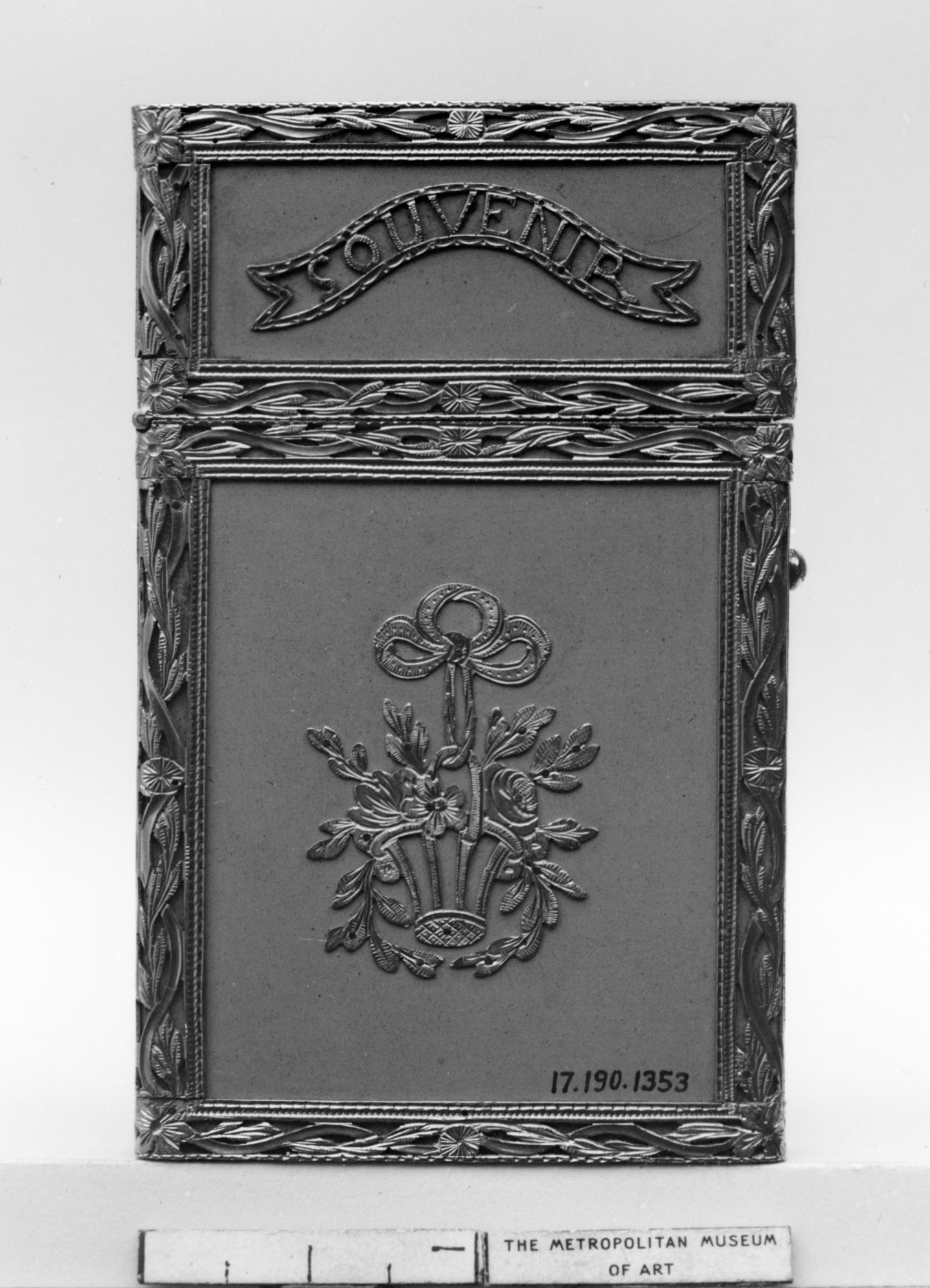
Deconstructing the Souvenir: The Gold and Ivory Tablet as a Blueprint for 2026 Haute Couture
The concept of the souvenir, in its most rarefied form, transcends mere memento. It is an object of aesthetic archaeology, a fragment of a lost world that carries the weight of memory, ritual, and material mastery. For Natalie Fashion Atelier, the 2026 collection begins not with a sketch, but with a single, isolated artifact: a gold and ivory tablet. This object, a micro-archive of classical elegance, demands a technical deconstruction that informs the very silhouette of the future. The tablet is not a pattern; it is a proposition for structure, opacity, and the poetics of memory.
Material Dialogue: The Structural Tension of Gold and Ivory
The physicality of the tablet is our primary lexicon. Ivory, in its historical context, represents a surface of unblemished, matte luminosity. It is a material of solidity, of carved, weighty presence. Gold, conversely, is the element of light, of malleable, reflective power. The 2026 silhouette must translate this binary. We are not replicating the materials, but their architectural dialogue.
The ivory tablet informs a new construction technique: “Panneau d’Ivoire.” This refers to a rigid, sculpted bodice, constructed from layered, heat-molded micro-filaments of organic cellulose (a contemporary, ethical analogue to ivory’s density). The surface is sanded to a matte, chalky finish, absorbing light rather than reflecting it. This creates a silhouette of impenetrable purity, a solid, monolithic torso that stands in stark contrast to the fluidity of the lower half. The garment becomes a carved volume, a literal souvenir of a classical statue’s form, frozen in time.
The gold of the tablet is not a mere embellishment. It is a structural seam. In the artifact, gold is inlaid into the ivory, a vein of precious metal that both divides and unites the surface. For 2026, we interpret this as “Fil d’Or Structurel.” We use hand-hammered, 24-karat gold leaf applied to the seams of the ivory-panel bodice. This is not a decorative trim; it is a load-bearing element, a metallic spine that holds the rigid panels together. The gold catches the light, creating a dynamic, kinetic line that traces the architecture of the body, moving from the clavicle to the waist, mimicking the tablet’s carved inscriptions.
Silhouette as Archive: The Classical Elegance of the Tablet
The classical elegance of the gold and ivory tablet lies in its geometric restraint. It is a rectangle, a perfect, isolated plane. This informs the 2026 haute couture silhouette through a radical departure from the organic. We are moving away from the draped, the gathered, and the fluid. Instead, we embrace the “Ligne de la Tablette.”
This silhouette is defined by a sharp, horizontal shoulder line, reminiscent of the tablet’s edge. The sleeve is a “Manche Tabulée,” a rigid, sculpted cap that extends from the shoulder in a perfect, 90-degree angle, cut from a single piece of the ivory-panel material. It is not a sleeve for movement; it is a sleeve for monumentality. The bodice, as described, is a solid block, a “Corsage-Monolithe.” The waist is defined not by a cinch, but by a negative space—a precise, carved gap between the bodice and the skirt, a literal void that references the tablet’s empty, uninscribed border.
The skirt, in a deliberate act of aesthetic archaeology, is a “Jupe-Papyrus.” It is constructed from hundreds of hand-cut, irregularly shaped panels of silk organza, each one a fragment of a larger text. These panels are not sewn together in a continuous line. Instead, they are suspended from a gold-wire framework that echoes the tablet’s inlaid gold. The panels overlap and flutter, creating a translucent, fragmented volume that contrasts the bodice’s opacity. The skirt is a souvenir of a memory, a collection of broken sentences, while the bodice is the immutable fact of the artifact itself.
Technical Execution: The Craft of the Isolated Fragment
The 2026 collection demands a new level of technical precision. The “Panneau d’Ivoire” bodice requires a bespoke, three-dimensional scan of each client’s torso. The cellulose panels are then laser-cut and hand-laminated in a vacuum press, creating a shell that is both rigid and remarkably light. The “Fil d’Or Structurel” is applied by a master gilder, using a technique of “soudure à froid” (cold welding) to affix the gold to the seams without heat damage. The result is a garment that is a sculpture of memory, a wearable artifact that retains the weight and presence of the original tablet.
The “Jupe-Papyrus” is a feat of engineering. Each organza panel is individually dyed in a gradient of “ivoire brûlé” (burnt ivory) and “or pâle” (pale gold). The panels are then suspended from a crinoline of hand-twisted gold wire, a structure that is both delicate and unyielding. The movement of the skirt is not a fluid drape, but a chattering, fragmented rustle, like the sound of ancient parchment being unrolled. This is the sonic souvenir of the artifact.
Conclusion: The 2026 Silhouette as a Souvenir of the Future
The gold and ivory tablet is not a relic. It is a generative source code. For Natalie Fashion Atelier, the 2026 collection is an act of aesthetic archaeology, where we excavate the classical principles of monumentality, opacity, and geometric precision to construct a new, future-facing silhouette. The Ligne de la Tablette is a silhouette of controlled power, of memory made material. It is a souvenir of a civilization that never was, but one that we are now, through the craft of haute couture, bringing into being. The body is the tablet; the garment is the inscription. And the gold is the eternal light that reads it. This is the elegance of the isolated fragment, perfected for the modern form.