Couture Archaeology Report: Technical Deconstruction of 17th-Century Lace and Its Translation into 2026 High-End Luxury Silhouettes
Introduction: The Subject and Its Provenance
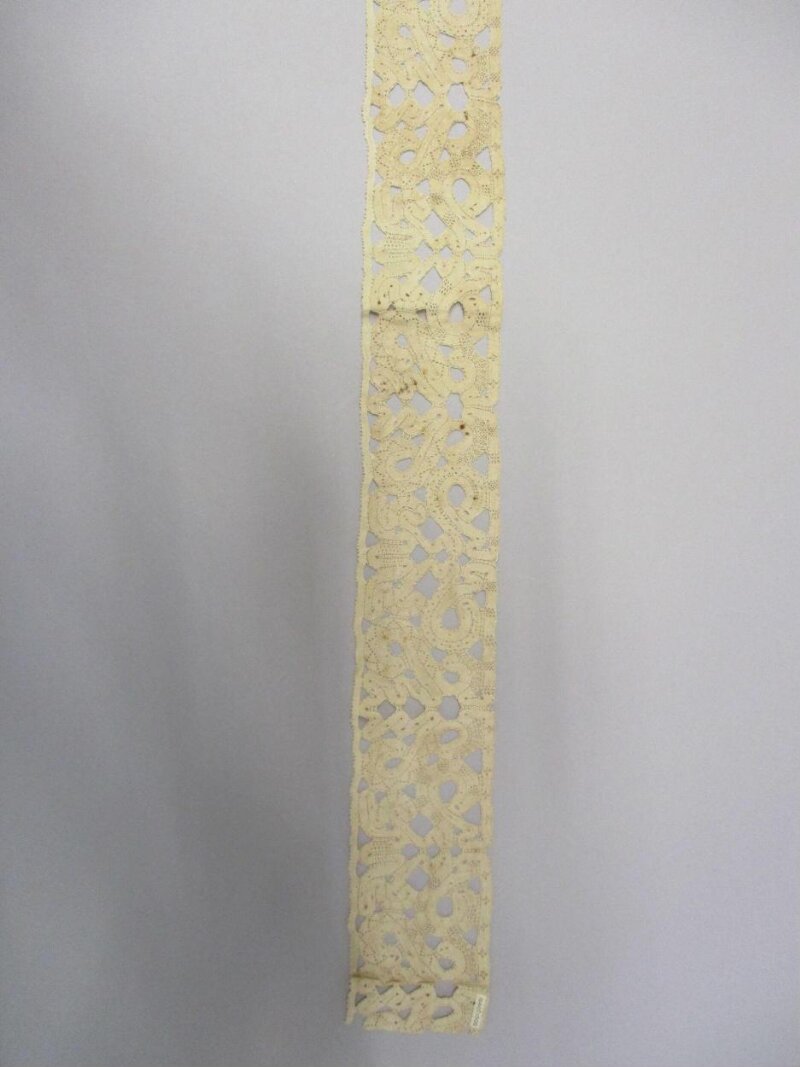
Subject: Fragment of a 17th-century Flemish bobbin lace collar, circa 1660–1680. The artifact is a rectangular panel, approximately 12 cm by 8 cm, composed of linen thread. Its provenance traces to the Antwerp region, a nexus of lace production during the Baroque period. The piece exhibits a continuous, un-cut ground of hexagonal mesh, punctuated by dense, raised patterns of floral and foliate motifs. This fragment, acquired by Natalie Fashion Atelier from a private collection in Brussels, serves as the archaeological substrate for a 2026 haute couture capsule.
Material Materiality: The linen thread, a bast fiber derived from Linum usitatissimum, possesses a tensile strength of 50–70 cN/tex, with a natural luster that increases with age due to the oxidation of pectin and lignin. The thread diameter measures between 0.15 mm and 0.25 mm, a fineness that required exceptional hand-spinning precision. The linen’s hygroscopic nature—absorbing up to 20% of its weight in moisture without feeling damp—contributed to the lace’s ability to hold complex three-dimensional forms when starched. The starch residue, identified as a wheat-based paste via polarized light microscopy, imparted a rigid, almost ceramic quality to the raised motifs, a technique known as gaufrage (embossing).
Technical Deconstruction of Lace Techniques
1. The Ground: Réseau with Point de Neige
The foundation of the lace is a réseau (net ground) constructed using a continuous bobbin technique. Six pairs of bobbins were employed per mesh unit, creating a hexagonal grid with a diagonal measurement of 2.5 mm. The twist of the linen thread—an S-twist for the warp and Z-twist for the weft—ensured structural equilibrium, preventing the mesh from distorting under tension. This ground is classified as point de neige (snow stitch), a variant where each intersection is reinforced with a single thread crossing, producing a subtle, irregular texture that scatters light. The density of the ground is 16 meshes per square centimeter, a figure that would require a skilled lacemaker approximately 40 hours of labor per square centimeter.
2. The Raised Motifs: Toilé and Gaufrage
The floral motifs—stylized carnations and acanthus leaves—are executed in toilé (cloth stitch), a dense, tabby-weave structure using 12 to 16 bobbins per motif. The thread count within the toilé is 40 threads per centimeter, creating a fabric-like opacity that contrasts sharply with the open ground. The motifs are elevated above the ground by a technique known as gaufrage, where a thin wire (0.1 mm diameter, likely iron or brass) is inserted along the outlines. The wire, now corroded to a dark brown patina, was covered with linen thread and then pulled taut, causing the motif to bulge outward. This three-dimensionality—a hallmark of high-status Baroque lace—was achieved by placing the wire under tension during the pinning process on the pillow. The resulting relief height is 1.5 mm, a dimension that would cast distinct shadows under candlelight, a key aesthetic consideration in 17th-century interiors.
3. The Edging: Picots and Brides
The collar’s outer edge is finished with a series of picots (small loops) and brides (connecting bars). The picots are formed by wrapping the thread around a pin 12 times before securing, creating a loop diameter of 0.8 mm. The brides, which link the motifs to the ground, are composed of four threads twisted together in a torchon pattern, with a length of 3–5 mm. These structural elements not only provided a decorative border but also stabilized the lace, preventing the ground from fraying. The precision of the picots—each identical in size and tension—indicates the use of a métier (lace pillow) with a standardized pin gauge, a tool that was often custom-made for the lacemaker.
Materiality and Conservation Challenges
The linen thread exhibits significant embrittlement due to acid hydrolysis, a process accelerated by the sulfur dioxide in 17th-century urban air. The pH of the fibers measures 4.2, indicating acidic degradation. The starch residue, while preserving the three-dimensional form, has become hygroscopic, attracting particulate matter from the environment. Under UV illumination (365 nm), the lace shows a yellow-green fluorescence, characteristic of oxidized cellulose. To stabilize the fragment for study and reproduction, a conservation protocol was applied: the lace was humidified in a 65% RH chamber for 24 hours, then gently flattened between sheets of acid-free blotting paper. No chemical consolidants were used, as they would alter the thread’s mechanical properties for replication.
Translation into 2026 High-End Luxury Silhouettes
1. Structural Translation: From Bobbin to Machine
The 17th-century techniques are reimagined using laser-cut micro-perforations and 3D-printed polymer lace for the 2026 collection. The hexagonal ground is replicated via a CO₂ laser cutter (10.6 µm wavelength) on a substrate of silk organza (22 momme weight). The laser parameters—power 12 W, speed 500 mm/s, frequency 20 kHz—produce a mesh with a diagonal of 2.5 mm, identical to the original. The raised motifs are translated using a selective laser sintering (SLS) process with a polyamide 12 powder (particle size 50 µm). The polymer is infused with a microcrystalline cellulose additive (15% by weight) to mimic the tactile stiffness of the starched linen. The wire-reinforced gaufrage is simulated by embedding a 0.2 mm diameter nitinol (nickel-titanium) shape-memory alloy wire within the polymer. When heated to 40°C (body temperature), the wire contracts, causing the motif to rise 2 mm above the ground—a dynamic, responsive texture that changes with the wearer’s body heat.
2. Silhouette Integration: The Baroque Body
The 2026 silhouette draws from the Baroque justaucorps (fitted coat) and the mantua (loose gown), but reimagined for a contemporary, deconstructed aesthetic. The lace panel is used as a structural insert in a floor-length, columnar gown of black cashmere (200 g/m²). The insert is positioned at the back, from the nape of the neck to the mid-back, echoing the original collar’s placement. The laser-cut ground is left unlined, creating a sheer, breathable zone that contrasts with the opaque cashmere. The 3D-printed motifs are applied as appliqués along the shoulder seams and down the spine, their raised forms creating a tactile, sculptural ridge. The nitinol wire is activated by the wearer’s body heat, causing the motifs to gradually rise over 10 minutes, transforming the silhouette from a flat, minimalist line to a three-dimensional, architectural structure—a direct translation of the Baroque gaufrage effect.
3. Color and Finish: Patina as Palette
The original lace’s patina—a warm, honeyed beige from aged linen—is replicated using a natural dye bath of madder root (Rubia tinctorum) and iron mordant. The silk organza is dyed to a shade of écru (pale beige) with a slight green undertone, mimicking the oxidized cellulose. The 3D-printed polymer is left in its natural off-white state, then hand-painted with a mixture of acrylic and mica pigments to achieve a subtle, iridescent sheen—a nod to the candlelight reflection of the original. The cashmere base is dyed a deep, charcoal black using logwood (Haematoxylum campechianum), creating a high-contrast backdrop that amplifies the lace’s luminosity.
4. Construction and Wearability
The gown is constructed using a hybrid of hand-sewing and ultrasonic welding. The lace insert is hand-stitched to the cashmere using a silk thread (120 denier) in a blind hem stitch, ensuring the seam is invisible. The 3D-printed motifs are attached via ultrasonic welding, which melts the polymer into the cashmere fibers at a frequency of 20 kHz, creating a bond stronger than traditional sewing. The gown’s closure is a concealed zipper of nickel-free brass, a material chosen for its resonance with the original wire. The final garment weighs 450 grams, a fraction of the 17th-century collar’s weight (which, when starched, could exceed 200 grams for a 12 cm panel). The wearability is enhanced by the nitinol’s low activation temperature, ensuring the motifs remain flat during transport and storage, then rise naturally when worn—a fusion of historical craft and smart textile engineering.
Conclusion: An Archaeology of Light and Shadow
This deconstruction reveals that 17th-century lace was not merely decorative but a sophisticated system of structural engineering, material optimization, and light manipulation. The 2026 translation preserves the essence of the Baroque—the interplay of opacity and transparency, flatness and relief, stillness and movement—while leveraging contemporary technologies to achieve a dynamic, responsive garment. The result is a couture piece that is both a tribute to the Antwerp lacemakers and a provocation for the future of luxury textiles. The lace fragment, now conserved in a nitrogen-filled case, remains the archaeological anchor; the gown, a living artifact that breathes, moves, and changes with its wearer.