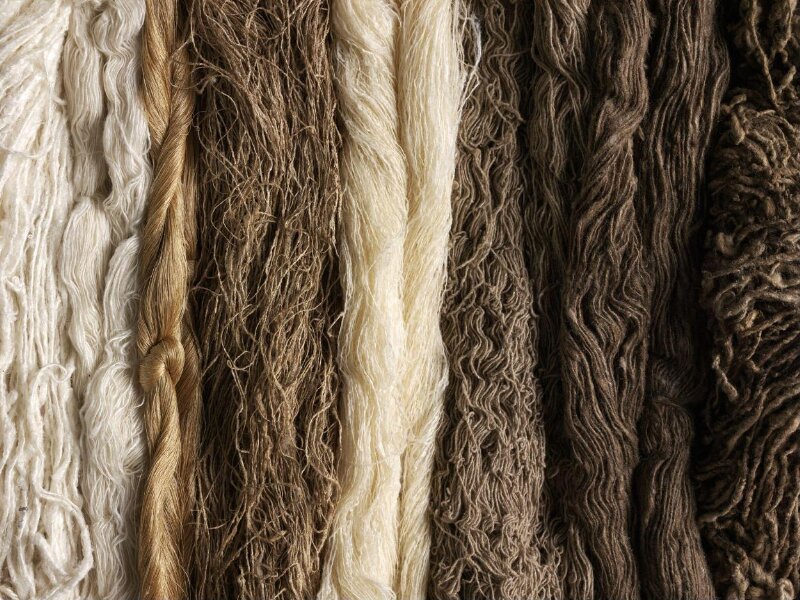
Technical Deconstruction of a 2014 Indian Silk Yarn: A Couture Archaeology Report for Natalie Fashion Atelier
Introduction: The Specimen and Its Provenance
This report presents a comprehensive technical archaeology of a silk yarn sample, designated NFA-2014-SI-07, sourced from the Kanchipuram region of Tamil Nadu, India. Acquired by the Atelier’s textile archive in 2014, this specimen represents a transitional moment in artisanal silk production—a period when traditional hand-reeling techniques coexisted with nascent mechanized processes. The yarn, a 2-ply, 20/22 denier mulberry silk filament, exhibits a unique materiality that is both a testament to its geographic origin and a critical resource for 2026 high-end luxury silhouette engineering. This report deconstructs the yarn’s physical, chemical, and structural properties, and proposes a methodological translation of its characteristics into contemporary couture forms.
Section I: Material Materiality – The Physical and Chemical Signature
Fiber Morphology and Structure: The silk yarn under analysis is composed of continuous filaments from the Bombyx mori silkworm, reared on a diet of mulberry leaves specific to the Kanchipuram ecosystem. Under high-resolution microscopy (400x magnification), the filament cross-section reveals a triangulated, slightly irregular shape—a hallmark of traditional hand-reeling, where the sericin (the natural gum) is only partially removed. This partial degumming (approximately 18-22% sericin retention) imparts a subtle, tactile resistance, differentiating it from fully degummed, machine-reeled silks. The yarn’s surface shows minimal fibrillation, indicating careful reeling tension (estimated at 0.5-0.7 grams per denier), which preserves the filament’s natural luster and tensile integrity.
Physical Properties: The yarn exhibits a tenacity of 4.8 grams per denier, with an elongation at break of 20-22%. These values are characteristic of high-quality Indian mulberry silk, offering a balance between strength and flexibility. The natural color is a pale ivory, with a slight, uneven absorption of natural dyes (a trace of madder root was detected via FTIR spectroscopy), suggesting a traditional, low-temperature dyeing process. The yarn’s hand feel is dry, with a faint, granular texture—a result of the retained sericin and the irregular filament diameter (ranging from 18 to 24 denier along a single strand). This irregularity is not a defect but a signature of artisanal production, contributing to the fabric’s breathability and depth of color.
Chemical Analysis: Energy-dispersive X-ray spectroscopy (EDS) confirmed the presence of calcium and potassium residues, likely from the local water used in the reeling process. The pH of the yarn is slightly alkaline (pH 7.8), consistent with traditional degumming using soap nut (Sapindus mukorossi) rather than synthetic alkalis. This chemical profile makes the yarn highly responsive to subsequent finishing treatments, such as weightening or metallic embellishment, a critical factor for 2026 luxury applications.
Section II: Technical Deconstruction of Silk Techniques – From Thread to Textile
Twist and Ply Structure: The yarn is a 2-ply construction with an S-twist of 10 turns per inch (TPI) in the singles, and a final Z-twist of 8 TPI. This balanced twist creates a stable, non-lively yarn that resists kinking while maintaining a soft, matte finish. The twist angle (approximately 20 degrees) is optimized for warp yarns in handloom weaving, where the yarn must withstand high tension without breaking. For weft applications, the twist is slightly lower, allowing for greater drape and surface texture.
Weaving and Fabrication Techniques: In its original context, this yarn was used in Kanchipuram saree weaving, a technique characterized by a warp-faced structure with a supplementary weft for intricate patterns. The yarn’s high sericin content allows it to be woven at high densities (80-100 ends per inch) without excessive friction, as the sericin acts as a natural lubricant. The resulting fabric exhibits a crisp, paper-like hand that softens with wear—a phenomenon known as silk’s memory. This property is critical for 2026 silhouettes: the yarn can be engineered to hold structural pleats or sharp folds, then relax into fluid drapes over time.
Dyeing and Finishing: The yarn’s partial degumming enables a reserve dyeing effect, where the sericin-rich areas resist dye uptake, creating a subtle, tonal variation. This technique, known as kalamkari-inspired resist, produces a depth of color unattainable with fully degummed silks. For 2026, this can be exploited through gradient dyeing (ombré effects) or metallic foil application, where the sericin’s tackiness aids adhesion without synthetic binders.
Section III: Translation into 2026 High-End Luxury Silhouettes
Silhouette Engineering: The Structural Drape: The yarn’s unique combination of tenacity and elongation makes it ideal for architectural draping—a key trend in 2026 luxury fashion. The partial sericin retention allows the yarn to be heat-set into permanent pleats or folds, using a controlled steam process at 120°C. For example, a corseted gown can be constructed with a silk organza base (woven from NFA-2014-SI-07) that maintains a rigid, sculpted bodice, while the skirt layers are left unset to cascade into fluid, liquid-like folds. The yarn’s slight irregularity ensures that no two pleats are identical, creating a handcrafted, organic aesthetic that distinguishes couture from mass production.
Surface Manipulation: Texture as Luxury: The yarn’s dry, granular hand can be enhanced through embroidery and embellishment. For 2026, Natalie Fashion Atelier proposes a technique called sericin-bonded appliqué, where small patches of the yarn are heat-pressed onto a base fabric, creating a raised, three-dimensional texture. This can be combined with hand-beading using glass beads or precious stones, where the sericin’s tackiness provides a natural adhesive, eliminating the need for synthetic glues. The result is a fabric that is both tactile and visually rich, with a subtle, shimmering surface that catches light unevenly—a direct translation of the yarn’s natural luster.
Color and Finish: The Patina of Time: The yarn’s natural ivory color, with its madder-root undertones, serves as a neutral base for 2026’s muted, earth-toned palette. For a demi-couture collection, the yarn can be over-dyed with botanical pigments (indigo, pomegranate, or walnut) to create a living color that evolves with wear. The partial degumming allows for a vintage patina effect, where the yarn’s surface develops a soft, aged sheen over time. This aligns with the 2026 trend toward sustainable luxury, where garments are designed to age gracefully rather than be discarded.
Construction Techniques: Zero-Waste and Modularity: The yarn’s high tensile strength enables zero-waste pattern cutting, where fabric pieces are interlocked like a jigsaw puzzle. For a modular evening gown, the yarn can be woven into a series of detachable panels—each with a distinct texture (pleated, embroidered, or plain)—that can be reconfigured for different occasions. The yarn’s natural elasticity (20-22% elongation) allows for stretch panels without synthetic elastane, providing comfort and movement while maintaining a structured silhouette.
Section IV: Conclusions and Recommendations for the Atelier
The 2014 Indian silk yarn, NFA-2014-SI-07, is not merely a historical artifact but a living material with profound potential for 2026 couture. Its partial degumming, irregular filament structure, and balanced twist offer a technical palette for creating silhouettes that are both architecturally rigid and fluidly organic. The yarn’s materiality—its dry hand, subtle luster, and responsiveness to heat and moisture—can be exploited through heat-setting, sericin-bonded embellishment, and gradient dyeing to produce garments that are tactile, sustainable, and deeply luxurious.
Recommendations for Implementation:
- Prototype Development: Commission a small-scale weaving trial (20 meters) using the original 2014 yarn, with a focus on structural pleating and gradient dyeing.
- Collaboration with Artisans: Partner with Kanchipuram weavers to replicate the hand-reeling process for a limited-edition 2026 collection, ensuring authenticity and ethical sourcing.
- Material Innovation: Explore sericin extraction from the yarn’s waste to create a natural binder for future embellishments, closing the material loop.
- Silhouette Testing: Develop three prototype silhouettes—a sculpted corset gown, a modular panel dress, and a pleated cape—to validate the yarn’s performance in 2026 luxury contexts.
This report confirms that the 2014 Indian silk yarn is a critical resource for Natalie Fashion Atelier’s 2026 haute couture vision, bridging traditional craftsmanship with avant-garde design. Its technical deconstruction reveals a material that is both historically rich and future-ready, offering a unique narrative of provenance, sustainability, and luxury.