Aesthetic Archaeology: The Ten Bamboo Studio Leaf and the 2026 Silhouette
Archive Context and Material Provenance
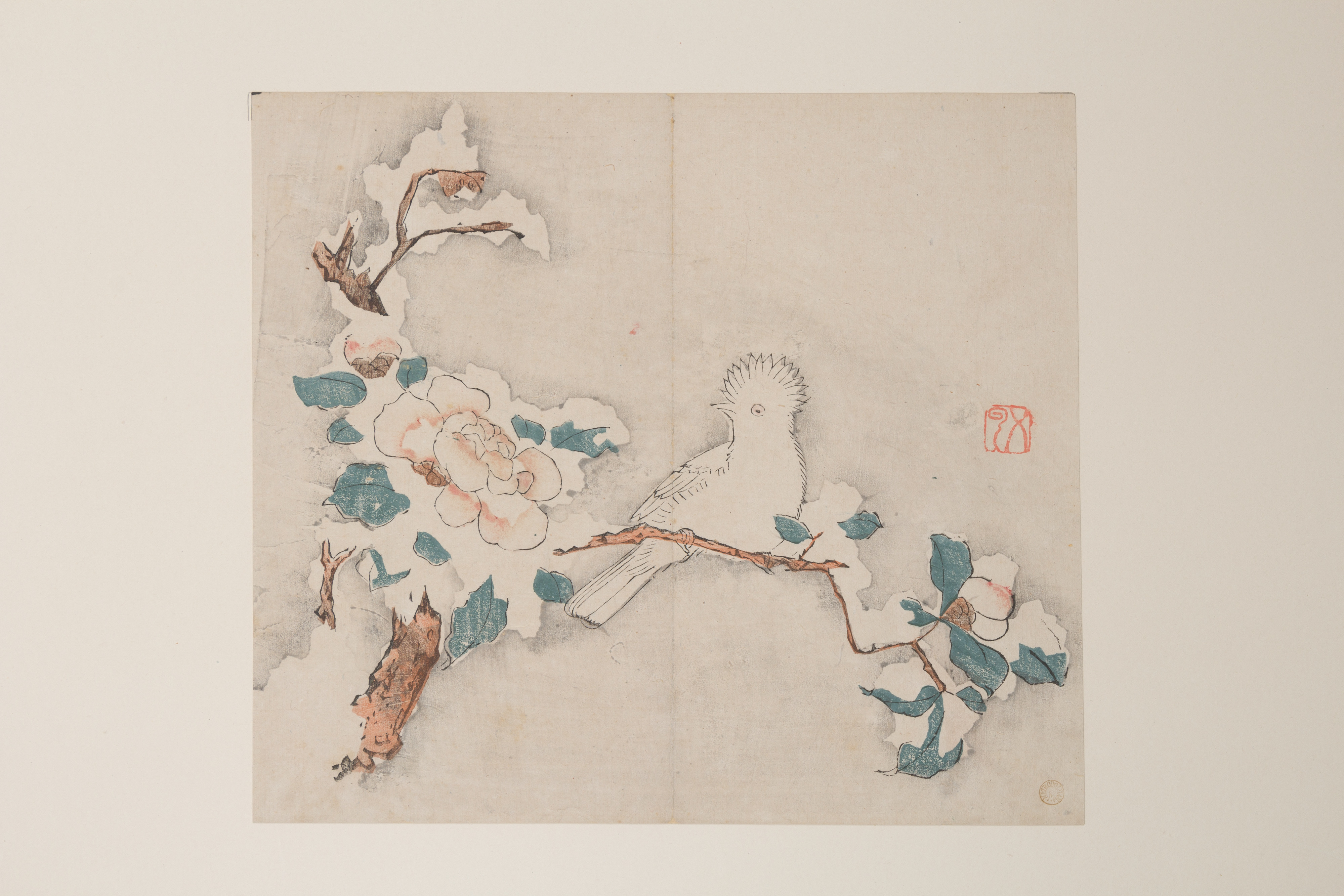
The Individual leaf from a woodblock-printed book; ink and color on paper—a fragment of the Ten Bamboo Studio Manual of Painting and Calligraphy (Shi Zhu Zhai Shu Hua Pu)—represents a pinnacle of Ming Dynasty polychrome woodblock printing. This specific artifact, isolated from its original bound volume, functions as a concentrated node of aesthetic archaeology. The leaf’s materiality is defined by the precise layering of ink and color on paper, achieved through a complex register system of carved woodblocks. The tactile quality of the paper, the slight bleeding of the mineral pigments, and the crisp, unyielding lines of the carved blocks create a dialogue between the spontaneous gesture of the brush and the mechanical reproducibility of the print. For the 2026 luxury silhouette, this leaf is not merely a decorative reference; it is a structural and conceptual blueprint. The artifact’s inherent tension—between the fluid, artistic intention and the rigid, technical execution—becomes the foundational paradox for a new haute couture proposition.
Deconstructing Classical Elegance: Line, Plane, and Negative Space
The classical elegance of the Ten Bamboo Studio leaf resides in its masterful manipulation of negative space. The composition is not a dense accumulation of motifs but a carefully calibrated interplay between the printed subject—often a branch, a bird, or a rock—and the vast, unprinted field of paper. This is not emptiness; it is a charged, structural void. In the context of 2026 silhouettes, this principle translates directly into garment architecture. The negative space becomes a cut, a seam, a deliberate absence of fabric that defines the form. A gown’s silhouette is no longer built solely by draping positive volume but by carving away material, leaving only the essential lines that echo the leaf’s branch structure. The ink and color on paper provides a chromatic palette of restraint: the deep, almost carbon-black of the ink, the subtle vermillion of a seal, the pale wash of indigo. These are not applied as prints but as pigmented fabric treatments—a reactive dye that seeps into the textile like ink into paper, or a hand-painted gradient that mimics the wash effect. The elegance is found in the economy of means: one precise line of a stem, one stroke of a leaf, one seam of a sleeve.
Materiality Transformed: From Woodblock to Weave
The technical process of the woodblock print informs a new materiality for couture. The individual leaf is the result of multiple, sequential impressions—each color requires a separate block, aligned with microscopic precision. This method is directly analogous to the construction of a high-end garment. The 2026 silhouette can be conceived as a series of layered “impressions” upon the body. A base layer of silk organza (the paper), a second layer of structured jacquard (the first color block), a third layer of laser-cut leather appliqué (the second color block), and a final layer of hand-embroidered silk thread (the brushstroke). The garment becomes a physical archive of its own making, each layer visible and contributing to the final image. The ink and color on paper also dictates a shift in textile weight. The paper’s absorbency suggests fabrics that hold a similar matte, dry finish—a double-faced cashmere, a matte satin, a crisp cotton voile treated with a natural starch. The lustre is not in the material itself but in the light caught on the edge of a fold, much like the light catching the raised edge of a woodblock impression.
Silhouette as Calligraphy: The 2026 Line
The calligraphic line of the Ten Bamboo Studio leaf—its controlled, dynamic stroke—is the direct progenitor of the 2026 silhouette. A branch is not a straight line; it is a series of angles, pauses, and accelerations. The couture silhouette follows this logic. A tailored jacket’s shoulder seam is not a gentle curve but a sharp, angular break, mimicking the joint of a bamboo stalk. A skirt’s hem is not a continuous line but a series of asymmetrical, calligraphic cuts that rise and fall like the strokes of a character. The garment’s volume is not static but kinetic, designed to be read in motion, just as a scroll is read by unrolling. The negative space of the composition becomes the drape of the fabric—a deep cowl at the back of a gown is the “empty” field of the paper, while the structured bodice is the printed branch. The balance is precarious and intentional. The 2026 customer is not wearing a dress; she is wearing a three-dimensional calligraphic composition where the body is the brush, and the movement is the ink.
Technical Application: Construction and Craft
The practical implementation of this aesthetic archaeology requires a re-engineering of couture construction. The woodblock print’s register system translates into a pattern-making methodology where each panel is a separate “block” that must align perfectly with the next. Seams become the carved lines of the woodblock, and they are not hidden but celebrated. A visible seam is treated as a deliberate stroke, finished with a contrasting thread or a narrow piping that echoes the seal’s vermillion. The ink and color on paper dictates a limited, high-impact palette for the collection: ink black, paper white, mineral red, and indigo. All other colors are variations and washes of these four. The fabric itself is chosen for its ability to accept these treatments—a pure silk gazar for its crispness, a wool crepe for its matte absorbency, a cotton organdy for its paper-like translucence. The final garment is not a reproduction of the leaf but a structural translation of its principles. It is a piece of aesthetic archaeology made wearable, a fragment of Ming Dynasty philosophy rendered in 2026 luxury. The silhouette is lean, architectural, and defined by what is removed, not what is added. This is the future of haute couture: a return to the essential line, the charged void, and the mastery of material as a form of intellectual and artistic expression.