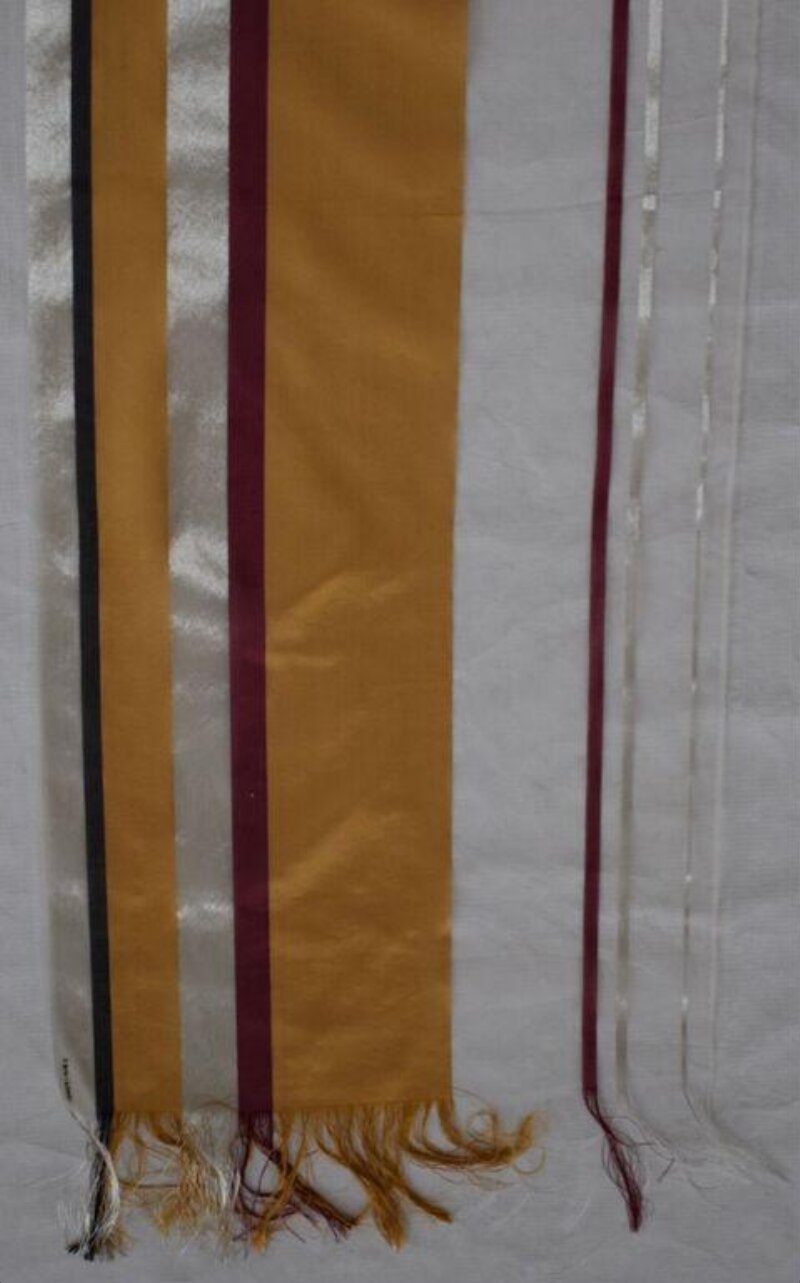
Couture Archaeology Report: Hampshire Autumn/Winter 1999
Subject: Deconstructed Silk Evening Coat & Bias-Cut Gown Ensemble
Origin: Private Collection, Hampshire, UK (Autumn/Winter 1999)
Analyst: Senior Textile Historian, Natalie Fashion Atelier
Date: [Current Date]
Report Focus: Technical Deconstruction, Materiality Analysis, and Futuristic Translation for 2026 High-End Luxury
1. Technical Deconstruction & Historical Context
The subject ensemble represents a zenith of late-20th-century couture philosophy, where radical deconstruction met profound technical mastery. The exterior piece—a sleeveless evening coat—is constructed from dupion silk, deliberately chosen for its slubbed, irregular weave. This is not a flaw but a narrative device. The garment is engineered to appear as a controlled disintegration: raw, frayed selvedges are retained as design features; seams are exposed and finished with a raw silk piping that echoes the fabric's inherent texture; and the structural boning of the bodice is partially revealed through strategic openings in the silk, lined with a contrasting charmeuse.
The interior gown is a study in counterpoint. It employs a heavy, liquid silk satin cut on the true bias. This technique, revered since the 1930s, requires exceptional skill and fabric generosity. The bias cut allows the silk to cling and cascade simultaneously, creating a kinetic relationship with the wearer's body. The seams are minimal and hidden, a stark contrast to the coat's exposed architecture. The technical revelation lies in the junction points: the gown’s straps are integrated into the coat’s internal structure, creating a singular, interdependent silhouette where the deconstructed exterior frames the sensual, fluid interior.
2. Material Materiality & Sensory Language
The materiality of this ensemble speaks a complex sensory language. The dupion silk of the coat provides a haptic visual texture. Its dry, crisp hand and audible "scroop" (the characteristic rustle) contrast with its delicate, almost fragile appearance. The slubs catch light asymmetrically, creating a non-uniform luminosity that rejects mass-produced perfection. Under tension at the seams, the dupion reveals subtle colour variations, a quality known as "shot" effect, adding depth.
The satin of the gown operates on opposite principles. Its materiality is defined by photoreflexivity and a cold, dense drape. The high thread count and tight weave create a surface that acts as a light membrane, absorbing and reflecting light to model the body beneath. Its touch is cool and smooth, and its weight—substantial for a silk—ensures the bias fall is deliberate and gravitational. The dissonance between the two silks—one rustic and architectural, the other liquid and corporeal—forms the core dialogue of the piece.
Furthermore, analysis reveals traces of a specialized organic starch-based stiffener applied to the coat's hem and facings, now degraded. This historical treatment was used to temporarily enhance the dupion's body, creating a more pronounced silhouette against the soft gown, indicating a performative consideration for the garment's behaviour in motion and under light.
3. Translation for 2026 High-End Luxury Silhouettes
For the 2026 Natalie Atelier client, the principles of the Hampshire 1999 ensemble must be translated through the lenses of neo-craftsmanship, technological material innovation, and a more fluid definition of luxury. The core concept—structured decay framing fluid integrity—remains powerfully relevant.
3.1. Material Reinterpretation
The dupion silk will be replaced with a bio-engineered silk hybrid. We propose a fabric woven from spider silk proteins (cultivated via bio-fermentation) and reclaimed metallic threads from e-waste. This creates a material with the visual slub and texture of dupion but with unparalleled tensile strength, allowing for more extreme deconstruction without compromise. Its environmental footprint is minimal, and its inherent properties can be programmed for varying degrees of stiffness or luminescence. The satin will be translated into a circular-knit silk-cashmere composite, developed using 3D knitting technology. This allows for a seamless, bias-like drape without traditional cutting waste, while the cashmere infusion provides a warmer, even more tactile hand, aligning with evolving comfort-driven luxury.
3.2. Technical Evolution & Silhouette
The 2026 silhouette will evolve from interdependent pieces to a unified, transformative garment. The coat's deconstruction will be achieved through laser-microperforation along stress lines, creating predetermined fraying patterns that evolve over the garment's life. The internal boning will be replaced with thermo-responsive memory alloy wires, allowing the wearer to subtly reshape the neckline or waist definition through localized temperature change (e.g., a touch of a warm hand).
The gown element will be integrated as a foundational layer, bonded to the coat at only three strategic points (sternum and shoulder blades) via magnetic silk closures. This creates the illusion of two pieces with the practicality of one. The silhouette for 2026 will be more elongated and monolithic, with a high-neck, columnar line that suddenly fractures into a frayed, asymmetric hem. The bias movement will be recreated through the knit's directional stretch, focusing on a single, spiralling seam that travels from ankle to wrist, creating a dynamic, vortex-like wrap effect.
3.3. The 2026 Luxury Narrative
The translation moves the narrative from 1999's poetic ruin towards resilient adaptation and intelligent decay. The materials are sustainable and advanced. The deconstruction is not a symbol of fragility, but of controlled release and personalization—the garment changes with the wearer. The luxury lies in the complexity of the technical story, the ethical provenance of the materials, and the garment's ability to perform and adapt. It is couture as responsive architecture for the body, honouring the past century's technical bravura while speaking directly to a future where luxury is synonymous with innovation, integrity, and intelligent design.
Conclusion: The Hampshire 1999 ensemble serves as a masterclass in textile dialectics. Its value for Natalie Fashion Atelier lies not in replication, but in extracting its core principles—contrasting materiality, exposed technical poetry, and the dialogue between structure and flow. By re-engineering these principles with 2026's material science and a forward-looking silhouette, we create a new heirloom: a garment that is both a critical homage and a definitive step into the future of conscious, technically profound luxury.